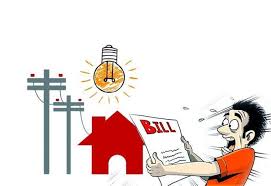
MARGAO: Days after higher electricity bills triggered widespread concern, consumers across South Goa continue to visit electricity department offices seeking clarification on revised charges, penalties and billing calculations.
While department officials have attributed the spike to the revised tariff structure, demand-based billing components and delayed billing cycles in certain areas, several residents say the financial impact has been severe and, in some cases, difficult to immediately understand.
For Stella Francis, who lives with her daughter in a three-bedroom flat in Fatorda, the shock was significant. Her electricity bill rose from around 6,000 in September to 14,000 in November. She says the breakup of units consumed and the manner in which they were charged was unclear to her.

“There’s nо proper breakup of how our consumption has been charged. It is not mentioned clearly on the bill,” she said.
According to Francis, department staff explained that 12,000 of the November bill reflected a penalty for consuming more power kW against a sanctioned load of 0.85 kW. She was informed that notices had been issued earlier regarding load enhancement. She added that since the bills were backdated, the penalty component may continue to reflect over subsequent cycles. She has since received a fresh bill of 1.2 lakh for a 50-day cycle, of which 10,000 is marked as penalty.
Commercial establish ments have also reported confusion. In Colva, restaurateur Daniel Rodrigues, whose monthly electricity bill aver ages around 30,000, said he was stunned after receiving a demand of nearly 1.4 lakh. Rodrigues said he has made five visits to the electricity department over the past week seeking clarification.
He claimed that depart ment engineers admitted that penalty notices were issued only to a limited number of consumers and not to certain three-phase consumers. He further alleged discrepancies in unit calculations.
“The bill shows we consumed around 6,000 units, but we were charged for 10,000 units,” he said, adding that different officials offered varying explanations during separate visits.
Rodrigues said part of his establishment’s billing was initially calculated on an average basis on the grounds that the premises were locked something he disputes, pointing out that the restaurant operates from 9 am to 11 pm daily. According to him, one senior engineer advised him to pay the bill with the assurance that any excess amount would be adjusted in the next cycle, while another staff member later indicated that the calculation required rectification and would be referred to Panjim. “Both maintained that they could not do anything about the penalty,” he said.
Not all consumers, however, have disputed the revised billing structure. Several residents who met officials over the past few days said their doubts were clarified and that they have accepted the revised demand-based mechanism, though many remain unhappy over the overall tariff hike and the financial strain of a higher billing cycle.
Department officials have maintained that penalties for exceeding sanctioned load have been in effect since October under the revised structure and that consumers were advised through public notices and newspaper advertisements to apply for enhancement of sanctioned load where necessary.
Officials have also stated that consumers can approach the department within the stipulated window for clarification and rectification. For lower-income households and small businesses, even a single elevated billing cycle has proved challenging Some consumers are now in the process of applying to revise their sanctioned load or reviewing their internal wiring and consumption patterns to avoid further penalties in subsequent cycles.
As queues continue outside electricity offices, the prevailing sentiment appears to be less about confrontation and more about clarity with consumers seeking a clearer understanding of how their bills have been calculated and how to prevent similar shocks in the months ahead.