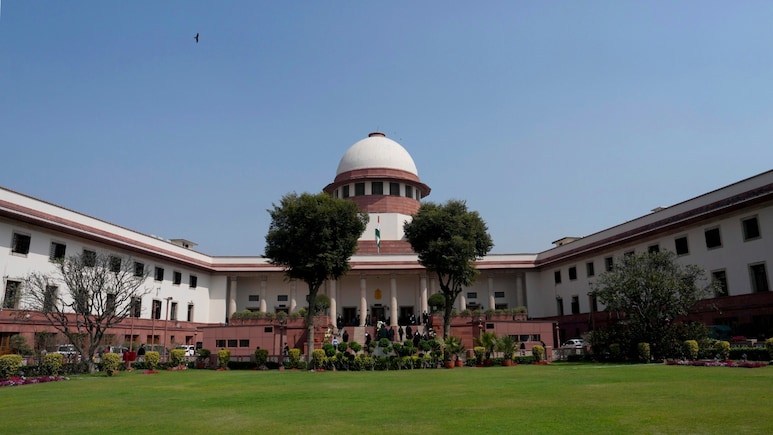
The Supreme Court has set aside an order passed by the National Company Law Tribunal (NCLT) in the Essel Infraprojects insolvency matter after finding that the tribunal relied on non-existent and AI-generated fake legal precedents. The landmark ruling also issued a strong warning against the unverified use of artificial intelligence in judicial proceedings.
A bench of Justices PS Narasimha and Alok Aradhe observed that the use of fabricated or hallucinated AI-generated judgments poses a serious threat to the justice delivery system. Comparing it to the release of methyl isocyanate, the court said such material is “invisible, insidious and catastrophic” and can erode the very foundation of judicial decision-making if left unchecked.

The apex court ruled that advocates have a duty to verify every legal citation before presenting it in court. It held that citing fake AI-generated judgments without proper verification amounts to professional misconduct. The bench also noted that judges bear equal responsibility and described it as a serious lapse if courts rely on hallucinated AI material while deciding cases.
Declaring a zero-tolerance approach, the Supreme Court said any judgment influenced even partially by fake or non-existent precedents cannot be sustained in law. It stressed that the sanctity and integrity of judicial adjudication must remain uncompromised.
While acknowledging that artificial intelligence can assist courts in research and administrative work, the bench underlined that adjudication must remain under the complete control of human decision-makers at every stage.
The court also directed the Bar Council of India (BCI) to constitute a committee to examine the issue of advocates citing AI-generated fake precedents. The committee has been asked to formulate guiding principles and recommend disciplinary measures to prevent similar incidents in future.