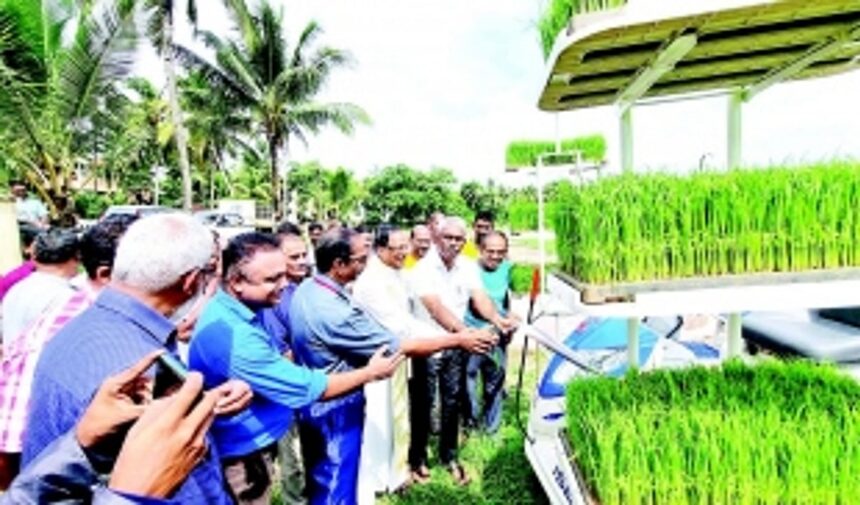
MARGAO: In a momentous occasion, Fr George Quadros of the Don Bosco Agricultural Society and the newly appointed State Director of Agriculture, Sandeep Fol Dessai, officially launched the paddy cultivation season in Betalbatim village. The farmers are targeting nearly three lakh square metres of land this monsoon.
The event commenced with a blessing ceremony conducted by Fr Agapito D’Cunha, from the Betalbatim church, where the farmers, fields, and a new transplanter were blessed.
Addressing the gathering, Fr Quadros hailed the concept of ‘collective farming’ being followed in Betalbatim, which he described as the future for Goa and distinct from ‘community farming.’ He reminisced about the project’s inception a decade ago when the new Agriculture Director Dessai, who was then the Zonal Agriculture Officer (ZAO), had provided the necessary approvals.
For Dessai, this was his first paddy transplanting exercise since assuming the role of Director, prompting him to bring along a huge team of officials from various ranks to witness the field activities in person. He expressed confidence that if farmers remain united, they can achieve their dreams.
Dessai highlighted the promising progress in similar projects in Salcete, Bardez, and Tiswadi talukas, attributing their success to flat terrain, modern technology, and the commitment of local farmer groups, which he added had resulted in many such lands no longer being left fallow and being taken up for cultivation on a large scale.
Dessai commended Fr Quadros’s efforts across Goa and noted that the Agriculture Department had approved the subsidy for the new transplanting machine.
Fr Quadros explained the different models he is involved with, such as Chinchinim, Navelim, and Velsao, emphasising that Betalbatim’s approach to collective farming is unique. “When it comes to the actual groundwork of paddy transplanting and cultivation, that is where the concept of collective farming shines, via the efforts of the farmers,” he said.
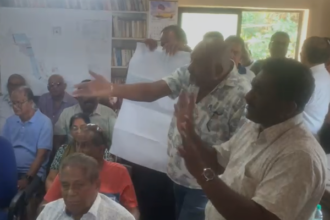
Fr George further elaborated on how this concept brings the community together, as evidenced by the presence of village citizens, priests, farmers, service providers, and volunteers at the launch event.
“Community farming is good, but within that sphere, collective farming is the need of the hour,” said Fr Quadros, adding that after ten years in the fields, having observed the situation back then and in the present scenario, he is in a position to speak about what can work and what does not work.