SHASHWAT GUPTA RAY

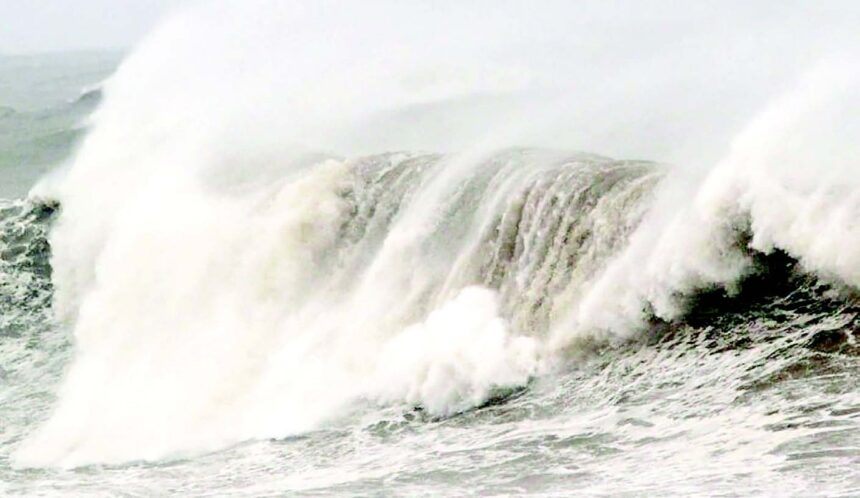
PANJIM: Tidal ocean surface waves generated by the tropical cyclones reach up to 8.1 to 13.5 m height, finds a study by CSIR-National Institute of Oceanography (NIO), which can hit the marine facilities of coastal States like Goa and also affect fishing activities since fishing vessels cannot operate during such high waves.
“We undertook this study as understanding ocean wave characteristics is important, particularly to ensure the safety of marine activities and assess risk management and preparedness. The marine structures have to withstand extreme waves. Tropical cyclones cause bad weather and high waves that can cause problems to maritime activities and damage to marine facilities,” Chief Scientist at CSIR-NIO, Department of Ocean Engineering division, V Sanil Kumar told O Heraldo.
The study titled High waves measured during tropical cyclones in the coastal waters of India, has been published in the Ocean Engineering Journal and co-authored by A Anusree.
Waves generated due to the cyclone also affect fishing activities since fishing vessels cannot operate during high waves. Hence, it is important to know how many days the high waves generated by the cyclone will be present at a location, Sanil Kumar said.
“This study was done to examine the wave characteristics during different cyclones. Generally, it is difficult to get the measured data using instruments close to the cyclone track. The wave measuring instruments are deployed in the Indian waters for different projects,” he said.
During the passage of the cyclone, the wave measuring instruments deployed under the projects – real-time data collection for ocean wave forecast funded by INCOIS, Hyderabad and studies related to the Integrated River Basin and Shoreline Management Plan for Goa funded by NIOT, Chennai – recorded the wave data.
“Data for three cyclones in the Bay of Bengal and two cyclones in the Arabian Sea have been discussed in our study. In the earlier publications, mostly the significant wave height information is provided and the data on the height of an individual wave is missing. Also, the ratio between the crest to trough height and the importance of the data collection interval have been assessed,” the CSIR-NIO chief scientist said.
According to the senior ocean scientist, high waves generated by the tropical cyclones will be there at a location for three days.
“During a cyclone, the wave heights reach up to 8.1 to 13.5 m and this value depends on the forward motion of the cyclone, central pressure, and the wind speed. The study also highlights the rate at which the wave height increases during a cyclone,” he said.
The data presented in the article and the study results can be used by all the agencies that are planning commercial activities and developing marine facilities. Keeping this data as a baseline, the design parameters can be evaluated. Also, these data can be used for validation of the numerical models used for arriving at the wave parameters.
Sanil Kumar urged the mariners to avoid the cyclone track and suggested that the marine operations be suspended by the operators during cyclone.
“The agencies who are operating or plan to operate the marine facilities, should evaluate the design parameters considering the recent cyclonic storms,” he said.