The widened roads in the coastal villages of Calangute did not alleviate traffic congestion in the heart of Calangute during the Christmas week or New Year’s Eve. They did facilitate the smooth flow of traffic at the outskirts of Candolim and Calangute, but the locals and tourists were inconvenienced due to traffic jams on the roads leading to the beaches of Calangute and Baga. The only plus point was the hot-mixed roads, which had been repaired before Christmas.
New Year’s Eve, as usual, saw a mad rush of tourists to the beaches of Calangute and Baga; serpentine queues of vehicles, mostly outstation, could be seen on the roads. The traffic on the road from St Anthony’s Chapel to Calangute beach moved at a snail’s pace, even though the road had been made one-way to avoid traffic jams. Even traffic police could do little to speed things up.
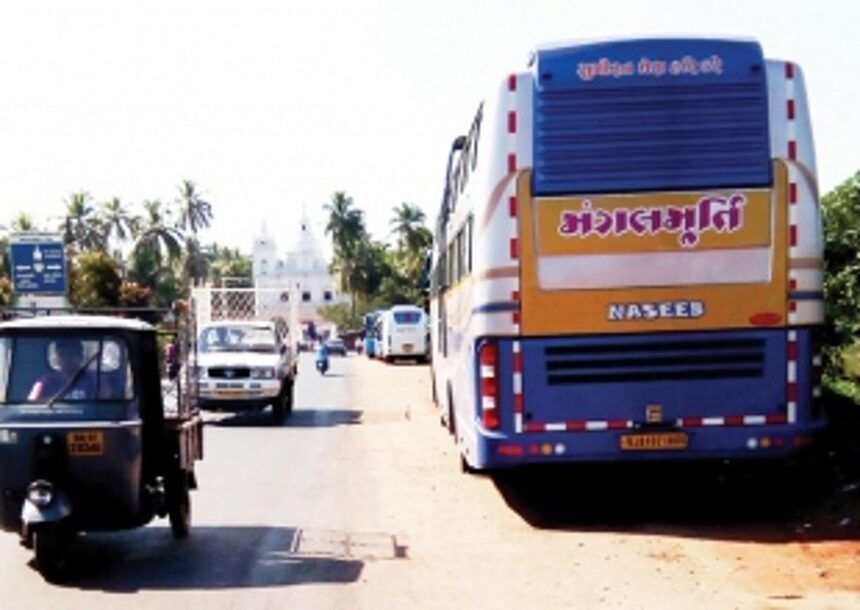
Additionally, huge buses were parked along the widened road from Calangute Church to the Calangute police station, causing traffic jams and also defeating the very purpose of widening the roads and cutting trees.
Locals have stated that the solution for traffic jams is not just widening the roads, but ensuring that parking spaces are not converted by builders and hoteliers, which they said is happening at the moment.
“Do the widened roads leading to Calangute, Candolim or Baga serve any purpose without clearing the open spaces that were meant for parking of vehicles? Most hotels in Calangute and Candolim do not have ample parking space, forcing tourists to park along the roads and contribute to traffic jams. Few hotel owners have converted parking spaces into restaurants, and the authorities have turned a blind eye to it. Builders and hoteliers have been let off, while locals have been threatened with dire consequences,” said Francis Fernandes, a local.
Ramachandra, another local, stated, “There is so much of destruction of nature in the name of development, especially widening of roads, but the end result is zero. There were fewer traffic jams this year as tourists preferred to skip the world-famous beaches of Calangute and Candolim on New Year’s Eve. What did Goans gain from the road-widening, which led to demolition of people’s compounds and other structures?”
Saluzinho, another local, claimed that the roads had not been hot-mixed due to Christmas or New Year’s Eve. He said, “The roads of Calangute were hot-mixed in a hurry, bringing much relief to the locals who were tired of negotiating dangerous and potholed roads daily. Initially, we were thankful to Calangute MLA Michael Lobo for taking up the hot mixing works, but later, we realised that the same had been done because of Sunburn at Baga. Today, no development takes place without some ulterior motive.”
However, Lobo stated that the roads had been hot-mixed in the interest of the villagers. He said, “I hot-mixed the roads as the villagers of Calangute have been facing difficulties due to the ongoing sewerage works. All roads that were dug up for the sewerage network were hot-mixed wherever possible. The Arpora-Baga roads and the roads leading to Calangute and on the borders of Nagoa were widened. I carried out the works in the interest of the villagers and tourists visiting the beaches of Calangute, Baga and Candolim.”