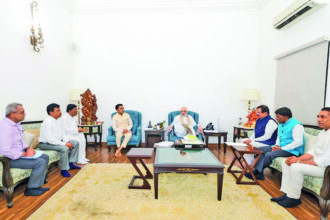
Herald: Hello and welcome to a debate that is going to be one with a difference. This is about liberal and right-thinking people in Goa trying to ensure that their voice is not crushed, to ensure that dissent is respected and to ensure that our society, which is being polarized by the powers-to-be, rises up in revolt. The issue is of a national character and of events that have led to a lot of violence at places like Dadri, events which have really brought down the levels of tolerance in this country. While those events are extremely important and reverberating throughout the country, we need to look at it from our perspective in Goa because several intellectuals have voiced concern; writers came together yesterday in a unique show of solidarity to ensure that what we speak, eat and think can only be ours and cannot be controlled by the government in power. Brute majority doesn’t mean brute suppression of liberties that we enjoy as far as our Constitution is concerned. As citizens of this country, we are protected by the Constitution, which guarantees us liberty of thought, expression, belief, faith and worship. This is the Constitution that the people of India have given to ourselves, and it is extremely important. This culture of diversity that we have needs to be celebrated, but what’s happening now is that instead of being celebrated, it is being crushed by the government in power. Our panelists for this discussion are: Fr Victor Ferrao, a professor in the Rachol Seminary; writer Damodar Mauzo; and social activist Dr Oscar Rebello.
Herald: Let’s start with Fr Victor. What are your first thoughts on what I’ve just said?
Ferrao: We are facing a crisis. Our democratic set-up is being crushed and invaded by a religious ‘us-and-them’ type of dialectics, which divides the ‘we’, fractures it, and fragments it. What we are seeing is actually the symptoms, where dissent and free-thinking is not welcome, and there is even a kind of food fascism around; what we have to eat is decided by the state. In such a democratic ‘we’ that we set for ourselves in the Constitution, I think there is a kind of loss; a squeezing out of that democratic meaning right in front of our eyes.
Herald: Damodarbab, you have taken this initiative to get writers together, but you have differed slightly from the act of writers who have given back their Sahitya Akademi awards, although you support them. You feel that returning awards will not serve a purpose. Can you just tell us your thoughts and elaborate on how the writers have come together and what your course of action is?
Mauzo: Many writers have returned their awards. Some have resigned from their positions in the Akademi, but they have not returned their awards. The basic thing to note is that the awards are not given by the government. They are given by a body of writers after considering the merit of a book. The award is not some lifetime achievement award; it’s an award given for a book. How can I question the merit of a book? Returning the award is an easy act. What’s more worrisome for creative people of this country is that the National Academy of Letters is silent on this issue. More importantly is our disregard for the Constitution.
Herald: So where do we go from here? What is your next step?
Mauzo: As a writer, I have not kept quiet on this issue. Goa being a small state, it is easier for us to come together. We should now call upon the artist fraternity. Whether they are singers, writers, painters or musicians – we have a number of them who have a say, and I am sure that every artist needs to protest what is going on. Our next move will be to bring together all the artists and then decide our course of action, which could be demonstration, approaching the government, etc. But our voice should be heard by the people. The government is under the impression that most of the people are apathetic, but it is not so.
Herald: Dr Rebello, what are your first thoughts on this?
Rebello: I have complete faith in the people of India. Our founding fathers have been inoculated by this vaccine of democracy. The very tenants of Hinduism itself, which the present Hindutva groups pretend to be protecting, are about democracy, debate and dissent. That’s the way I understand it. It’s always about questioning faith, being yourself and revolving to some other thought or idea. The present government, which came to power with the help of its right-wing groups, came to power in such a big way because the large centre of India, which was fed-up with the corruption of the Congress, veered towards the BJP. By these kinds of acts that are taking place – perhaps they’re taking place only by the fringe groups – but the fact that the leadership does not take cognizance of the trouble being caused by the lunatic fringe groups across the country. It is going to backfire on the BJP. The people of India have no time to waste on beef politics or wanting to go and lynch a Muslim man or wanting to indulge in a communal riot. They don’t have the time for that. They need to put bread on the table for their family. The first casualty of Fascism will be the BJP.
Herald: Fr Victor, I’ll just draw your attention to a comment made by the Haryana chief minister today; he said people who eat beef should not be in this country. Do you feel that this is about Hindus trying to stamp the majority and is it a Hindu versus Muslim communal issue? Or is it more than that?
Ferrao: It’s coming up sporadically. It’s not necessarily to be construed as a fight between Hindus and Muslims. It is being churned out to build vote banks. I have a strong feeling that beef politics is actually a kind of politics that the BJP looks at as ‘capital’. They can capitalize on this politics of polarization. I do hope that this polarizing politics produces a reverse polarization. We can believe in the people of our country.
Herald: Let’s put this into the Goa context. Before the 2012 Assembly elections, you had played a significant role in travelling across Goa and feeling the pulse of the people. Do you think that with the BJP government in power, the same kind of dynamics will play out in the Goan context?
Ferrao: I think it’s becoming the same. The present government is trying to put everything into a promise of the future. It is telling us that issues will be solved in the future. The BJP government is not acting on what the minority would like. At this point, they seem to have abandoned us.
Rebello: In many ways this whole vaccine of democracy tends to inoculate even the BJP. Look at what Manohar Parrikar has said on the beef issue. He categorically said eating beef is an individual choice and we cannot impose our views on what everybody has to eat. He was speaking to his constituency in Goa. And then you have someone from the same party like Manohar Lal Khattar, who is trying to speak to his constituency in Haryana, and telling that if they want to eat beef they have to get out of this country. Even within the BJP, you will have these kinds of differing voices. That is the problem with the BJP. It does not have one compassionate, all-encompassing, inclusive leader, like Atal Bihari Vajpayee. The BJP in Goa is just running from pillar to post with no ideas whatsoever. If you don’t have this grand idea for Goa, which was promised in 2012, then the party in power will pay the price.
Herald: Damodarbab, coming back to writers and the way they are protesting. As a senior writer, do you feel that the intellectual class in Goa is strong or vocal or reacting enough? At the end of the day, it’s not just the press; there’s a larger body of creative people who form opinions. Are you disappointed with this class in terms of what they’re doing to fight this whole issue?
Mauzo: I don’t think so. They are strongly on our wavelength. No writer can write without protesting. If there is no protest, they have nothing to write about. This is the basis of any form of art. The intellectual class is definitely on the same wavelength, but they should come together to voice their concern. Them voicing their concern and other people hearing it – that is not happening. Due to this, the right-wing fanatics are getting emboldened; they think they are protected. This is worrisome.
Rebello: What is interesting is that this initiative taken by Damodarbab is that it includes people who are left-liberal in their ideology and also right-wing people. They are all coming together to send just this one message to the government: you cannot trample on freedom of expression. This is what the government needs to look at instead of just mocking artists. Today, every spectrum of society feels that their freedom is being compromised. Therefore, the government has to be able to take into account that it is not just the left liberal, but also the right-wing groups that are trying to make their voice heard.
Herald: Damodarbab, what is the message that you would like your community to give out? What do you think is wrong, whether nationally or in Goa? What are you pained about?
Mauzo: The message is that we are against the suppression of the freedom of our expression. I agree that every person has a right to disagree, which should not be scuttled.
Herald: Fr Victor, the minority MLAs’ performance has a lot to be desired in terms of coming out against these issues. DO you feel that the minority MLAs have just become far too comfortable? They just want to play out this particular term and be happy and comfortable. Have they completely detached themselves from issues that are very important?
Ferrao: You might be right. I look at them as invisible allies of the BJP government. They remain invisible and they remain where they were put. I don’t know what kept them silent. My point is that they are not visible in the way you want them. They are visible with the government. They have not put on the table certain things that the people want. Nothing has been heard from our side.
Rebello: I have a slightly differing point of view on this. This is not a Catholic or a Muslim issue. This is an Indian issue and a human issue. You have to just be a liberal-thinking person, which is 95 percent of this country. We all have to come together. To protest against this should not be the act of Catholic MLAs or Catholics. You should protest because your conscience tells you that this is wrong. You find a large number of Hindu MLAs within and outside the BJP who have the same kind of thinking of protesting against this. But the problem is they d not find the courage or conviction to shout this from the rooftops that this is wrong.
Mauzo: I have an objection to the term ‘minority MLA’. You should not call him that because he is not chosen by that community. Unless we come together as Goans, I don’t think we’ll get justice.
Rebello: We are so busy fighting these little battles amongst ourselves. Throughout Goa’s history, whether it is the opinion poll, the language agitation or Devnagiri versus Romi, every agitation that we define ourselves with is about a Goan fighting a Goan. How on earth can you go on saying you want the idea of Goa? We need new thinking. We need to think about the future, governance, roads, electricity and our liberal spaces. Somehow or the other we can’t get our Goans to even learn how to agree to disagree in a very civilized manner.
Ferrao: The way politics has been played for the last 50 years is communal. Our pre-colonial and post-colonial history has been written communally. In a way, we Goans have fallen into a trap and have shown that we are incapable of dialogue. It’s very painful to say. We need only agitations or newspapers or debates like this.
Herald: We end on an extremely sobering and worrying thought that in over 50 years, we’ve not really managed to come together to dialogue and fight for our rights to dissent and disagree.