Not very long ago, we never ever celebrated occasions that focused on environment and biodiversity.
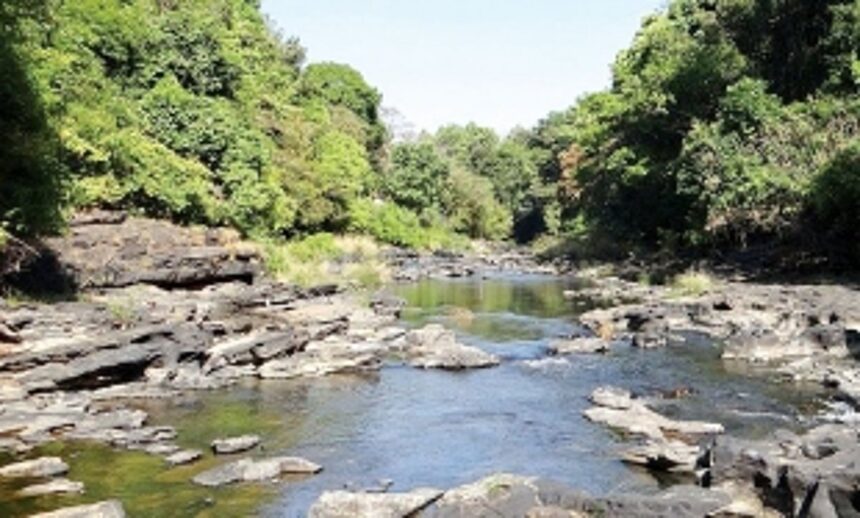
Though the scientific community looks at biodiversity, ecosystem and environment as distinctly different topics, the society rightly considers as complimentary subjects supplementing one another. In this article, I will focus on the very vital issue of our ecology, vegetation and grave scenario of rise in seawater levels, as Goa being a coastal state with surface and underground waters in the form of silted lakes, ponds and surface waters in the form of canals, rivers, waterfalls, springs spread across the length and breadth of Goa.
During the first International meet in 1972, our late Prime Minister Indira Gandhi exhorted the rich nations of the developed first world that they are the culprits of environment degradation as it was the rich countries who colonized the poor and plundered not only the jewels but took away our timber to strengthen and support their infrastructural and housing needs in the form of logs for laying railway lines and also build homes and burn to derive heat in cooling towers and housing cum commercial units.
It is time for us today to reflect and correct our wayward ways and also conserve and sustainable explore and our rich biodiversity for upliftment of our weaker sections of our society.
In the fitness of things, I must confess that we have in Goa numerous social activists, teachers, social workers and scientists who have very quietly put in their entire life in the study of Goan biodiversity and its effects on health and quality of our lives. One must be able to call “a spade a spade”.
If Covid-19 has been a pandemic, it is primarily because we have destroyed our forests and allowed our wildlife too haplessly stray into the settlement and residential areas.
We in fact have allowed the food chain cycle as well as nutrient cycle in nature to manage itself intrinsically but we have ignored the few social as well as ecosystem experts and not only offered a deaf ear but Nelson’s eye to the science of ecosystem management. To add a nail to the coffin of our woes, we have plundered and destroyed what our ancestors, who had painstakingly protected and preserved our rich natural resources which provided us food, feed fodder, fuel, medicinal plants, fertile soil, silt and perennial water bodies including rivers, lakes, springs, waterfalls, etc.
It is now time for me to show our Goans that amidst the dark clouds of destruction we have to all imperatively acknowledge the good work done by the Chairman of Goa State Biodiversity Board, Mr Pradip Sarvokadam. It would be a great shame if we ignore the books published by the able Secretary of the Goa State Biodiversity Board (GSBB) and the excellent support he received in the form of field study conducted by Rajendra Kerkar in particular who gave a shot in the arm of GSBB by writing books, articles not only in the publications of the Board, with an international stamp attached to it, but also we would authors on Goan biodiversity presented in local as well as national magazines and newsprint.
Rajendra Kerkar’s painstaking work on the sacred groves of Goa is an excellent account of our forefathers who have preserved our medicinal plants, wild animals and birds for posterity.
In this article, I would exhort our Chief Minister and all the other 39 legislators along with all forest officials to expose our college as well as our school students to exhibitions, camps, books and lecture / seminar programmes detailing out the good work done by our environmental scientists through the aegis of the GSBB. I am sure with adequate financial assistance from Goa Assembly Legislators our budding scientists in our schools and colleges would be able to see for themselves the bounties of Mother Nature in Goa. It is not a joke that Goa is called as a Pearl of the Oriente for not only being beautiful but evergreen and resourceful too.
It is a matter of shame for me in particular that our able Environment Minister Mr. Nilesh Cabral was unable to keep his Forest Minister hold his horses and refrain from making ludicrous statement that “tigers are visitors to Goa from Karnataka”. During my years as a Professor on Environment Sciences and Microbiology, I had seen scores of tiger skin on sofas of homes of aristocratic Goans of the bygone era even up to 1980.
The need for wildlife conservation was absent during the Portuguese era. The era of 17 years of MGP were devoted for building schools. Sadly even as of today, those MLAs in Goa from the mining talukas of Goa, specially around Bicholim and Sanquem are turning a deaf ear to the need for protecting our water bodies, avoid siltation of our agricultural field, save our orchards and wildlife for posterity and medicinal value.
Even the half baked science graduates in the print media have absolute no knowledge of ‘Goans adversely affected by mining’. Tom tomming and tomfoolery did not go for far too long as the Judges both in our high courts as well as in the Supreme Court too ridiculed the ignorance to the need for us to protect and preserve our biodiversity, water bodies and orchards, sacred groves and the carbon-nitrogen phosphorous cycle in our State of Goa.
We must be aware that kernel-less rice straw with substandard yield of rice made paddy cultivation in the mining belt is non-remunerative, unproductive and an exercise in futility.
As enlightened Goans, we all should pledge to promote our rich biodiversity of Goa, which our nature worshipping ancestors have left for us to protect and use judiciously for our basic needs as said earlier in my essay for the purpose of food, feed, fodder, fuel, fence, fish and forest produce such as gums, methane gases (bio fuel) and burnt ash as fertilizer and construction of bricks and thatched cool houses or homes.