I entirely agree and support what Dr Mashelkar said. Just to reinforce that, I would say, you know I talked about “Cillage” a while ago. I believe that valuable experience could be gathered during this period on Knowledge and Technology enabled human development for sustainable capability building in rural areas through the concept of bridging city and village (Cillage). I believe, this is important for bridging urban-rural divide through creation of wealth and value at the base of socio-economic pyramid.
Goa to my mind, close proximity or mixing between urban culture and rural culture, I think Goa is an ideal case. It already exists in Goa. Things are so close to each other. Secondly, in terms of knowledge, I actually have no hard statistics to say this but if you ask a question of looking at high performance, you define some threshold for high performers and high performers per million population, I think in Goa you will find that number much higher. I believe that the per capita income in Goa is already one of the best in the country so in the knowledge economy and particularly the way the situation in Goa is, there are all in large numbers. Most of them are engaged in pursuit of knowledge, application of knowledge. They are all very deeply connected with culture, performing arts, so Goa is a very rich place from a socio-cultural. If you take education which is also a part of culture, I remember it was Late Manohar Parrikar who told me once that you look at parameter and I will prove to you that Goa is number one in most of those parameters.
Later I did look through those numbers and that was in fact, true. Goa should be looking at something much bigger and much higher compared to what rest of the country is looking because it is in a position to achieve that. Based on the importance of knowledge in the things going forward, which includes economy, Goa is not talking about technology. Goa is talking about people who are deeply rooted. I am talking about people who are culturally very rich and so I think if we want to explore the future, Goa could be a great model to emulate.
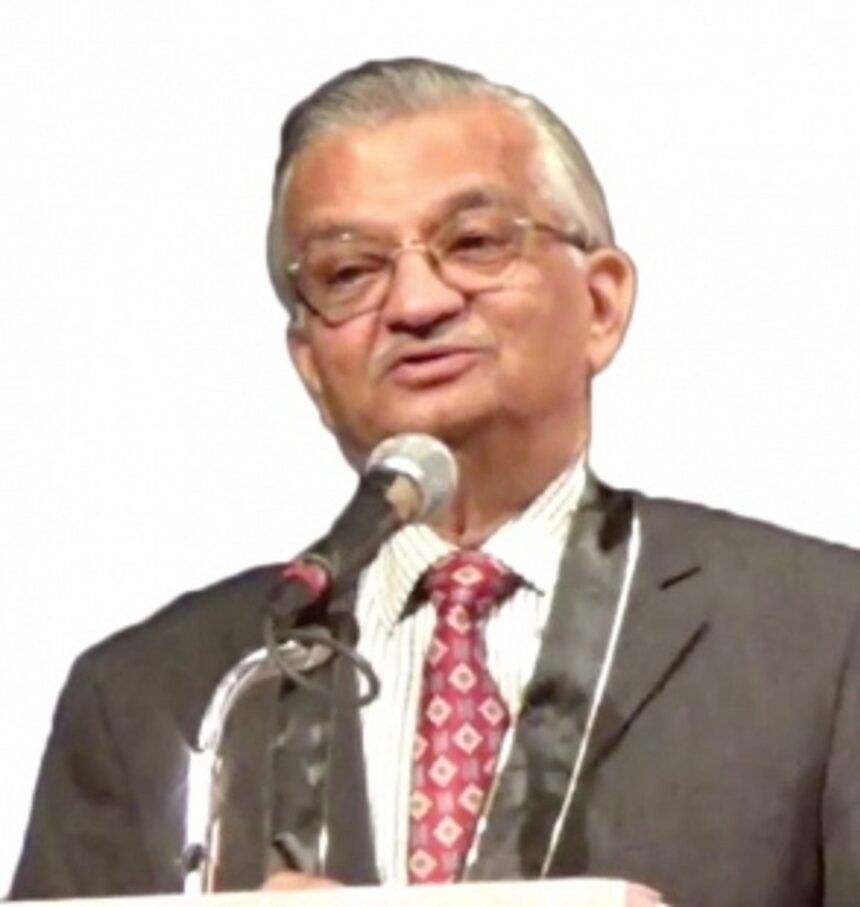
On reimagining and reinventing post-COVID India, Anil Kakodkar believes that, he is actually seeing large number of people, particularly the daily wage workers, wanting to walk back, literally walk, in some cases, a thousand kilometers. So that kind of distress getting caused suddenly, tells us that in terms of the organisation of our society, there are some fault lines. I think we need to address those fault lines. I strongly believe, about a concept called ‘Cillage’, a joint word derived from city and village. Dr APJ Kalam used to talk ‘purab ‘, providing urban amenities in rural areas. That was important. However, I think bringing in knowledge is even more important or critical and this combination of Cillage is where we bridge the divide between the city and village.
Now service sector is impacted most by way of knowledge technologies. Service sector is something that makes a quick impact with instant results just as when IT came in the scene. We saw big economic impact and a lot of people got jobs. Now that it can happen in service sector partly by IT itself and other applications of knowledge in villages, in my mind, a fairly simple thing to do is to make the village youth, both IT literate and IT capable to these newer technologies.
We should look at rural empowerment of that kind which I believe is quickly possible. However, we have to take into account other significant knowledge driven technologies, call it, manufacturing, 3-D printing is one area where again the rural sector can do, or even the value addition to agro-produce where again knowledge can contribute a lot. If I have the money and the choice that you have to set up a university where would you set it up? A normal citing committee will look at infrastructure, look at connectivity, look at jobs for spouses and converge on an urban location but if you ask me, I will converge on a rural location where there is reasonable penetration of education at school or college level and there are opportunities for rural people in terms of the resources.