By ewen murray
Regular reports in the papers over the last couple of years state the disappointment at the decline in overseas tourist numbers to Goa. There is rarely a proper analysis of its causes and what factors are obstructing an improvement.
For some time Goa has concentrated on chasing the Tourist dollar without really appreciating what attracts tourists to Goa. International Tourism is a very fickle business easily swung by fashion, economics, expectation, enjoyment, security and convenience to name a few. Some countries have suffered a dramatic decline in tourism due to obvious natural, political and terrorist calamities. Mercifully Goa has avoided this kind of upset, so why the decline in a globally increasing market?
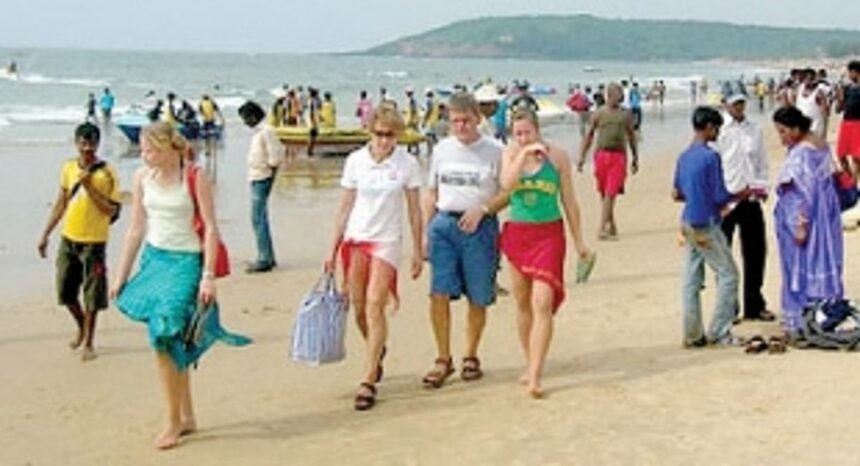
My impression from feedback of numerous people whom one can regard as regular customers of the Goan holiday experience, typify the positive reason they returned to Goa and spread the good word in past years but have changed their sentiments in recent years. Past images of Goa, was of a laid back and welcoming winter retreat with pristine beaches and beautiful nature matched by a friendly vibrant culture and heritage. These may not have totally disappeared but there are numerous factors that could be influencing this decline in European visitors.
Whilst the tourist business was peaking with the combined boom of Russian and Indian tourism several years ago the scene was being set for a decline. There was an assumption that the free spending Russians where going to drive a permanent boom without anticipating that rich Russians want to experience something new and once they had ‘been there and done that’ only the budget market was left. Allowing one to become reliant on a limited customer base leaves one exposed to that nations political and economic frailties. It was evident to repeat customers of other nationalities that prices in all segments of the market became less value for money. Some establishments became unappealing due to selective service and rowdier behaviour of the Russian clientele.
As time passes there is a generational change in the expectations of the tourists.
Ten years ago when the Goa winter season was dominated by 17 direct charter flights a week from the UK alone (now 6), a large segment of the clientele would be happy with basic accommodation if the price was right and the weather nice. Other countries are now able to easily match the price and surpass on the quality. Market forces in Goa have sustained a low quality high price situation because Goa is the only sizeable location in India able to provide the Beach holiday experience to the potentially huge Indian market. It is ironic that it is cheaper for someone in Delhi to holiday in an upmarket resort in Thailand than Goa. One may say the solution is to build more hotels. This is most likely to have a further retrograde effect. Past experience has shown many tourist related developments have been poorly planned, lack proper infrastructure and environmental considerations. More hotels are only likely to further disturb the ambiance of Goa. There is sufficient hotel capacity but most of it needs upgrading to international standards and priced accordingly. Large international tour operators allocate their capacity primarily where the room rates are most competitive.
Widespread litter and fly tipping of refuse has often been mentioned as a poor image maker of Goa. Goans may wonder what is in effect an Indian problem influence a European tourist sentiments. In European countries it is culturally unacceptable and against the law to litter. There is also a widespread awareness of the environmental plight of the planet and recycling has become standard practice. Therefore a view of Goa covered in refuse does not fit with the image they expect of a holiday paradise. Furthermore if someone witnesses the beach shack or guest house they patronise dump their waste in the sand dunes or paddy this creates a sense of guilt through association. Non biodegradable waste processing is a major problem for an increasingly consuming India that will have to be tackled. Goa is a small state and is quite capable of being a trend setter in executing the infrastructure, educational and cultural changes this nation needs. Sadly there seems to be no evidence of a will for change at a political and individual level.
The Goa tourist industry is dependent on the preservation of its beaches and sustainable beach shack business. These are already under ecological stress from rising sea levels. This again requires action. Varca beach is an example of how taking ownership sadly equates to an entitlement to cutting down government planted dune protection trees for firewood, collecting sand for private construction projects and large picnic groups trampling and scattering rubbish in the dunes.
One sizeable group of tourists that have been coming to Goa over many years are the long stay retirees. Many of these tourists came to experience a laid back Goa in retirement and get away from the UK winter. They tend to stay in Homestay accommodation or rent local apartments contributing directly into the local economy. They have an affinity and interest in local affairs which makes their accumulated time in Goa over the years a good witness to the mentioned changes and assessment on the feel good factor. Goans and retirees themselves have commented on a decline in this category. Their generation chose Goa for what it was but there is no guarantee that future generations will continue this choice in retirement.
Not everybody in Goa may agree that tourism has been a positive influence. It has however directly or indirectly contributed to the improved livelihoods of many. If future generations of Goans are to continue benefiting from international tourism a positive political leadership to get it right for the State and a game changing mind set of the population to take responsibility for their own environment is required. Goa has currently many contentious environmental and cultural identity discussions in the public arena. This downturn in the foreign tourist market is likely to remain for some time. This is an ideal time for everyone to reflect, plan and execute change.
Preserving one’s own environmental and cultural heritage it’s not just for foreigners to enjoy.
(The author is UK based, works in the International Tourist Industry and visits the World’s major tourist locations)