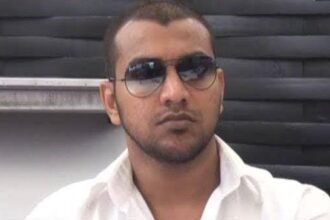
Advocate Rui Ferreira, political activist: The independent candidate contesting from Panjim was very critical about the policies of the BJP government. In his manifesto, he was clear and assertive that he would not associate with the BJP, which grew in stature largely due to his father (Manohar Parrikar). An independent MLA is like rolling dice. He can’t join any party but can give his letter of support. He can rollover any which way, rock, and roll to any side he wishes. This was the doubt in the minds of people of Panjim whether he (Utpal Parrikar) will remain true to his words because he has been supported by the erstwhile members of BJP think-tank who were staunch friends of Parrikar. He was supported by them silently and covertly.
This happened many years ago when Panjim elected an Independent candidate Vishnu Naik (in 1980), who was elected with the support of Congress and then later wanted to bring down the Congress as he wanted to be the Chief Minister. Due to this, he was phased out as the party members did not support his agenda.
Ramakant Khalap, former Union Law Minister and member of the manifesto committee GPCC: Let us accept the fact that any individual has the right to contest elections. If elected, he has the choice to go whichever way he wants. But in every election, every candidate is contesting against the incumbent MLA. To do that, he has to build a very strong case so that the electorates know that he wants to defeat the incumbent MLA.
Now the issue is should he join or not join any political party? Utpal (Parrikar) has already made a statement that he might give issue-based support. But to which party, no one knows. Knowing his history, we know whom he will support. A major point is a lot of churning is going on in our election process. Law says an independent can’t join any other party. But it doesn’t prevent him from supporting the ruling or opposition party. I am looking at greater electoral reforms in this sense.
There can be a candidate who wins with only 25 per cent votes polled in his favour and later on becomes a minister saying he is representing his constituency. But is he really doing that? I think the time has come to find out a solution to this problem. At the moment we are all helpless.
Premanand Mhambrey, BJP spokesperson: Normally many of the candidates contested as Independents because they were denied tickets by their own party. Another thing they will think once getting elected is that they have to satisfy the aspirations of their electorate. Naturally, they would like to aid with the ruling dispensation. This has been the norm for many years. Once they are elected, they have to look at development. The popular notion is one has to ally with the ruling party to have development in the constituency. So, naturally once the poll results come out the Independents would like to latch on with the single largest party.
After the defection by 10 MLAs from Congress to BJP, they were taken to strengthen the party because the existing allies were pressuring. The Congress was literally broken. Then closer to the elections, they have been denied tickets by BJP with the thought that if they win they will come back to the party. Is this a well-thought strategy?
Premanand Mhambrey: Certainly. Knowing that they won’t win on BJP ticket, we gave them the freedom to in some cases choose.
Shouldn’t the parties and independents go to the public and make it clear about their agenda so that people know where their vote is going?
Rui Ferreira: Certainly. BJP became the ruling party by claiming they had the majority when actually they didn’t have the majority. The government did not invite the single largest party to form a government.
Premanand Mhambrey: The Congress did not approach the governor to stake a claim for forming a government for two days after the poll results were declared. They did not have a CM face. We stitched a coalition to form the government and had a leader.
Ramakant Khalap: Supreme Court in the SR Bomai case has clearly stated that the single largest party has to be invited to form the government. Once the election results are declared the governor knows which party has won how many seats. So, the governor is the constitutional head of the State and has to invite the single largest party.
Rui Ferreira: The leader is elected by the MLAs. But that happens subsequently. I don’t understand why was the hurry to invite BJP to form the government. Today if a similar situation repeats itself, I would expect the governor to call the single largest party to form the government. That would sustain democracy and give a positive message to the electorate.
After the polling was done Independent candidates who are prospective MLAs like Laxmikant Parsekar and Utpal Parrikar have said they won’t support BJP. But some of a couple of minority community Independent candidates from South Goa have not categorically said they won’t support the BJP as they are likely to win on anti-incumbency wave. Where is the ethics?
Ramakant Khalap: Talking about ethics, which political party has a strong ideological base? If you look at Congress and BJP, one talks about secularism, other talks about Hindutva. When you ask BJP what is Hindutva, they say it is secularism. It is an all-encompassing mantra for them. Congress will say secularism involves Hindus also and other communities. Ultimately both are saying the same thing packaged in different words. There is no clear ideology unlike in the past. This allows the Independents to shift their allegiance to different parties. Those who get elected, do they have any ideology? No. They just look at their self-interest, what benefit would the candidate give to the electorate, and start thinking about what they will do in the future? Jobs have become so important in Goa, anybody who can convince voters of providing jobs with certainty or any benefit in kind, move towards that candidate.
The second is Goa’s demography. Over the years, we have lot of influx from outside. The original Goans had some ideology. But now the ideological part is gone. Today everything is mixed up. Those people who have come from outside, what is at stake for them? For them the stake is wherever they are living, if they are occupying Comunidade land nobody should remove them from there. If they are living in illegal houses, none should break it. If they are running a business – legally or illegally – nobody should touch them. So they will vote for those who support them. Their representative will do whatever can serve their purpose. The voter does not have any ideology.
If you look at Salcete in particular, most minority candidates went to the people on the anti-incumbency factor. What do you make of Independent candidates from these seats actually saying after elections our workers and people will decide? What do you think about these candidates refusing to say clearly they won’t support the ruling party?
Rui Ferreira: Electoral politics is nothing but a game of numbers post-elections. It is who has the bigger numbers to form the government. Though the Representation of People’s Act recognises national parties like the Congress and BJP, if any of them gets more numbers it is the duty of the governor to call that party to form the government. Curtorim is a completely Catholic-dominated constituency which is why the voters have always gone for secular candidates. Earlier it was the UGP. Then Congress has been the rock of Curtorim. So the Independent candidates like Reginaldo who first felt uncomfortable in Congress and went to TMC, then there also he felt uncomfortable and became an independent. Is the mask of any party not comfortable with minority voters? There is fear and paranoia. This time there is more paranoia due to the incidents occurring from December onwards. The BJP is more paranoid and there is no doubt that it is a Right-wing party. Candidates like Reginaldo have masked themselves. Naturally, if he is not comfortable with these parties, he will go to the ruling party, which is against his vote bank.
In Bicholim Chandrakant Shetye’s leanings towards BJP is well known. Filipe Neri Rodrigues is a NCP candidate from Velim. But he does not clearly tell whom will he support if he gets elected and puts the onus on the party. Since he was in the BJP is it fair to assume that he will support BJP?
Premanand Mhambrey: If there is a need for Independents to form a government, we will welcome them. Even if we get a majority on our own and somebody wants to support us to strengthen the government, we welcome such support also. The question of the idealistic situation that we are talking about is out of the question in today’s politics. But I have seen a couple of MLAs who have stuck to the traditional role of a legislator whose priority was to take up issues of people, work towards forming better laws, and not get into other things. But unfortunately, they could not get re-elected. You can’t expect the Independent candidate to become idealistic and say that he won’t shift. My personal opinion is they can’t go to the electorate with the idealistic stand. Ultimately it is politics.
If Congress finds itself near to forming the government, will it also rope in Independents?
Rui Ferreira: Why not? Finally, the government has to be formed from the elected lot. One can’t remain idealistic. I feel in this election, electoral bonds are an important area regarding expenditure during the course of elections. Presently a lot of wounded soldiers are funded by the party’s old guard who was associated with Manohar Parrikar, including the Panjim candidate. I saw he was privately funded by them. It is time to look within. For the people and the workers of a candidate, it does not matter which way he goes. They just want to be part of a ruling party candidate.
Ramakant Khalap: There is nothing like morality in politics now amongst the political parties. Where are the socialists? Where are the Leftists? Where are the parties which spoke about handing over the land to the tiller? Leave alone the country. Look at the entire world. Does anyone want to read Leo Tolstoy’s theories on landholding? Even in Goa, in the earlier days, we were legislating. We legislated upon land reforms. We gave protection to the Mundkars. What hurts me is that, although I am not in the Assembly for the last 20 years, I have been speaking about issues from outside. Today the MLAs, irrespective of the party, don’t implement the laws which are in the statute book, forget about bringing new laws. Nobody talks about issues like updating land records. It is a total mess today. Today old landlords and tenants are hand-in-hand to dispose of those properties. We talk about maintaining Goa, making it a really great State but all political parties and their candidates are not interested in these issues.
I was the chairman of the manifesto committee for Congress. This time I included all these issues in our promises. I want to see whether if they come to power tomorrow whether they will stick to the promises. I will ask the same question to BJP if they come to power.
The smaller parties will have numbers that won’t be big enough for anti-defection law to get applied. Any large party looking at poaching or attracting MLAs from outside, not just Independents, even smaller parties can become potential defectors by skirting anti-defection law. How do you look at this situation?
Ramakant Khalap: I have been harping on changes required in anti-defection law. Law says that two-thirds of the legislators of a political party decide to merge into another party, the anti-defection law won’t be applicable on them. But that has to be decided by the courts, Speaker. The petition is filed but remains unattended till the elections are over.
Rui Ferreira: This time the smaller parties and Independents are going to play a key role. The campaigning was so intense in a small State like Goa. The public is still smarting under the defection by Congress MLAs and hence seem undecided, on the other hand, there is a strong anti-incumbency factor that has hit the BJP badly. So, there is a space for Independents and smaller parties to call the shots. We are heading for hung Assembly.
Premanand Mhambrey: Our internal survey says we are going to have a majority. We still maintain that we will get 22+ seats. Even after that, we welcome anybody’s support to form the government because most of them have been in our party.
CONCLUSION: Life in Goa was a lot simpler earlier. Earlier a school teacher or a doctor or a learned man used to be approached to be the people’s representative. Those days are gone and its culture is under threat, Gaonkari system has become a thing of the past, Comunidade system is completely gone and a lot of our community bonding is gone. These are a result of the tumbling down of our system. When we lament all this, we should also lament that our political system also is one of the systems that is going along the traditional community system. The sad part is irrespective of who wins, politics has become a mirage. You don’t know whom you are voting for, you don’t know what you are going to get.