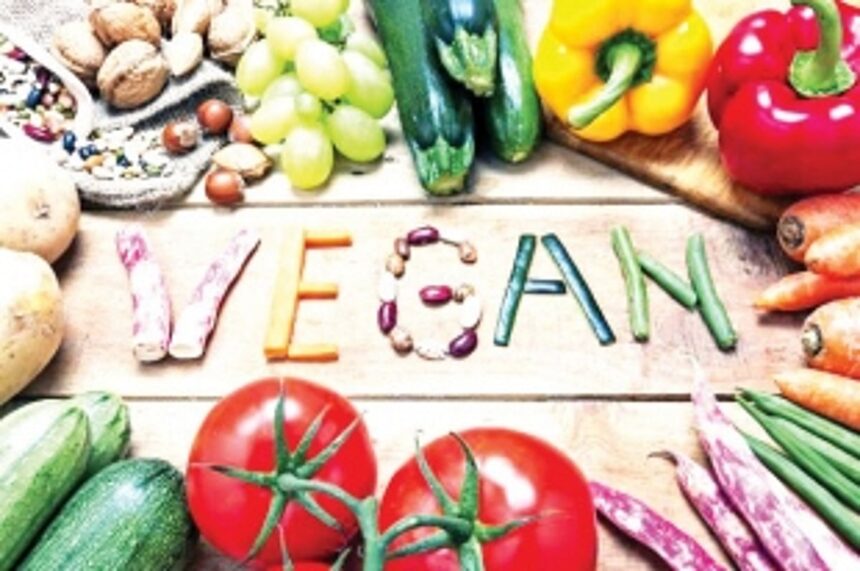
A foreigner recently told me of her shift to veganism and her keenness to visit India to gorge on the smorgasbord of vegan Indian food. For a minute I was taken aback because I had never considered Indian food to be vegan or Indian’s to be vegans.
There are vegetarians and non-vegetarians, but vegans never.
It is not only our sweets that dispel the idea of veganism but also dairy products -everything from milk to yoghurt and ghee – in our daily diet that suggests Indian cuisine is far from vegan.
Diet Choices and the environment
Having said that, people across the world, are turning vegetarian and vegan. The population of vegans and vegetarians is growing across the world. The Chinese government is encouraging Chinese to reduce their meat consumption by 50 %. In the Portugal, vegetarianism rose by 400% in the last decade. There has been a 600% increase in the number of people identifying themselves as vegans in the last 3 years in the US.
According to the Vegan Society, ‘Demand for meat-free food increased by 987% in 2017 and going vegan was predicted to be the biggest food trend in 2018.’ The reasons given are health, treatment of animals and concern for the environment.
Undoubtedly there is sufficient cause for concern when it comes to health and treatment of animals, but the ‘good for the environment’ argument may not hold much water.
In India the definition of vegetarianism is amorphous – some vegetarians eat eggs, others don’t eat meat on particular days of the week, there are a number of permutations and combinations. A survey conducted in 2016 found that 71% of the Indian population is non-vegetarians.
The animal and poultry industries are major pollutants – animal dung pollutes water sources and cattle flatulence is a major source of methane – a climate change causing gas. Further, swathes of forests – Amazon, for example- are destroyed to produce animal feed or to extend cattle ranches.
That being said, veganism and vegetarianism would only help if the agricultural industry went totally organic. Unfortunately this is not the case as yet. Chemicals are still a major input. As per market research ‘ The global value market for pesticides stood at $58.46 billion in 2015 and is expected to register growth at a CAGR of 5.79% between 2015 and 2020. ’ Two major causes for this increase are the decrease in arable land and increasing population.
Take the case of India. According to government of India, pesticide consumption in 2010-11 was 55540 million tonnes it grew to 57000 million tonnes for the period 2016-17. Not all states submitted pesticide use statistics. And we are not even talking about fertilisers and other chemical inputs. As per a research paper in the Agricultural Economics and Research Review the growth rate in domestic pesticide consumption varies over time, fluctuating weather is a major cause of this variation. But, the paper
Of Veganism and Vegetarianism adds ‘The pesticide market in India is expected to grow at 12-13 per cent per annum to reach $6.8 billion (2017) of which the domestic demand growth may be at the rate of 8-9 per cent and export demand at 15-16 per cent’.
According to The India Pesticides Industry Analysis, the CAGR (compound annual growth rate) is 14.7 per cent making the predicted size of market at`2,29,800 million by 2018.’
It must be clarified here that this pesticide use is for cash and food crops. As per the above mentioned paper ‘Cotton and paddy are the major crops where pesticides consumption is 50 per cent and 18 per cent, respectively.’ Fruits and vegetables are also major consumers of pesticides. Be that as it may, according to research by CARE Ratings, the country’s pesticides consumption is one of the lowest in the world – just 0.6 Kg per hectare. Unfortunately, agricultural run-off still pollutes water bodies.
Soya for humans or cattle
A major source of proteins for vegans is soya. It is predicted that the global soy protein market is going to reach USD $5,888.4 million in the next 5 years. A major reason for this growth is the demand from veganism.
It is interesting that vegans and cattle are now sharing a common meal – soya. Large swathes of the Amazon are being destroyed to grow soya, environmentalists argue that cattle (therefore non-vegetarians) are the major reason for this destruction. This is true to a large extent.
Would the issue still remain when vegans finally replace the cattle industry as the major consumer of soya or are the only consumer of this crop?
What about privilege, our food habits are in the midst of a perfect storm. There is a slow realisation that animals are sentient beings and therefore should not be ill-treated. At the same time the link between our dietary habits and environmental impacts can no longer be ignored. In the midst of this one forgets two important aspects, nutrition and culture.
The debate on veganism/vegetarianism vs non-vegetarianism has to include
nutritional security. I remember walking the lanes of Nizammuddin in Delhi. They are dotted with tiny restaurants whose business model is based on poverty and generosity of the rich. Clusters of beggars sit around these restaurants waiting for a benefactor to give money to the owner to feed a certain number of people. A few years ago this cost Rs 10/- per person and it included a meat dish and huge rotis. Therefore does a halo of privilege surround veganism and vegetarianism? A packet of soya milk or almond milk would buy many liters of regular milk. Buying tofu and nutritional supplements is something that only a very few can afford. One is not going
to go into the cultural and castiest history that surrounds vegetarianism in India. The issue is not only of food choices but also about agricultural methods,Of Veganism and Vegetarianism consumption and wastage. According to UNDP, 40% of food produced in India is wasted. As per FAO statistics 1/3rd or 1.3 billion tonnes of food produced globally are
wasted. This is an economic, nutritional and human developmental loss.
There is a growing market for free range and cruelty free meat products, but these can’t be mass produced, thereby making it expensive. Nor are organic vegetables cheap. There is no easy solution here and there is much food for thought. As we ruminate about what our next meal should consist of, we can act to reduce wastage and consumption.