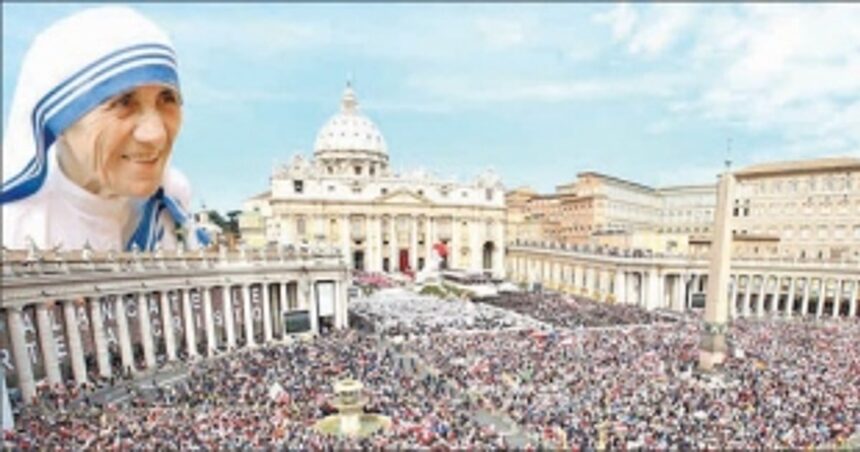
For many of the poor and destitute whom Mother Teresa served, the tiny nun was a living saint. Many at the Vatican would agree, but the Catholic Church nevertheless has a gruelling process to make it official, involving volumes of historical research, the hunt for miracles and teams of experts to weigh the evidence. Here’s a look at the process:
Making saints
The process to find a new saint usually begins in the diocese where he or she lived or died; in Mother Teresa’s case, Kolkata.
A postulator essentially the cheerleader spearheading the project gathers testimony and documentation and presents the case to the Vatican’s Congregation for the Causes of Saints. If the congregation’s experts agree the candidate lived a virtuous life, the case is forwarded to the pope, who signs a decree attesting to the candidate’s “heroic virtues”.
If the postulator finds someone was healed after praying for the candidate’s intercession, and if the cure cannot be medically explained, the case is presented to the congregation as the possible miracle needed for beatification, the first major hurdle in the saint-making process.
Panels of doctors, theologians, bishops and cardinals must certify that the cure was instantaneous, complete and lasting and was due to the intercession of the saintly candidate. If convinced, the congregation sends the case to the pope, who signs a decree saying the candidate can be beatified.
A second miracle is needed for the person to be declared a saint.
Reforming the process
Pope Francis has raised eyebrows with some rule-breaking beatifications and canonisations, waiving the need for miracles and canonising more people in a single clip more than 800 15th century martyrs than John Paul did in his 26-year pontificate (482).
Pope Francis has also imposed new financial accountability standards on the multimillion-dollar machine after uncovering gross abuses that were subsequently revealed in two books. The books estimated the average cost for each beatification at around $550,000, with much of the proceeds going to a few lucky people with contracts to do the time-consuming investigations into the candidates’ lives.
St. Teresa?
Why is Mother Teresa a saint? And why is she the icon for Pope Francis’ Holy Year of Mercy? For her admirers, it’s obvious.
“Mother is known throughout the whole world for her works of mercy, recognised by Christians and non-Christians alike,” said Sister Mary Prema Pierick, the current superior-general of Mother Teresa’s Missionaries of Charity order. “Reflecting about Mother and the life of our mother, we see all the works of mercy corporal and spiritual put into action.”
“She crossed all barriers like castes, races, gender, ethnic, religious, cultural and turned into and remained the mother of the whole civilisation,” he said. “In the history of sainthood and that of Christianity, she is the first saint of Hindus, Buddhists, Muslims, non-religious and of course for Christians.”
AP