Panjim has been unscientifically developed to cater to the economic development of the society. A healthy environment is basic to a healthy life and as solid waste management is one amongst the many issues that are adversely affecting Panjim, and needs to be addressed on priority basis.
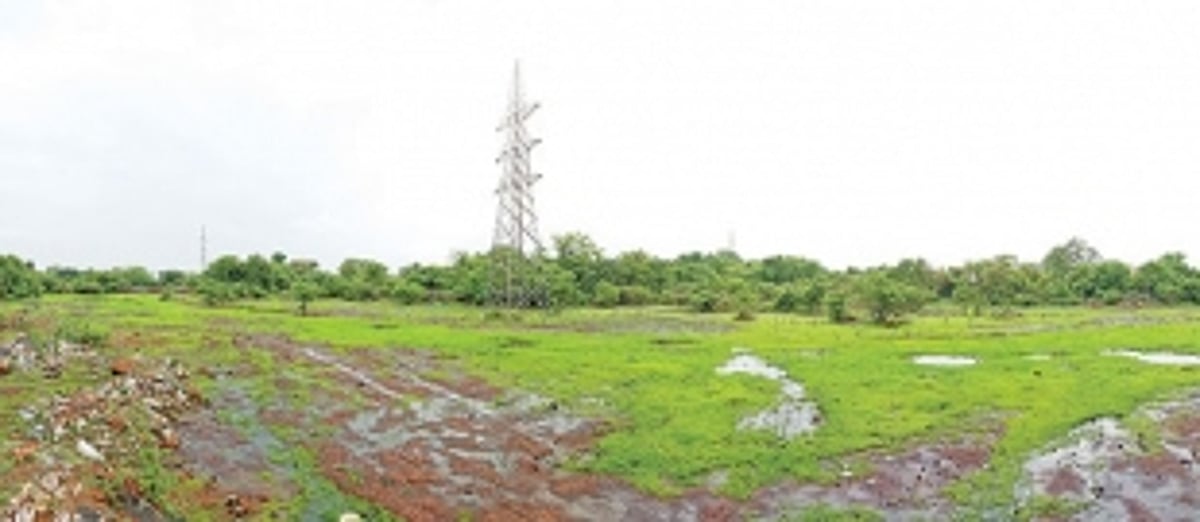
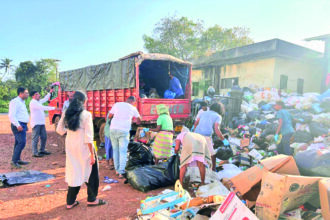
As Panjim suffocated under garbage woes, the city garbage got dumped at various sites: around Old Goa, on the Kadamba plateau, at Merces in the low lying marshy areas and Curca. The Panjimites also ignored the haphazard dumping of garbage at sites like the Campal parade ground, at Tonca, near the sewage treatment plant, the entire Patto Plaza, which was a mangrove area and the Taleigao plateau, close to Goa University. Even the Ourem creek and the St. Inez creek are the victims of garbage dumping; thus converting the entire marshy land and estuarine water bodies into garbage dumps.
Meanwhile, as dumping garbage was unscientific, the CCP decided to set up a scientific Common Solid Waste Management Plant at Bainguinim. Interestingly, the present site for SWM site was identified in 2006 and thereafter sanctioned the requisite finance to acquire the 1,70,000sq.m of the land. Once the procedure was completed and the payments made, in 2009, it was mandatory for the TCP dept to have sealed the boundaries and should have marked 500 meters further on from the site as the buffer zone. The records show that CCP wrote to the TCP and the panchayat surrounding the site not to allow construction around the site earmarked as the site for garbage treatment. We were lucky to have received sanction of funds for a world class scientifically operated SWM facility, by the Jawaharlal-Nehru National Urban Renewal Mission (JNNURM). The subsidiary of Tetra Tech of USA, the project proponents along with the JNNURM subcommittee under late Manohar Parrikar approved the garbage treatment facility in 2010 and requested the CCP to build a boundary wall and also plant trees around the boundaries and into the No Development Buffer Zone as mandated by Central Pollution Control Board.
But the TCP ministry and the Old Goa panchayat strangely thereafter started giving licenses to mega building projects, in the vicinity of the garbage management site and into the designated buffer zone. The politicians and bureaucrat’s nexus thus delayed the setting up the plant. The guilty who sabotaged the project need to be identified and punished.
During the period of the project finalization I was both a consultant for the CCP as well as a Member of the sub-committee of JNNURM. The main Steering Committee under (former) CM Digambar Kamat and (former) Minister Joaquim Alemao approved the Tetra Tech USA proposal of SWM in which garbage was to be segregated into the non-recyclables like plastics which was then to be converted into Refuge Derived Fuels; the green woody wastes and leaves of shrubs was to be converted into green fuel and the house hold wastes, and kitchen wastes from restaurants were marked to be converted into bio-fertilizers, compost and soil amendment additives; by the world class “Windrow System of treatment”. Unlike what we see at the Saligao SWM facility, the bio-fertiliser generated at Bainguinim was to be analyzed and tested by field trials, as Tetra Tech garbage plant had earmarked space for laboratory set up, and field trials for growing in house vegetables and horticultural crops on the compost generated in the plant at Bainguinim.
The windrow technology is not a capital intensive project and the total cost of plant, machinery, laboratories only was about Rs60 crores. The entire amount was to be borne by the UPA central govt with CCP having to pay absolutely nothing. But then the Digambar Kamat govt fell in 2012 and Manohar Parrikar shelved almost all the then sanctioned projects under JNNURM including the SWM facility at Bainguinim. Today a Rs 400 crore for garbage treatment is a capital intensive facility at Saligao, which in reality a “White Elephant” with Goans having to pay about Rs 14 lakhs for each day the plant works, and the load of the expenditure is being borne by the tax payer.
In the meantime, on the Kamdamba plateau around the SWM plant, mega builders from across India started purchasing huge tracts of land close to the site the garbage plant was to come, between 2012 to date. The mega housing complexes, with high rise buildings started coming up rapidly converting the Kadamba plateau into an urban settlement zone from a desolate location meant for SWM only.
The High Court of Bombay, Goa bench had already given a go ahead signal but the lazy residents of Panjim, did nothing to needle the establishment for the much needed Bainguinim treatment facility for the Panjimites. Sadly Panjimites are sitting on a garbage bomb and abetting in the destruction of Panjim. If the plant to treat garbage is deemed unsuitable by those opposing the plant no other place better than Bainguinim would ever be identified leaving Goa unto utter mismanagement and decay, as the entire territory of Goa today is urbanized or sold to the devils that be.
We Panjimites need to wake up and learn from those now neo residents of Kadamba plateau, as how to fight in self-interest. Sadly, Panjimites only cry for themselves and not for holistic and sustainable development of Panjim and the surrounding villages of Santa Cruz, Taleigao, Merces, Curca and Agassiam.
(The writer is a retired University Professor)