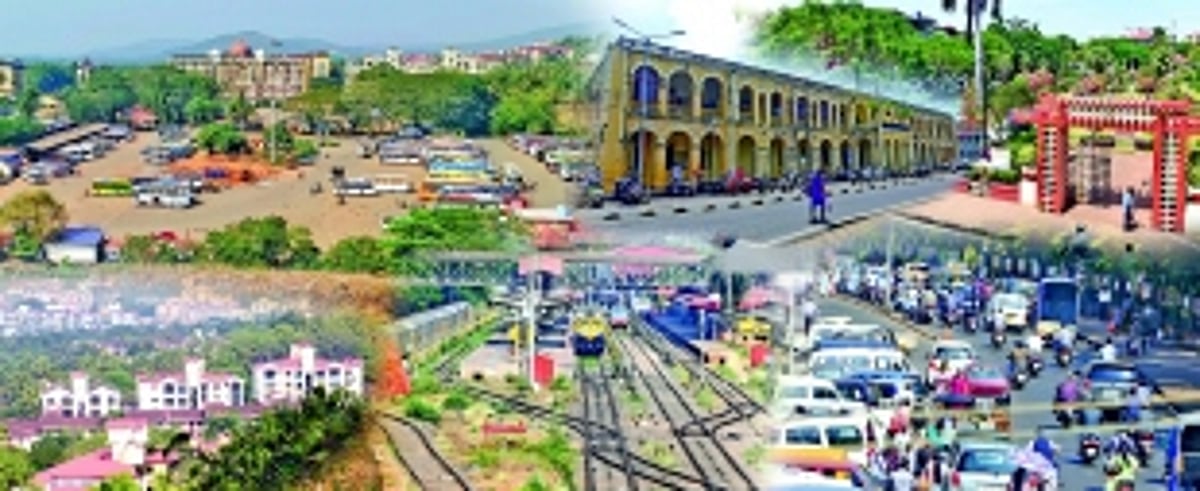
Among the ideas put forth in the draft Master Plan 2041 for Margao are an integrated public transport system, revitalising River Sal with a buffer, promoting agro tourism and heritage tourism, generating new economic activity, energising the municipal garden area, and creating a pedestrian-friendly town centre, in addition to commercial space exploitation.
The Goa State Urban Development Agency’s (GSUDA) consultant that has made the plan informed the Margao Municipal Council (MMC), that it is estimated that implementing the five to six projects included in the proposal might cost the exchequer Rs 120 crore. It was suggested that projects can be undertaken by the government in stages, contingent on funding availability.
The plan proposes to introduce a bio-diversity park in Borda, serving as both a sponge park and city park. Along NH66, the government plans a Sal Riverfront pilot, redefining the Goa State Urban Development Agency (GSUDA) plot along the Sal River with promenades and pavilions. A new economic district in the south of Margao is also on the horizon.
The plan outlines strategies for regenerating the Holy Spirit Church Area through infrastructure for pedestrians and streetscape design. Tackling issues from traffic to commercial development plots, the draft Master Plan strives to revitalise Margao. The proposal spans the entire city, from Fatorda in the north to the MMC garden and markets in the centre, down to the south earmarked for economic development.
In addition to designating the Holy Spirit Church as a heritage area to be explored on foot, the draft plan also proposes to activate the municipal garden area, develop a museum for South Goa, revitalise the MMC market area, and bring in pedestrian-friendly streets.
Fatorda, Margao Centre, and Margao South are the three zones into which the city has been divided in the draft plan.
The concept has redesigned NH-66 as civic commercial corridors in Zone 1, Fatorda, with the KTC bus terminal serving as its anchor. It is suggested that the Margao-Ponda highway passing through MMC’s jurisdiction serve as a ‘cultural and recreational spine’. This stretch begins at the Old Market clock tower circle and connects the Fatorda-based Ravindra Bhavan, Sports Complex, and Stadium. Moreover, new, smaller economic nodes are suggested along the Margao bypass road.
Storm water drainage is proposed using an integrated green-blue network that respects the natural hydrology to allow storm water drainage without flooding the surrounding areas. This is combined with a system of planned open spaces located across Fatorda that are connected by pedestrian networks and accessible from any area within a five-minute stroll.
Resurgent farming, agro tourism, parks, public areas, walking and cycling trails, and other riverbank recreational activities are all part of the plan to revitalise the Sal River.
The proposal in Zone 2 Margao Centre calls for opening up of the Margao Municipal Garden and Aga Khan Park to the adjoining street; converting the administrative building of Salcete Comunidade to be converted into a museum for South Goa; and the plaza adjoining the building to be connected to the market street, which will be converted into a pedestrian-friendly street.
According to the draft, the intermodal transit gateway at the Margao railway station would serve as the anchor for the proposed Margao South Zone, a new economic hub connected to the rest of the town by the transit loop.
A hierarchical roadway network was envisioned in the concept, resulting in blocks with a variety of land uses, including mixed-use, commercial, residential, and industrial.