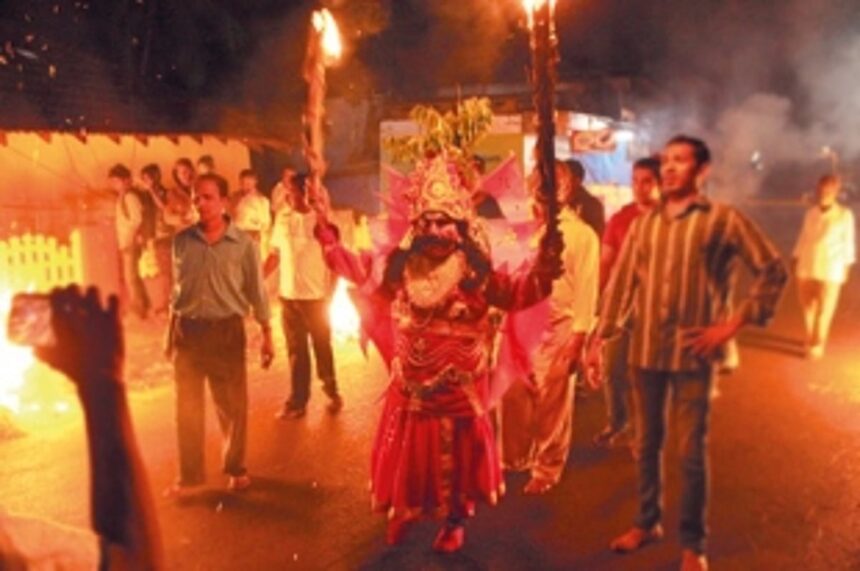
Veerabhadra is a ritual dance performance that happens in Goa in different places on different occasions. However, what is unique to the town of Varkhande in Ponda is that it is performed on the concluding day of the weeklong Dhalo festival in which women from the village dance and sing through moonlit nights for seven days. On the final day of Dhalo, a designated person from the village sheds his identity and transforms into Veerabhadra.
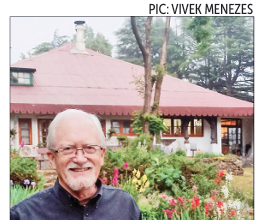
Until last year, 75 year-old Anand Naik, fondly known as Bhau, had been transforming himself as an embodiment of Veerabhadra for the past 38 years. However, due to the unfortunate demise of his son last year and due to ailing health, Bhau will be passing on the baton to Ankush Naik who will continue the tradition of becoming Veerabhadra from now on. What is interesting is that the person exacting Veerabhadra is supposed to maintain a strictly vegetarian diet for the first six days and observe fast on the
seventh day. A cautious Ankush Naik has
already begun following the necessary
prerequisites.
When Veerabhadra enters and starts
dancing, the chudtis, which are made
from tying together dry coconut
leaves and set afire from one tip,
are handed to Veerabhadra. Heaps
of hay/dry grass are kept on either
side of the road. Veerabhadra
dances and moves towards them
and sets fire to this heap of dry grass
till his way to the Maand or the sacred
space. Once he enters the Maand, the
chudtis are taken away and two swords
are handed to Veerabhadra and the dance
finally culminates after almost a dozen
rounds of dancing.
Once transformed into Veerabhadra,
in most cases, the person slips into a state
of trance and starts dancing violently.
As such, there is a high possibility of him
falling on his back because of the heavy
costume but the elders of the village see
this as bad omen. According to the elders,
Veerabhadra should not be allowed to fall
on his back, failing which there is a high
possibility of him going out of control. To
ensure that this does not happen, there are
two-three people holding Veerabhadra
at the back; they then rock him back and
forth to the beats of traditional musical
instruments.