At any given
weekend in Goa, there is a
‘Retro’ theme party and even in the ongoing Carnival celebrations, you can hear
and see Goans dancing to the golden classics.
Given how music of a time gone by is still popular in Goa, Savio
de Noronha, Channel Head at AIR FM Rainbow, Goa, had a dream, to revive and
restore the music, interviews, talks, chats and other recordings that
captivated the older generation.

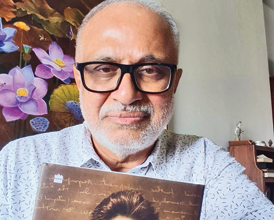
Savio, who has been associated with AIR Panjim studio since
1989, put together a strong team that has been on a musical odyssey for the
last three years. In their endeavour to preserve, digitise old tracks,
interviews, concerts, radio plays and other formats, they had to sift through
the age old Vinyl LP (long play) records and magnetic tapes that ruled the
airwaves in the ‘60s and ‘70s and the CDs that followed.
This meant delving into its rich inventory, during which, the
enormity of the project at hand, the annals of history and the impact Radio in
Goa has had came to light.
While All India Radio’s FM Rainbow has entered its silver
jubilee year, broadcasting in Goa has been around from 1946 although the medium
of radio made its debut in the country in 1927 in Mumbai.
Before Goa’s liberation, there was an initiative taken up by
amateur radio operators that led to formation of a radio station, called
Emissora – de- Goa in 1946. Less than a month after liberation, Radio Goa was
taken over by the Government of India, and re-christened as All India Radio.
On January, 24, 1994, the state was among only 5 cities in the
entire country that saw FM stereo services being launched in Mumbai, Chennai,
Kolkata, Delhi and Goa. For a larger part of the last two and half decades, FM
Rainbow has been a major source of entertainment and news for Goans across the
state.
Looking at the records and the magnificent Panjim Radio studio
station, one truly gets a sense of déjà vu ; the walls of the buildings are
adorned with black and white photographs and the studios still have that old
world charm and wonder.
“It has been a fascinating project and each record in whatever
format has a story to tell. For instance, some of the Konkani records are spelt
as Concanim,” says Savio, his face lighting up as he walks around the large
library.
He points to the LP and is excited with the prospect of playing
these old 1960 Vinyl records. “Many people are still nostalgic when it comes to
the sound of LPs,” he says, while demonstrating how the sound of ‘Country
Roads’ on an LP is different from a CD. Over the course of time, technology has
galloped, bringing with it a sea change at the historic radio station in
Panjim.
“Prasar Bharati
(India’s Public Service Broadcaster) was keen to digitise the treasures of the
past,” adds Savio while talking about how this project got started.
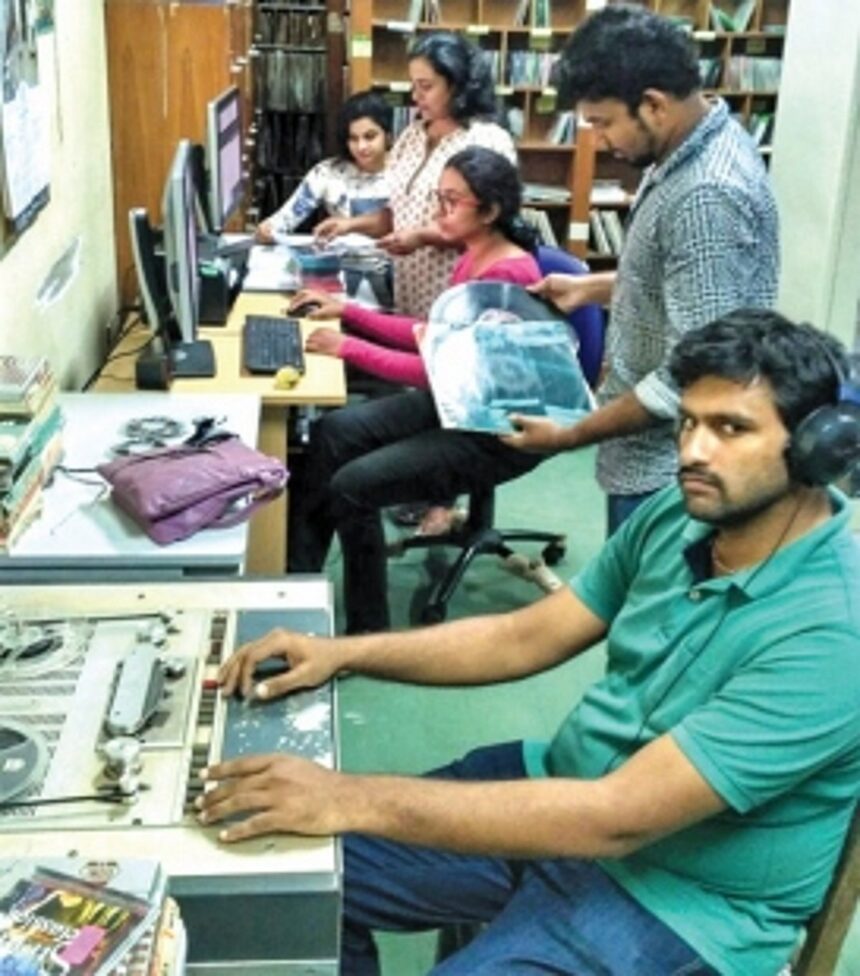
Having a strong
personal interest to take this project up, Savio was ably assisted by an
interesting team that consisted of retired employees and the present younger
lot (age group stretching from 17 to 70!). The two generations were tasked with
retrieving of tapes and transferring the same in its new digital form.
“You have to remember
that this was outside their normal routine and it was a part-time assignment at
best. What united this team was that common passion to save something for the
future and the love for music and desire to learn about the past,” adds Savio,
who is a walking encyclopaedia when it comes to all things radio.
Athos Fernandes,
Pratima Shirodkar, Madhav Borkar and Bambino Dias were roped in as Domain
Experts familiar with the old records. More importantly Rajendra Naik and Suhas
Chari revived or resurrected the old machines such as ‘Meltron’. The current
assignees consisting of Zulema Pereira, Priyanka Holi, Amey Joshi , Cher
Fernandes, Runa Agarwal, Prashila Simepurushkar, Aditya Sakhalkar, Leena Naik,
Aquila Fernandes and Avidh Morajkar, carried out a whole range of activities
such as digitising, creating meta-data and storing the tapes back to original
position in the library.
“There is music of
all genres and all languages including the Konkani Classics, recordings of top
artistes ( that they themselves don’t have) and interviews with celebrities and
top musicians of the country and other recordings such as that of Pope John
Paul II’s Mass in Goa, among other important events,” adds Savio.
It even has music
from international countries as diverse as Peru and Czechoslovakia (as it was
then).
About 15 years ago,
Savio and RJ Bambino had conceptualised the highly successful ‘Nite of the
Fortnight’, which paved the way to Rainbow Hour that showcased original Goan
music by Goan artistes and incidentally earned its place in the Limca Book of
Records (2006) for being the first-ever live-cum-radio concert broadcast on
radio.
Now,
Savio, Bambino and the rest of the team at FM Rainbow, with its appealing new
social media avatar ( courtesy Lourdes Soares), are paying their tributes to an
era that the next generation will have a chance to know about, thanks to their
efforts.