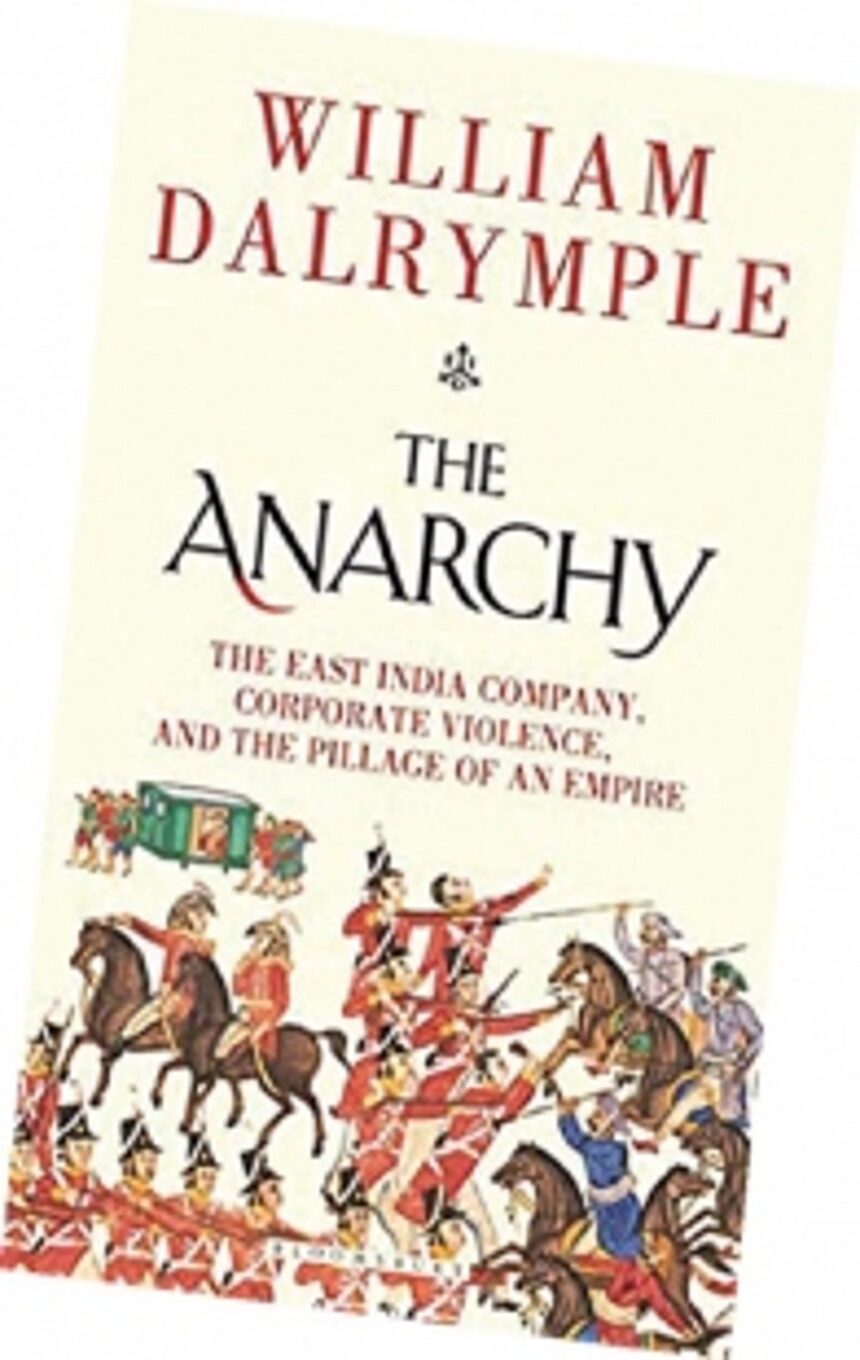
It was sometime in August in the year 1608 when the first English man made his appearance on
Indian shores. Captain William Hawkins dropped anchor off Surat. A different
time in the history of India and a time when large parts of the country were
ruled by the Mughal empire.
India was an industrial powerhouse, the
world’s leader in manufactured textiles. As William Dalrymple points out early
on in “Anarchy” this excellent book, the English language gained much from this
visit. Over the next couple of centuries as the English took over the
administration and basically ruled the place, words like pyjamas and the word
loot made their presence felt. Loot is exactly what they did in the country
during their stay in India. Within 200 years of Hawkins’s arrival, the Mughal
emperor had become an effective vassal, not of the British crown but of a
private for-profit corporation based in London, the East India Company (EIC).
Having done remarkable research in various libraries of London and
India,Dalrymple tells how this happened. This is an account of the first true
multinational company taking over the fortunes of a country.

William Dalrymple made his name with a
series of entertaining travel books before switching to histories that have
recounted British engagement with south Asia. This is a book that plainly
states facts. And yes, there is violence. Blood flows freely as families fought
and paid heavy prices. He writes of the presence of the Dutch, the French and
the Portuguese as they tried to enhance their land and wealth holdings. The
East India company did not shy away from violence. Successful sieges are
followed by systematic looting – that word again – usually accompanied by
chaotic rape and murder of civilians by East India Company troops. Another form
of violence was the extraction of vast quantities of gems, jewellery and gold,
much of which found its way into private collections in Britain and, of course,
into the crown jewels. Then there was the destruction of thriving industries,
the impoverishment of millions, and famines caused by the economic disruption
resulting from the activities of the company and exacerbated by its officials.
Characters, students of history are familiar with make their
appearance in the book. There is the blunt, unsophisticated and depressive
Clive of India; a series of dissolute, incompetent princes; Shah Alam whom we
follow from unlucky prince to blind emperor; principled administrators traduced
by their enemies; generals betrayed by their mercenary soldiers and, behind it
all, the directors of the EIC itself. The description of the headquarters is
pretty detailed. The Leadenhall headquarters, with its discreet frontage and it
was pretty obvious they preferred to keep it discreet in London and be very
ostentatious in India, the place where they made all their money. A useful
point, which could perhaps have been further emphasised, was how often those on
the ground in India, deeply committed to the expansion of the company’s domains
as well as filling their own pockets, acted contrary to instructions from
London, where shareholders remained leery of overcommitment. Dalrymple’s
interest in the network of Indian bankers who provided credit at key moments to
the company, provides a new and important view of a factor underpinning its
success.
Any one reading this book will be struck by the obvious fact
that history does repeat itself regularly. Hungry bankers ignored instructions
for years and pushed most of the world into the financial crisis of 2008. It is
obvious to se when the problems with over-mighty and unregulated corporations
started.
Importantly
the book makes its point to point out to readers of the game’s politicians
played and how corporates used them to their benefit. It is also an account of
the East India Company as it has never been told before and provides a portrait
of the devastating results from the abuse of corporate power. A must read ,
highly recommended without a doubt.