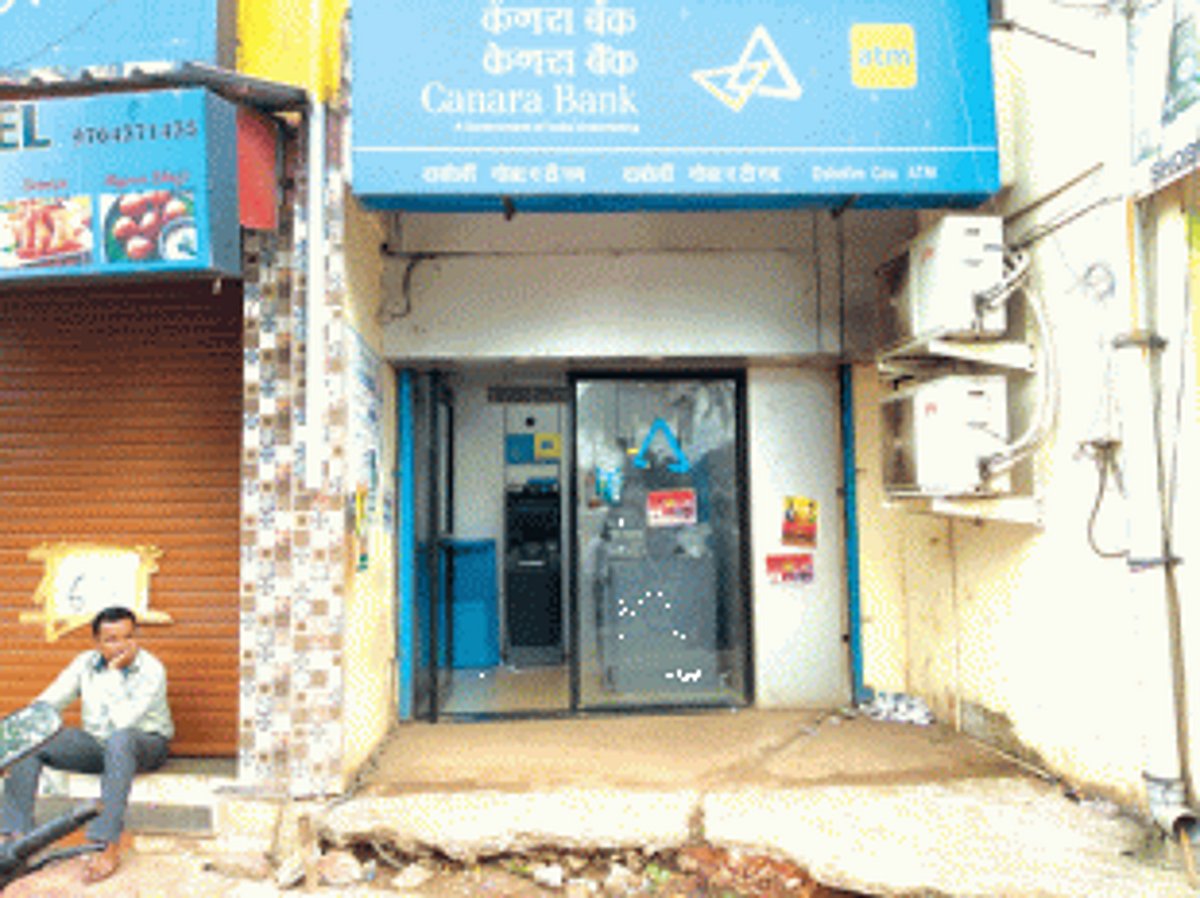
Every stride of world digitalization is also fraught with risks and perils. It is therefore pertinent for banks and financial institutions to undertake adequate security measures, specially at ATMs so that customers do not lose their hard-earn money.
Banks and financial institution also needs to ensure that threats to customers of ATMs from schemsters are diminished by ensuring that all safety measures are taken.
Sadly, certain banks and financial institutions are yet to take this issue seriously and are taking the issue casually. It is observed that despite Goa police advisory several ATMs in Vasco, Dabolim and other parts of Mormugao may well be vulnerable, as before, leaving customers scared and worried.
“I have literarily stopped using ATMs for any transaction as I lost Rs 1.40 lakh due to fraudulent withdrawals of money from my current account on March 6. All withdrawals were made through ATMs located in different parts of Delhi. Currently I am scared to use ATMs and use other payment methods,” Bharat Sail, a businessman from Vasco, said, adding that banks had assured him refund after completing insurance formalities.
Many others who have lost their money or have heard about such fraud from their friends and family are scared and avoid using the ATMs in Mormugao taluka, perhaps because they feel ATMs are still vulnerable.
“Fraudsters target ATMs which do not have security and install a card reader on the ATMs real card slot. It is very difficult for common man to know whether fraudsters have installed devises or not. As many ATMs in Mormugao do not have security guards at the ATMs I don’t think my money would be secured if I use the ATM,” another businessman Avdoot Naik said.
Herald investigation revealed that over 80 per cent of the ATMs in Mormugao were still unmanned like before, as banks and financial institutions have failed to deploy security guards to man the ATMs being run by them round-the-clock. This has left Vasco police upset as over 97 complaints on fraudulent withdrawals of money from their accounts were reported at Vasco police station from January to March this year, with people losing as much as Rs 12 lakh due to fraudulent withdrawals.
Though Goa police named three Romanians for the ATM fraud cases reported at different parts of State, even after their arrest police stations continued to receive complaints on fraudulent withdrawals.
This compelled Goa police to issue an advisory to all banks. One such advisory was issued on April 5 this year by the south Goa SP Arvind Gawas, who suggested that banks should implement security measures at all ATMs.
As per the advisory, banks were asked to depute responsible personnel to check the ATM machine twice a day and to check if the blinking lights is hidden at the card slot and should also check if any Spy cameras are placed anywhere, especially above the keypads of the ATM machine.
He also advised that the private agency to which the ATM operations are outsourced by banks should pay attention to the ATM machine, while loading the cash and to ensure that no cloning devise added to the debit/credit card reader.
Gawas had also advised banks to post security guards round-the-clock with fire alarm/hand torch etc. Also, a register should be kept in the ATMs for police on beat patrolling the area to sign. Other suggestions such as CCTV cameras, installation of cloning proof ATM machines etc were also advised.
Ironically, on the ground things have not changed, leaving not only bank customers but even police upset.
“As regards to ATM fraud cases, we had advised banks to adopt certain precautions like monitoring the ATM’s round the clock and they should keep a security guard at there. We even conducted sessions with bank officials sensitising them the need of taking precautions in view of modern technology and gadgets. It is people’s hard-earned money and banks needs to put in certain things in order. However, nothing has been done in this regard by banks or else till now they would have deployed security guards at the ATMs,” Vasco Police Inspector Nolasco Raposo said.