This is where the ocean meets the sky with
the most enchanting sunset, looking on as a mesmerised bystander. This is where
even nature stops to look at itself in the mirror and reassure itself that that
there can be no competing pretenders. As the sea looked at the sky, as the soft
rays of the drooping sun caressed them, off the shores of Anjuna, another cycle
of day and night was completed. From the ocean, the lights of the shore, the
shacks, little dwellings and other restaurants came on as another evening
commenced.
The narrow labyrinths of Anjuna were coming
alive. At the edge of the cliff and the roads beyond, soft sounds of the flute
were heard from some the guest houses. At a bakery, fresh bread was being
baked. Different voices, languages and accents and songs were heard in the
waddos and in their lanes.

Most homes are rented out to long returning
guests from the west- many of whom have been coming for over twenty years. Weather
beaten and older they return, in different stages of their lives. Some without
earlier partners and spouses, and some with new ones and still others who have
been together and now arrive with their grown up children and grandchildren.
The only relationship that remains permanent is with Goa. and built into this
relationship are the ones with those who run shacks, guest houses and hotels.
This is relationship tourism- if a phrase needs to be coined at all, for the
benefit of number crunchers and those in departments, who put figures to
tourism. Anjuna’s relationship tourism is all about people who have known each
other over time and come back to meet their families here. And honestly, past
the lines and rows of empty restaurants, silent cold bars and empty streets, it
is in these narrow lanes of Anjuna where families come back, their
nationalities just a footnote, their presence not counted as tourist arrivals,
and their experience in Goa, that of home.
It is here that your understand that the
relationship between the locals of Goa and the early visitors is an endless
journey which takes a course that does not flow through the government office,
an international travel mart or a road show. They are not products of a smart
outsourced campaign, they are not consumers of branded lines like “kenna fast,
kenna slow”. They are people who return
for those sunsets.
And over the years some places reach an
iconic status as a home for such folks. These places do not make it to the list
of “100 best places to see before I die”. They are just simple go to places
where you take your shoes off and lie back in a
lovely state of eternal nothingness. This is a story of one such place.
Sadguru Puroshottam Naik, was a lifeguard
at Vagator, many years ago. He doubled up as a tea stall owner who then started
what was called “Guru Canteen” near the cliff edge in Anjuna close to the UV
Bar. Today his family runs Guru Bar, a nightclub and a restaurant, a dream
fulfilled and a journey well travelled by Naik, who knew in the sixties, this
is what he wanted to do, as he made new friends who kept returning each year.
Naik, from a family of farmers left his farm to cultivate friendships. In the
village and the area, he was simply known as ‘Guru’. At his “canteen” and then
his restaurant, people spent nights, this being one of the very few places that
offered hot food. People brought their own instruments and if they fell sleepy,
Guru offered them mattresses. When the sun rose, the guest of the previous
night became a dear friend. The canteen is now the “Guru Bar”.
In the morning Guru served bean bhaji and vegetable cheese toast
everyday. His sons serve the same even today. The grandson of a police man who
served in the Portuguese police force, Guru helped many young people set up
business there.
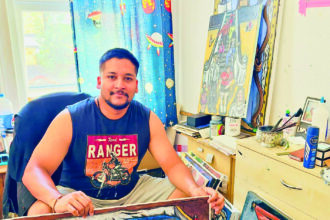
His sons, Swapnil Naik and Satyavan Naik
have carried on the tradition splendidly, doing the same things their father
did, making people feel at home. The music is played the whole day but gets
into a rhythm of its own as the sun sets. Guru Bar looks into the wide ocean with the most beautiful views of
the ocean anywhere in Goa. And then it
takes on a rhythm of its own. Last weekend musicians from Bangladesh, Assam and
Bengal, let themselves free on the little elevated stage, singing folk songs in
Bengali. Two girls from Europe were in a complete trance (and I can assure you
that the only substance they were on, was music). An almost seven foot man from
Croatia joined in, trying to match and copy the words of the song, whose
language did not come in anyone’s way or rhythm. Another day of ‘relationship
tourism’.
And in the corner, Swapnil watched, perhaps
telling his father “ Guru, the sixties never end”.