| Diana Fernandes
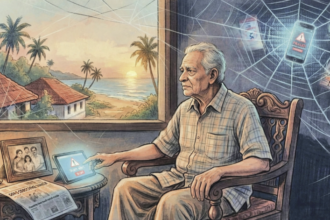
It’s commonly referred to as temporary messaging or social media and Snapchat is the best example. In the age of Twitter, Facebook and Whatsapp, Snapchat with its self-destruct mode quickly turned into the choice of messaging for many the world over. And rightly so! NSA spying and the more recent Sony Hacks only highlights the need for a technology user to protect his ideas, conversations and opinions.
Stanford graduates Evan Speigel and Bobby Murphy came up with the idea of Snapchat after New York Congressman Anthony Weiner accidentally made racy photos of himself public on Twitter, forcing him to resign later. What the app allows for is its users to take photos or short videos for a recipient deciding how long they will be made visible to the receiver.
In 10 seconds or less, the images disappear forever. One major flaw however is an image meant to vanish can be saved with the ability of the receiver to use the screen capture feature to take a picture of the message before it disappears.
The company’s policy adds, “cannot guarantee that the message data will be deleted in every case.” Several other companies have since created their own versions of the app, posing as competition to Snapchat.
Wickr, another free app for iOS and Android allows for users to have an expiration date so messages can’t be viewed after a certain time, or the ability to chat with a group of users. An added feature allows users to sketch, add graffiti and clip art style stickers to images. Critics point to Wickr as a simpler version of Snapchat saying “at least you’re not going to accidentally broadcast a personal message to the world instead of one person”
Other apps including Burn Note and Confide, both for the iOS and Android platforms are simpler than Snapchat and Wickr. The apps never fully reveal all the contents of a message on the screen at once.
Reading a message requires users to slide their finger over it to see a snippet at a time while the rest of the message is covered. This way, reading a message is easy but taking a screen shot becomes difficult.
With Burn Note, once a message is opened, a countdown begins, after which the message deletes itself from the recipient’s phone and the company’s servers. Makers of the app say, “This level of security makes it more intimate than reading a traditional text or email.”
Confide on the other had works on an encryption system. Messages sent to any phone number or email address gets encrypted so that only the sender and recipient see what’s being shared.
In addition to apps, companies are now investing in self-destruct devices as well. Recently announced, Blackberry and Boeing have joined hands in developing a high- security Android based smart phone.
The Canadian mobile technology company, BlackBerry and Chicago based aerospace and defence contractor, Boeing will be developing The Boeing Black phone that can self-destruct if tampered with. The device will be able to encrypt calls and is aimed at government agencies and others that look to secure data communication. Revealing only the essentials, BlackBerry CEO John Chen said, “We’re pleased to announce that Boeing is collaborating with BlackBerry to provide a secure mobile solution for Android devices utilizing our BES 12 platform. That, by the way, is all they allow me to say.”
The BES 12 plattform also called the BlackBerry Enterprise Service allows clients to manage and secure BlackBerry devices as well as Android and iOS.
The device will come with a dual SIM card feature allowing access to multiple cell networks configuring with biometric sensors and satellites. It will also come with a unique tamper- proof covering that will erase data if it is disassembled. Though its release was due in 2012, the first word of the device was only announced this year. BlackBerry also plans to partner with Samsung to integrate the BES 12 platform with their Knox security solution.
Review Bureau