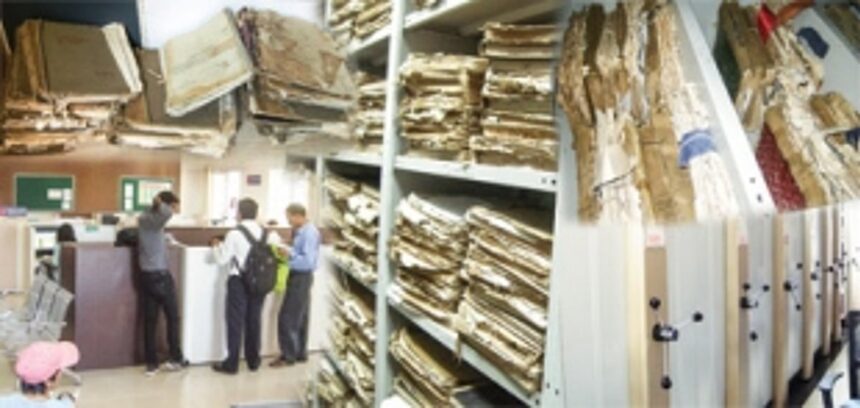
Everything appears spick and span as one enters the Office of the Salcete Sub-Registrar cum Civil Registrar in the South Goa District Collectorate on any given day. When the Salcete Sub Registrar’s office was shifted from the Osia Commercial Complex over a year ago, officials had left behind the old and corroded cupboards in the old office. Reason: The new office had the innovative compactors in place to house the precious and priceless records with a provision to take care of documents for over a decade. Open the compactors and do not be surprised to find mutilated births, deaths and marriage records stacked inside, indicating the government’s failure to find a solution to the problem.
Indeed, births and marriage records pertaining to the period from 1965-1971 are in bad shape, with the documents either lying in a mutilated State or missing.
It’s not uncommon to come across umpteen complaints on missing records and documents, with officials attributing the situation to the mutilated records. That citizens are forced to knock on the doors of the courts to obtain birth certificates is literally the order of the day in Salcete. Those fortunate enough to have one’s old birth or marriage certificate may escape the ordeal of knocking the doors of the courts or authorities just to get a registered copy of the documents.
Salcete Sub-Registrar Suraj Vernekar admits that the situation is bad in respect of births and marriages pertaining to the period form 1965-1971. “This has been the state of the documents even before I assumed charge of the Salcete office. The government has to come out with a permanent solution to the problem. But, as a temporary measure, we do issue certificates based on the old certificates issued by the office.”
Vernekar said the office has put a temporary mechanism in place in respect of missing or mutilated marriage documents.
“If the applicants manage to submit get a marriage teor from the concerned Church which had solemnised the marriage, we do not hesitate to issue the marriage certificate based on these documents,” he said.
Ironically, while the innovative compactors in the Sub-Registrar’s office have ample space to house records for the next 10 years, the authorities seem to have run out of ideas to protect and preserve the priceless old records.
Promises made by successive governments to find a permanent solution to the problem have remained only on paper.
Even laws enacted to overcome the problem have been confined to the dusty record books of the administration. Promises to re-construct the documents or copying the documents or micro filming or computerisation have only remained as promises for reasons best known to the authorities.