Rajendra P Kerkar
n June 6, 1998 in association with Swami Vivekanand Smruti Sangh and Peaceful Society of Madkai, a State level seminar was held where in the hydrological, geological, botanical, ecological aspects of River Mandovi were discussed thoroughly. At this seminar, it was decided to establish the Mhadei Bachao Abhiyan, a non-governmental organisation aimed at the protection and conservation of the River Mhadei. Earlier in July 1997, I along with Dr Nandkumar Kamat established Goa River Conservation Network. GORICON was formed for the protection of the unique ecological and cultural heritage of Goa’s eleven river basins and the sustainable economic activities dependent upon them and their life-support systems.
In September 1997, a visit to the sites of proposed areas of the Mhadei damming and diversion projects was organised by me, under the initiative of Nirmala Sawant. In October 1997, with Sawant as the president and Adv Amrut Kansar, Krishnarao Rane and Venkatesh Desai as the vice presidents and Prof Prakash Paryekar, Prof Prajal Sakhardande, Prof Prakash Vazrikar, Mahesh Gaonkar, Hanumant Parab, Rupesh Samant, Nandkumar Bhagat, R.B Phadte, Vasudev Parab and Sadguru Patil as the members and I as the general secretary the Mhadei Bachao Abhiyan was formed. On behalf of GORICON, on September 3, 1998, I submitted a memorandum along with the resolution passed unanimously by all village Panchayats from Sattari opposing any move of damming and diversion of the Mhadei and its tributaries to the State government’s expert panel appointed for making a master plan for the Mandovi river basin under the chairmanship of V R Deuskar. From March 12 to 14, 1998 as the secretary of MBA, I along with Paryekar and Gopinath Gawas took part in the first National River Conference held at Tatanagar, Jharkhand, then a part of Bihar. In this conference, I presented a paper on the rivers of Goa and their status.
Along with Lt Gen (Retd) S C Sardeshpande, Shrihari Kugaji, Gangadhar Kallur from Karnataka, Durgesh Kasbekar, Vishvesh Madhavan and other from Maharashtra we started a movement for the protection of 700 sq km of the forests of the Mhadei region forming part of Goa and border regions of Maharashtra and Karnataka. On June 29, 2000 Michele Perrault, vice-president of International Affairs of Sierra Club from San Francisco wrote to the president of World Bank not to finance the controversial water development project planned by Karnataka in the Mhadei valley. Accordingly, World Bank refused to provide the finance for the damming and diversion projects of Karnataka in the Mhadei region aiming at 457 MW of hydroelectricity with three different power houses and more than a dozen of dams for diverting the tributaries of Mhadei into the Malaprabha and the Kali Rivers for the irrigation purposes. However, Karnataka established Karnataka Neeravari Nigam Ltd and started the work of Kalasa Project in Kankumbi on October 2, 2006.
When I realised that the Mhadei Water Dispute Tribunal was constituted and my State government was in a tight corner, I submitted a letter to then the Environment Minister Aleixo Sequeira that Karnataka’s proposed Kalasa dam site is just 231.27 mts away from the Mhadei Wildlife Sanctuary and on going work of the Kalasa project in Kankumbi is at 3.17 km from the sanctuary’s boundary. This gave a new dimension to the Mhadei issue. Earlier, I had filed an affidavit with the Centrally Empowered Committee constituted by the Supreme Court bringing to notice illegalities committed by Karnataka Neeravari Nigam Ltd in Kankumbi. Along with Sawant, and Kamat and other members, I have been continuously involved in the movement of saving my lifeline the river Mhadei known throughout Goa as the Mandovi.
I am also involved in providing necessary photographs and other evidence to the team of Goa government officials representing the State in the Mhadei matter before the MWDT. Our MBA filed a petition before the Supreme Court and in August 2017 before the bench of Justice Madam Lokur and Justice Deepak Mishra, Karnataka’s Senior Counsel Fali Wariman assured that no further work of the Kalasa project would be taken at Kankumbi. The court disposed off the petition, allowing MBA to approach again, if the Kalsa work was resumed by Karnataka.
As these inter-basin water diversion projects of Karnataka and Maharashtra will have devastating effects on people’s livelihoods and endangered natural resources. I am involved persistently in the initiatives of awareness drives in Goa, Maharashtra and Karnataka, meeting the politicians, environmentalists and other concerned groups and individuals. When Dr Rajendra Singh, the Waterman of India supported the farmers movement of North Karnataka of diverting water of the Mhadei’s tributaries into the Malaprabha basin, I personally met him at Kankavali, Maharashtra and provided detailed information on the issue which helped him to understand the realistic side of the Mhadei problem. On August 15, 2017 on his invitation, I in Vijayapur of Karnataka presented my arguments in the matter before the people assembled from various parts of Karnataka and also from India.
I strongly feel that if the diversion scheme of Karnataka is given effect to, it would result in changing the hydraulic characteristics of Mhadei River, reduction in flow of water in the river thereby disturbing the delicate balance required for sustenance and growth of habitat in the region. The water flow/moisture content presently available in the said region will be considerably reduced, varied or changed and this would severally and irreparably affect the flora and fauna in the region.
The State of Goa is almost entirely dependent upon this river and its basin for its drinking water needs, navigation, tourism, fishing, etc. The wellbeing, sustenance and even the basic existence of the inhabitants of Goa is dependent upon this river and the river basin.
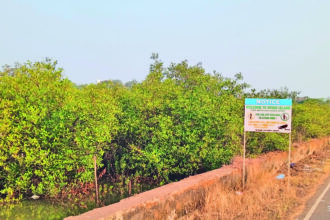
Reduction in fresh water flow in the Mhadei River as a result of abstraction of water from the river, whether for trans basin or inter basin diversion or for within the basin use by Karnataka and Maharashtra will have devastating and detrimental effect on the Goa’s entire eco-system unique mangroves, agriculture and fisheries.
At Nerse village where Singer, Pat and Bandhura three main tributaries join together, Karnataka has proposed an earthen dam for which 244 ha of forest land will be submerged due to the reservoir and the diversion channel also will involve the non-forest use of 16 ha of forest land. As per the observations made by the DCF, Karnataka the proposed dam site of Bhandura is located among the most luxurious and scenic moist, deciduous and semi evergreen patches of forest frequented by wildlife. The Bhandura nalla is one of the perennial streams which joins the Mhadei at Kongla and then enter Goa via Gavali- Krishnapur at Bondir along with the Panshira of Mendil. Near Dhave- Uste, the Kalasa stream which joins the Mhadei. At Dhave -Uste, Sonal on the banks of Mhadei locals stiIl practice the traditional silt based cultivation called ‘puran sheti’ which is believed to give three times more yield than other types of agriculture.
Karnataka has a proposal of building Kalasa dam at Kambar Ves on the Chorla ghat – Belgaum road near Kankumbi which 231.27 mts away from the Mhadei wildlife sanctuary. Kalsa dam has the height of 32.6 m and length of 340 m. Another dam is planned on the Haltara nalla at Chorla which has the height of 33.6 m and length of 200 m. From the Haltara, water will be brought to Kalsa reservoir through the open cut channel of 1180 m Iength and from the Kalasa water will be taken to Malprabha by excavating open cut tunnel of 2550 m and channel of 1740 m. A total 178.43 ha of reserved forest in Kankumbi, 14.58 ha of reserved forest in Parwad and 64.73 ha in Koda is proposed for diversion. It is therefore clear that forestland is an integral part of these projects and is required not only for the construction of the dam and the resultant submergence area but also for the diversion channels.
The Mhadei Water Dispute Tribunal in its verdict has allocated 3.9 tmc of the Kalasa and Bhandura water into the Malprabha River for outside basin use. Though it appears negligible one should not forget that this water flows in the Mhadei Wildlife Sanctuary. Also Karnataka has been allocated 8.02 tmc of water of Kotni for Hydroelectricity generation in the ecologically sensitive area. 1.72 tmc of water is allocated to Karnataka for within basin use. Maharashtra has been given share of 1.33 tmc for within basin use. All these diversions if get materialises it will have serious ecological implications on Goa and that is why I believe that the struggle for the protection and conservation for the river Mhadei is the need of the hour which we have to continue.
The writer is an environmentalist and has fought the battle to save the Mhadei