The recently concluded
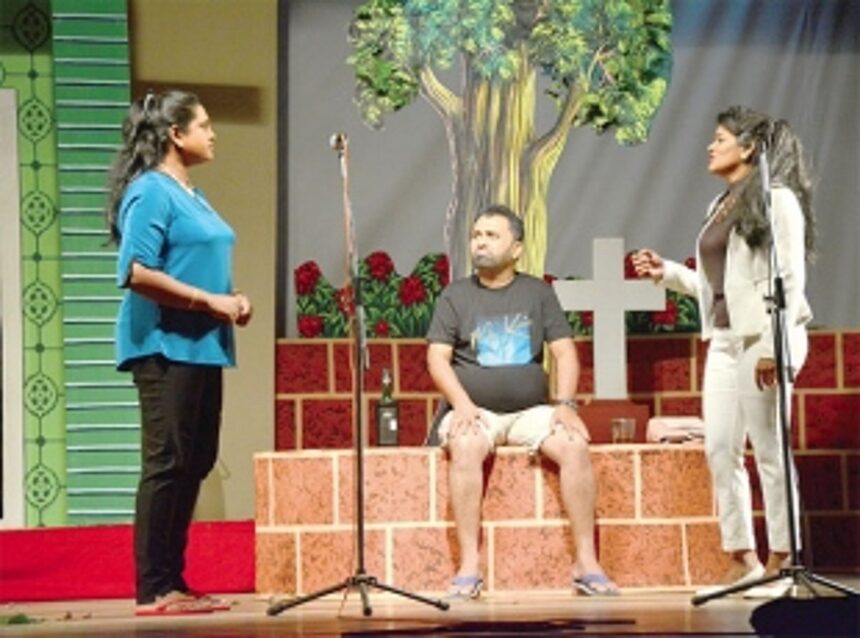
Kala Academy (KA)’s 7th Tiatr ‘B’ Group Competition 2021-22 had seven social,
cultural troupes participating and showcasing multiple talents on stage. Four
groups hailed from North Goa, while the remaining three troupes were from the
South.
After the entire presentation concluded at Ravindra Bhavan,
Margao, the judges gave their verdict, thus declaring the first three winners,
including several individual prizes. Among the four judges, one was responsible
for only assessing the script of the plays and lyrics of the songs, considering
the literary value.

This year, as before, with the amateurs and raw talent on stage,
there were a handful of tiatrists from the commercial field participating in
the competition. And the sight of those few artistes was an eyesore as they
were depriving new talent from coming and shining on the tiatr stage, a
platform which the Kala Academy always provides to the amateurs willing to
perform and excel on the Konkani stage.
Earlier, a clause existed in the set of rules laid down for
those troupes participating in the competition that only amateurs will find
entry in the contest and involvement of commercial artistes will not be
entertained. But later that clause was withdrawn, paving way for commercial
artistes to find an easy entry in the competition and win prizes.
Making an overall
assessment of the competition, one of the judges said that as per the rules
laid down for the competition, “in some tiatrs comedy was not linked to the
main plot or it was not interspersed in the tiatr. Consequently, it was not
entitled to winning a prize.” “Before the commencement of the tiatr
competition,” the judge suggested, “the participating troupes, especially the
directors need to be briefed about the norms of the competition, so that they
don’t lose after a good presentation.”
“In one or two
tiatrs,” he continued, “as per the script handed over to the KA authorities,
there was no presentation on stage. And as per the rules, excluding only one,
rest all other tiatrs did not abide by the rules.” He grieved that despite of
one of the directors being a judge for the said competition earlier, he was
found violating the rules.
Evaluating the tiatrs
staged at the competition, another judge said that in some tiatrs unnecessary
characters and scenes were found introduced on the stage. He criticized the KA
authorities for accepting Marathi dramas in the tiatr competition and welcoming
them on the tiatr stage.
“When the government
is giving funds for preservation of tiatrs, then why the rules should be
violated by the troupes?,” the judge inquired. “Likewise,” he said, “khell
tiatrs cannot be brought and mixed in tiatr and rules framed by the governing
body should be strictly followed.”
“Rules are not
followed, which are actually framed by the tiatrists themselves,” the judge
commented. “One Marathi drama was not considered for competition as it violated
rules 16, 17 and 35,” he said specifically, “as it did not come in the tiatr
format. Tomorrow many will come with ‘nattaks’ on the tiatr stage. In that
case, where will the tiatrs stand in the near future?”
Another judge noted
that apart from comedy not related to the story, there was vulgarity in it
which was not acceptable. While appreciating the good concept introduced in the
first prize winning tiatr, the judge said that some tiatrs fell short of
winning a prize as the subject was a common one or the direction was poor.
“Songs in the form of
duo, duets, trio and quartet were not interactive by nature,” the judge noted,
“instead all the above came under the category of choral songs.” “Being not
well versed with the songs,” some utilized the mobile on stage for their
convenience, which was absolutely wrong,” he grieved.
Appreciating the
overall performances on stage, one of the judges said that many new artistes
were seen on stage, which is a good sign for the growth of tiatr. “There were
also many new singers on stage, showcasing their singing abilities,” he said.
He mentioned that
prizes for child artistes (in acting and singing) are there, but this year
there were no child artistes in acting. “Child artistes should be encouraged in
both categories so that they win prizes allotted for them,” he opined.
Pinpointing the
follies, the judge said there were violations of main rules in most of the
tiatrs. “Comedy should be linked in the main plot,” he insisted, “some tiatrs
had no comedy and the comedy introduced was not linked to the main story. There
has been an attempt of ‘khell tiatrs’ being introduced in tiatrs.”
“Excluding one or two
tiatrs,” the judge said, ‘there was no stress laid on the direction.”
“Excluding one tiatr, rest of the tiatrs had common subjects. Even if the
subject was common,” he said, “there was scope for it to be presented in a
different way.”
Excluding one or two,
the judge bluntly said that the rest of the tiatr scripts for the competition
were not up to the mark and there was need to introspect at which level they
should be. “In one tiatr, can you imagine most of the characters involved
totally in alcoholism? So what was the director trying to project to the
audience? In the same tiatr, the dialogues were found repeated in first and
following scenes,” he observed minutely, “and the plot failed to develop or
rise at different level in every scene.”
Regarding the songs
and music, the judge said that originality needs to be presented in the
competition, but there were songs picked up from the audio albums, without any
changes in them. “Excluding solos and chorals, there is a clause where rest of
the songs has to be interactive, but it was not seen on stage. There is also a
rule in the tiatr competition that personal criticism, including vulgarity in
songs should be avoided, but the directors did not take note of it. And
excluding two or three bands, rest of the musicians from other troupes was a
sheer flop show.”
“The rules laid down
for the tiatr competition need to change,” insisted another judge, “as merely
inserting songs and ‘cantos’ in a drama will not justify it as a tiatr on the
Konkani stage. “And KA in collaboration with Tiatr Academy of Goa (TAG) holding
seminars and workshops for amateurs regarding composing of songs and its
formats is the need of the hour,” he added.
Not
as a tiatr director, but as a tiatr lover, Irineu Gonsalves from Nagao, Verna
said that the stage sets of some tiatrs were very good. Some were not very
impressive. “The concluding tiatr had a superb script as it carried totally a
different subject and we need to give to the tiatr audience something unique
and different. Themes of the songs were very good, apart from voices included
in some songs,” he said.