For whom the highway tolls
It sounds good. In fact, it’s music to the ears. The only question is, is there any substance to the talk? Chief Minister Digambar Kamat announced on Tuesday that two and three wheelers would be exempt from paying toll when the widening of National Highway (NH) 17 and NH4A is taken up by the National Highways Authority of India (NHAI).
The CM’s good news came after the Legislative Assembly’s sub-committee meeting. According to Mr Kamat, the committee has recommended that four wheelers registered in Goa should also be exempted from paying toll. It would be nice, if the NHAI could afford it.
The thing is that both highway widening projects are being executed by the Public-Private Partnership (PPP) route. This means private parties will be asked to bid for the highway. They will have to pay for building the road, and recover the costs – partly – from collecting toll for a fixed number of years.
The operative word here is ‘partly’. That is because it is close to impossible to collect enough money from toll to fund a big highway or bridge project, unless the toll is fixed at unreasonably high levels, which will meet with strong opposition from vehicle owners.
To get around this, the NHAI and the central government offer what is called ‘viability gap funding’, which means the centre will meet the expenses incurred that cannot be recovered by the toll. Usually, in bidding for such projects, the company that asks for the least viability gasp funding grabs the contract.
But if the company is asked to exempt X, Y or Z class of vehicles from paying toll, it will upset the entire viability calculation, and the PPP contractor will have to ask for agreater amount in viability funding. In the case of both NH17 and NH4A, the PPP tender for the highways have already been awarded. What happens to the viability calculations of the infrastructure companies that have taken up the projects?
Unless the centre is willing to cough up a much larger amount than it originally envisaged, all such recommendations for exempting more and more classes of vehicles from toll will remain fond hopes that float only till they dash on the hard rock of rerality and sink. So whether it is the demand of the BJP and the National Highways Diversion Action Committee (NHDAC) that the toll be scrapped for Goans as it would be an additional burden or PWD Minister Churchill Alemao’s recommendation that booths be at every 40km instead of every 20 km, or Chief Minister Digambar Kamat’s fond hope that four wheelers registered in Goa be exempted from toll, each of these proposals will have to pass the litmus teast of viability before they can even be considered for implementation. All party delegations going to New Delhi may not necessarily succeed in their bid to impress upon the Union Minister for Road Transport and Highways Kamal Nath.
It is best, under the circumstances, that the state government makes such pronouncements only after its recommendations find favour with the authorities in New Delhi, and do not take the people for a ride with some rosy announcements that sound good, but may never see the reality.
Weather bother
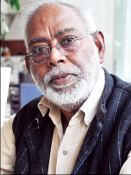
Goa’s weather has been extremely variable, with a prolonged monsoon. One of the world’s leading experts on climate change has warned that the state is deeply vulnerable to climate change, mostly sea level rise. An eminent climate scientist whose organisation, the Inter-governmental Panel on Climate Change (IPCC) has won a Nobel Prize, R K Pachauri delivered the keynote address at the fourth Vasudeva V Sinai Dempo memorial lecture on ‘Restoring respect for nature in economic development’. We hope the government was listening.