AUGUSTO RODRIGUES
ASSAGAO: After a buzz, there is a burr. Restaurants in Assagao that serviced high-end clients from India are seeing bad times with some restaurants closing; and some cutting costs.

Assagao, once a village famous for the nightlife offered by restaurants along the Mapusa – Anjuna road, is seeing many restaurants closing down and a few persevering, hoping for the best.
“Things are not good. With hardly any guests, we have had to cut costs and are hoping for a turnaround, says Punam Singh, Proprietor of Mustard Café.
“We are trying new ways to get our clients back; we are experimenting with new social media broadcasts and hope at some time, they will decide to come back. We have to just wait and hope for the best,” she hopes.
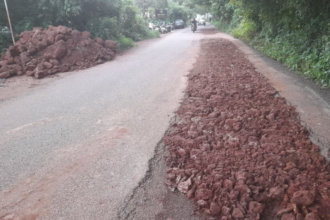
Assagao, once a quiet laid-back village bathed in beauty, has become an infrastructural nightmare. “The conditions of our roads are so bad that it could be another reason why restaurants in the village are seeing low footfalls. Travelling on our roads at night is a risk,” steps in Sarpanch
Hanumant Naik.
“I think, part of the problem will be solved once the roads are repaired,” reasons Naik, perhaps unaware, that there are no roads at all to many restaurants in Anjuna and Vagator.
“Assagao is suffering from poor planning. We had no electricity for the last three days and believe me in a few years there is going to be a war because of no water. There is going to be pots of money but no water to buy,” warns Ida Fonseca, proprietor of Astoria, the first bar and restaurant of the village. The restaurant was once frequented by locals and foreigners.
The business is for “night outs” in Anjuna and Vagator where loud music is the main course in most menus.
“People who invested did not realise that restaurants had mushroomed in a village and therefore there was a big choice but few takers. There are restaurants touching compounds all along. They just kept giving permissions without thinking of the long terms,” reasons writer and musician Sigmund D’Souza who performed regularly in the village.
“Restaurants end up with one table a day and it is not economically viable to do business because the staff overheads are huge,” explains D’Souza.
“We started very well and initially had clients that hung around till around midnight. Slowly, there were complaints from neighbours that they were getting disturbed by the music. Despite not being loud, we tried to be accommodative and then started the decline,” admits the manager of a restaurant, which has temporarily shut shop, on condition of anonymity.
“We do not allow loud music in our village though a few establishments try to play on the sly. This could be one reason most tourists prefer to go to Anjuna and other places where music can be played all night,” reasons the Assagao sarpanch.
Meanwhile, the profile of people visiting has also altered. “The days of classy tourists are over. Plus, the pricing of most restaurants here is phenomenal. Four-wheelers and guests walking in, and security men guiding guests in with torches was a regular feature on the popular Mapusa to Anjuna road through Assagao. The road is lifeless now”
“I visited three restaurants on different occasions with a friend from Delhi and realised that the bar prices were compatible with the prices in New Delhi. For me, that is one reason why many stopped visiting restaurants,” argues socialiser Alvito Pereira.
“You don’t expect an outsider going out every day to eat what he gets in his place and at the same price. The element of Goan cuisine is missing in most kitchens,” added Pereira.
The long-term impact of this will be felt, even in the short term. Restaurants are the mainstay of a tourism economy if they are not vulnerable due to their ways of functioning or due to an environment that keeps sending diners away.