The month of August in Goa is symbolic of ‘novidade’ or newness, as it marks the season when the paddy crop approaches maturity and the first sheaves are harvested. This fresh harvest tradition is honored across Goa’s parishes through a thanksgiving ritual known as Konsachem Fest. During the festival, the parish priest blesses a marked paddy field, and a bundle of these sheaves is later distributed in church—one to each family—who place it on their home altar, replacing last year’s sheaves which are burnt.
Among the many celebrations, the feast at Raia in South Goa stands out. Held annually on August 5 (Feast of Our Lady of Snows), it is regarded as the most prominent observance. Other parishes celebrate at different dates in August: Rachol holds it on the Sunday following August 5, Aldona on August 6, Sinquerim on August 10 (Feast of St. Lawrence), while most parishes mark it on August 15, the Feast of the Assumption. The final major celebration occurs on August 24 in Betalbatim, on the Feast of St. Bartholomew (moved to the following Sunday if the date falls on a weekday). Taleigão, however, holds the distinction of celebrating first in Tiswadi, marking the new harvest annually on August 21.

This tradition traces its roots back to 1510, when Portuguese commander Afonso de Albuquerque first arrived in Goa. After being initially welcomed, the Portuguese were soon overpowered by Adil Shah’s forces and forced into retreat. During this hardship, the villagers of Taleigão courageously supplied food to the starving Portuguese fleet stranded near Britona. Grateful for their support, Albuquerque rewarded Taleigão with the privilege of being the first village to reap and bless the year’s paddy harvest at what became known as the Festa da Espiga.
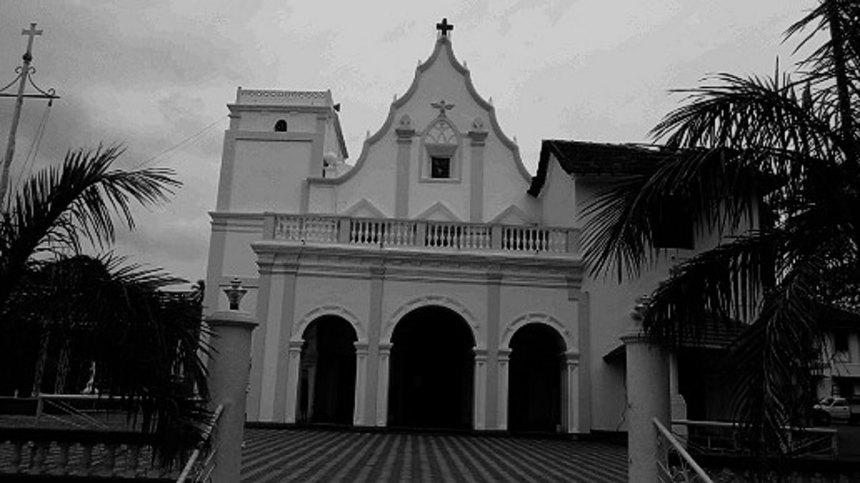
The village’s parish church, Igreja de São Miguel Arcanjo, founded during the tenure of Bishop João de Albuquerque, houses six altars, the main dedicated to the Blessed Sacrament with St. Michael Archangel venerated above it. Over the centuries, the church has been served by Dominican friars, diocesan clergy, and underwent a major restoration in 1972 funded by Arthur Viegas, for which he was honored by Pope Paul VI.
The harvest feast continues to be organized by the gãocar families of Taleigão’s nine traditional clans (vangodds): Abreu, Almeida, Falcao, Faria, Gomes, Luis, Martins, Mendonca, and Viegas. Each year, one family takes on the responsibility for the feast of both St. Michael and the harvest. On the morning of the feast, a brass band awakens the village with the alvorado (dawn music), followed by a procession led by the parish priest and feast president, carrying the statue of St. Michael to the fields. There, the priest blesses the crop, and with a silver sickle, the president cuts the first sheaves, which are carried back to the church and offered symbolically during mass.