The stage is set for the Zilla Panchayat (ZP) elections scheduled on Sat urday, December 20. A total of 8,69,356 voters are eli gible to exercise their fran chise. The polling will be held through ballot papers from 8 am to 5 pm. As many as 226 candi dates are contesting the ZP polls across 50 constitu encies, with 25 seats each in North and South Goa District. Of these, 111 can didates are in the fray in North Goa, while 115 are contesting from South Goa. There are 4,40,199 voters including 2,13,704 males and 2,26,492 females in North Goa ZP while South Goa ZP constituencies comprises 4,29,157 elec torate including 2.06,902 men and 2,22,253 women voters. There are also five transgenders. A keen tussle is between BJP-MGP alliance and Con gress – GFP alliance. The two alliances are fighting against AAP and regional RGP.
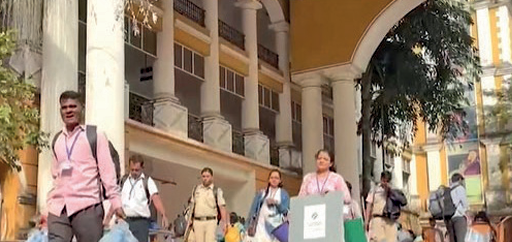
The Sancoale ZP constituency has the highest 28,405 voters followed by 24,312 in the Socorro ZP constituen cy. The lowest 12,605 voters are in Usgao-Ganje ZP seat while Borim ZP and Pale ZP constituencies have 14,004 and 14,621 voters respectively. Nearly 17 ZP constituencies are witnessing four-cor nered contests followed by triangular battles in six ZP constituencies. There will be a straight fight in Pale and Queula (Kavlem) constituencies. Sancoale also has the highest eight candidates including two former ZP Members in the fray. There are a total 1,284 polling booths including 658 in North Goa and 626 in South Goa District. The State government has declared December 20 as ‘Paid Holiday’ in view of the ZP elections. Meanwhile, to ensure smooth conduct of the elections, the State Election Commission (SEC) has deployed about 6,500 polling staff and 4,000 police personnel across 50 ZP constituencies. Counting of votes is scheduled for Monday, December 22

WHAT’S AT STAKE
KARSTEN MIRANDA
As Goa votes in the Zilla Panchayat (ZP) elec tions, the contest is being closely watched not merely for control of district-level bodies but for the political signals it will send ahead of the next round of elections in the State. Governance claims, opposition unity and organisational credibility are all under scrutiny, mak ing the outcome significant well beyond the ZP results themselves. For the Bharatiya Janata Party (BJP), the stakes are highest as the party in gov ernment. The BJP has fore grounded its governance record and rolled out major welfare initiatives, includ ing the Mhaje Ghar scheme among others, close to the elections, while also remind ing voters that it has pre viously controlled the two district ZP bodies. A strong performance would allow the party to project the results as a natural endorsement of its governance model and as a precursor to future elec toral victories, reinforcing its narrative of continued dominance across institu tions under the leadership of Prime Minister Narendra Modi. However, any setback would puncture the BJP’s re peated claims that it remains unbeatable at every level — from panchayats and munic ipalities to the Assembly and Parliament. The pressure is particularly pronounced in South Goa, where the par ty is keen to regain politi cal ground after losing the South Goa Lok Sabha seat in the last general election. For the BJP, success here would help signal recovery, while losses would raise questions about the durability of its electoral grip.
For the Goa Pradesh Congress Committee (GPCC), the elections represent a crucial organisational test. In the last elections held in Goa — the Lok Sabha polls — the opposition had fought as a united alliance and succeeded in South Goa. In contrast, the ZP elections are being fought without such unity, with only the Congress and the Goa Forward Party (GFP) aligned, while the AamAadmi Party (AAP) and the Nationalist Congress Party (NCP) have cho sen to stay out of the arrangement and contest it separate ly. Whether the absence of a broader alliance proves costly will be a key post-poll question. The GPCC has chosen to stick to its organisational struc ture, backing block-level decisions even as it faced inter nal dissent from aspirants denied tickets. While the party has sought to distance itself from allegations of imposed candidatures, it has leaned heavily on door-to-door out reach and issue-based campaigning, sharply attacking the BJP on corruption, governance failures and crises affect ing the State. The GFP, contesting as part of the opposition alliance, is looking to expand its footprint beyond its current limit ed legislative presence. Having once had three MLAs, the party is now represented by a single MLA and is no longer part of the ruling majority in the Margao Municipal Coun cil (MMC). The ZP elections offer the GFP an opportunity to rebuild ground-level influence and test whether alliance politics can help it regain relevance. For the Congress–GFP alliance, key pockets in South Goa include Salcete taluka, which is considered a thorn for the ruling BJP, as well as the Quepem constituency, represented by Quepem MLA Altone D’Costa, given his bitter political contest with for mer Quepem MLA and BJP leader ChandrakantBabuKavl ekar. The same applies to the Cuncolim constituency, rep resented by Leader of Opposition Yuri Alemao. AAP is also eyeing seats in these areas and has a running battle with the Congress across several Salcete constituencies and in other parts of Goa. It also remains to be seen how the GPCC’s third MLA, Carlos Alvares Ferreira, fares in the Aldona constituency, which has seen the BJP make repeated claims of having made inroads in the area. There has also been a significant political development in Ponda following the recent demise of BJP MLA RaviNaik. While the MaharashtrawadiGomantak Party (MGP) has continued to remain aligned with the BJP, senior MGP leader KetanBhatikar resigned from the party after dif ferences over his preference to contest the impending Pondabyelection. Though the development preceded the ZP polls, it has added to the political churn in the constit uency, with Bhatikar widely seen as keeping an eye on the next Assembly elections. For the Revolutionary Goans Party (RGP), which has gone solo, the ZP polls are about credibility and consoli dation. The party had won a single ZP seat in the previous State elections — a result considered significant for a rel atively new political formation — but failed to replicate that success across other constituencies. This election will indicate whether it can broaden its appeal or remain con fined to limited pockets. AAP, meanwhile, sees the ZP elections as foundational. The party had opened its political account in Goa through earlier ZP results and has invested heavily in national visibility this time, with party supremo ArvindKejriwal spending several days in the State and senior leaders such as Atishi actively involved in campaigning. Welfare mes saging and national-level pull have been central to AAP’s pitch. Failure to convert this visibility into seats would raise questions about the sustainability of its strategy in Goa. Across the political spectrum, there is also acknowl edgement that a fragmented opposition could split votes in several constituencies, potentially allowing the BJP to secure seats even without a dominant vote share. How this arithmetic plays out — and whether it disproportion ately benefits the ruling party — will become clear only after counting. Local controversies and internal churn have added fur ther uncertainty. Governance issues that drew national at tention, internal infighting within the BJP in certain pock ets, last-minute party switches and disciplinary action against rebels have all contributed to a volatile backdrop. The results will therefore not only determine control of ZPs but also shape how parties reassess strategy, consol idate support bases and position themselves for the next electoral contest in Goa.