Fish is a staple in most Goan homes, and for many coastal families, fishing is not just part of their culture but their only source of livelihood. In Betul village, several families continue to rely on traditional fishing and seashell collection methods passed down through generations, earning just enough to survive.
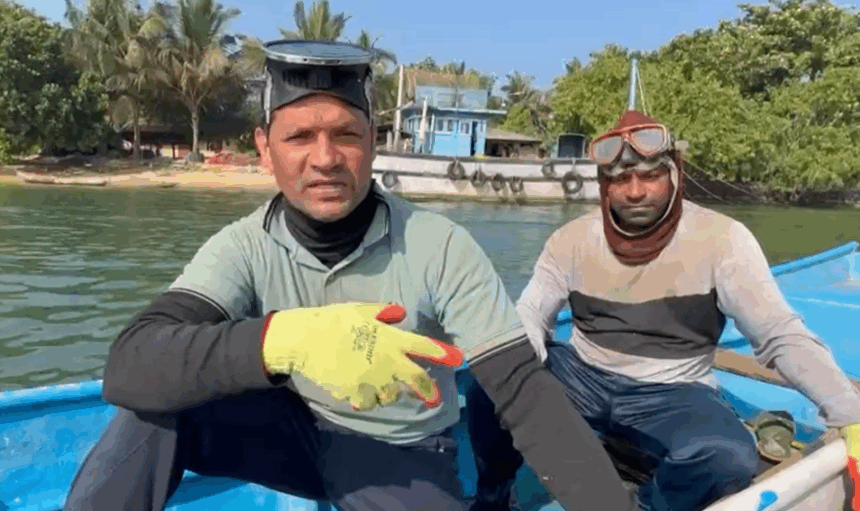
Among them are Kiran Morje and Ravindra Zovatkar, who have been collecting seashells for over two decades. Using small wooden boats known locally as vade, they travel to the point where the river meets the sea. There, they anchor the boat and dive deep underwater to collect shells such as khube, tisryo, shinane and calva.

Their work is extremely hazardous. Despite wearing protective headgear, gloves and goggles to guard against jellyfish and other marine dangers, the risks remain high. The fishermen often dive as deep as 13 metres in the middle of the river and around 5 metres closer to the shore, spending up to five hours underwater every day. This relentless physical strain has severely affected their health, but without financial security, medical treatment remains out of reach.
The hardship is not limited to the older generation. With limited job opportunities available, even younger villagers are forced into the same occupation. Ravindra revealed that he has applied for government jobs multiple times but was never selected, claiming that poorer locals are overlooked while individuals from wealthier backgrounds manage to secure positions. He added that local fishermen often act as first responders during emergencies at sea, rescuing drowning victims before official agencies arrive — yet their skills and experience go unrecognised.
To make matters worse, small-boat fishermen do not qualify for government subsidies or welfare schemes, which are largely designed for bigger vessels. They believe that extending support to traditional small-boat operators would help them upgrade their livelihoods and improve their financial stability over time.
Fishing and seashell collection in Betul remains a tough, risky and physically demanding occupation. With little government support and no alternative employment prospects, these traditional fisherfolk continue to brave the waters daily — risking their health and lives simply to feed their families.