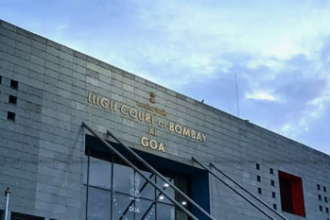
The High Court of Bombay at Goa on Tuesday ordered the State govern ment to identify and list the assets and properties of those responsible for the devastating fire at the Birch by Romeo Lane nightclub, signalling a decisive push towards fixing individual liability for one of Goa’s deadliest recent tragedies. Hearing a suo motu pub lic interest litigation (PIL), the Division Bench direct ed government authorities to compile a detailed in ventory of movable and im movable assets belonging to the accused, including property owner Surinder Kumar Khosla, the Luthra brothers, who operated the nightclub, and former Ar pora–Nagoa sarpanch Ros han Redkar, who has since been disqualified. The court made it clear that compensation to the families of the 25 victims who lost their lives in the December 7 inferno cannot be allowed to remain an abstract promise, and must be backed by enforceable recovery from those whose actions — or inaction — led to the tragedy.
Advocate General Devidas Pangam informed the court that the State would initially disburse compensation to the victims’ families and subsequently recover the amount by auctioning the assets and properties of those found culpa ble. He added that the government would place on record the Supreme Court-approved compensation formula appli cable in such cases. Amicus curiae Adv Rohit Bras de Sa pressed for the immediate attachment of assets belonging to former sar panch Roshan Redkar, arguing that he played a crucial role in granting a trade licence to what was later found to be an illegal commercial structure. Pangam further told the court that statutory notices would be issued within two days to the Luthra brothers, who are currently in judicial custody. The matter has been posted for further consideration on February 16, when the court is expected to pass substan tive directions. The proceedings arise from a writ petition relating to the Birch by Romeo Lane nightclub, which the High Court converted into a suo motu PIL on December 15, 2025, after observing that illegal commercial construc tions lay at the heart of the disaster. The court had then sharply criticised regulatory authorities, particular ly local bodies, for failing to act against unauthorised structures and for issuing licences in blatant violation of law. On December 29, amicus curiae de Sa submitted an ex haustive 496-page memorandum, concluding that the fire was the direct result of an abdication of statutory respon sibility across multiple levels of governance. The report pointed to systemic failures in enforcing the Goa Land Development and Building Construction Act, 2008 and Rules, 2010, the Town and Country Planning Act, 1974, the Goa Panchayat Raj Act, 1994, and Coastal Regulation Zone (CRZ) norms.