Pio Esteves
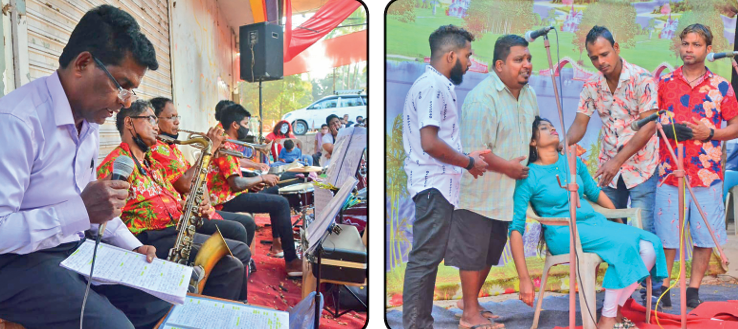
Carnival festival in Goa is marked by a three-day fun and frolic and the colourful floats that parade in the major cities of the state is a witness to the tradition that follows over the years. But apart from the festive mood that prevails among the Goans and the tourists in the cities over the three days, there’s an upbeat mood witnessed in the villages and it is prevalent only in south Goa, specifically in the Salcete taluka. Carnival festivities mark the staging of street plays, popularly known as ‘zomnivhele khell’ in several nooks and corners of the villages, which began with our ancestors. These ‘zomnivhele khell’ include staging of three short plays simultaneously at one particular venue, interspersed with cantos and comedy. In earlier years, there might have been only a handful of tiatrists, who would painstakingly pen those short folk plays and meticulously compose cantos related to the plays. But of late, many have hopped into the same boat and are successfully staging their productions in the villages. And in order to give a boost to this age-old art, the Tiatr Academy of Goa (TAG) has been inviting entries annually from tiatrists staging ‘zomnivhele khell’ and the response has been overwhelming. It has helped many to raise the standard of this art and give the best to the audience. While there are only a handful of those tiatrists, who have been penning and staging ‘zomnivhele khell’ for several years, there are many newcomers from the tiatr stage who have hopped in this field as well and by showcasing their acting and singing skills, have excelled in this art. When ‘zomnivhele khell’ are staged at different places in the villages, the performances begin in the morning and continue throughout the day till late night. Each director has more that 6-7 shows each day and they keep moving to entertain the assembled crowd on the specified date and time. Luis Azavedo from Curtorim has been penning and staging ‘zomnivhele khell’ for the past 16 years and this year his troupe consists of 12 artistes, with 11 picked up from his own village and one female artiste from Carmona. “As there are 4 teachers and 2 university students in the troupe,” Azavedo revealed, “for the convenience of the artistes, the presentation will be only in the evening, unlike other shows carried out from morning onwards.” Pascoal de Chicalim, a tiatrist, noted writer and director and an ardent lover of ‘zomnivhele khell’, creates time to go and watch these presentations in the villages. And as he comes up with his tiatr productions annually, he picks up raw talent spotted in ‘zomnivhele khell’ and trains them further with the hope of grooming new tiatrists on the Konkani stage. Pascoal de Chicalim was part of Xavier de Maina’s troupe years back and his participation in ‘zomnivhele khell’ took away all the fear that once prevailed when facing the audience. “It is a good opportunity to perform in this age-old art and gain confidence before the village folks,” he mentions. The performances of ‘zomnivhele khell’ will begin this year much before the scheduled dates and will conclude on February 17. The uniqueness of this art form is that before the commencement of the folk plays, the unique drum roll, followed by the sound of the trumpet makes everyone aware that plays are about to begin. And then the crowd pours in, young and the old, some seated on the floor, while others will sit on the fences and watch the shows. It is pure entertainment filled with curiosity and rush by the directors to makeshift venues to enthrall the lovers of ‘zomnivhele khell’. Xavier de Maina, one of the participants in ‘zomnivhele khell’ disclosed that each director will carry with him three stories for the audience. “Those three stories are performed, each of them running to 45 minutes. It is slightly less than 3 hours of continuous entertainment at one venue. Each folk play carries a variety of stories, tragedy and comedy, accompanied by songs, cantos and music.” “In earlier days,” confessed Azavedo, “there were only two musicians with blowing instruments and drums introduced in folk plays. But now some of the directors have welcomed the keyboard and bass in their presentations. Of late, background music has also been introduced by some of the directors to make the entire presentation lively.” With most of the folk plays being staged only in south Goa, especially in Salcete taluka, many people in the north would be deprived of such a unique entertainment during Carnival. But for people of the north to get the taste of ‘zomnivhele khell’, there are some organizers, who have taken the initiative to get those folk plays to the north. Anthony de Agassaim, popularly known as “Starman of Agassaim’ have been organizing ‘zomnivhele khell’ just outside his residence at Dexibhat, Agassaim for the past 13 years and his motive is to bring this unique art to the locals of north Goa. He has received good audience response and people eagerly wait to watch those folk plays annually. To attract more people, he introduces spot prizes in between the presentations