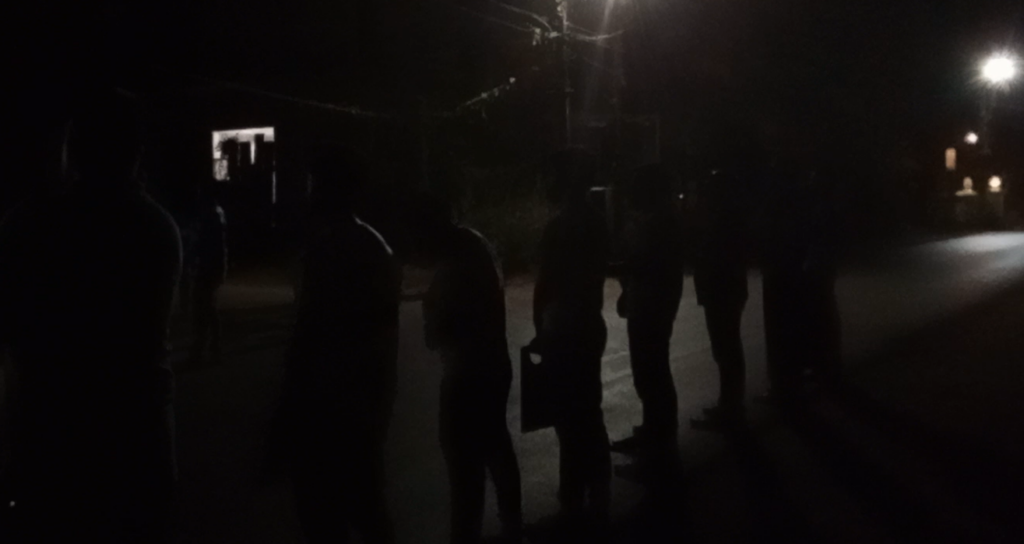
Devott is a distinctive Lenten tradition of special prayers and hymns. “Papiyano, uthaath! Deemi ghalat, rozaar korat, ek Amche Bapa ek Noman Marie mhunpak vinoti kortam….” is exclaimed loudly. However, the words used may differ from region to region. “Papiya,” a Marathi term for penitents, refers to these Devotts, a band of devoted Christians who travel from cross to cross in the dead of night. They chant prayers, urging fellow Christians to rise from sleep, kneel, pray, and seek God’s forgiveness.
This captivating custom, now a rare sight, was once practiced in South Goa villages like Varca, Orlim, Carmona, and Benaulim, among others including several places in the north of Goa. It features two groups, traditionally of men, each with 10 or more members, who pause at roadside crosses.

The groups often came into action from the night before Palm Sunday, building to a peak on Maundy Thursday. In certain places, devotees followed this practice every Friday from the very start of Lent.
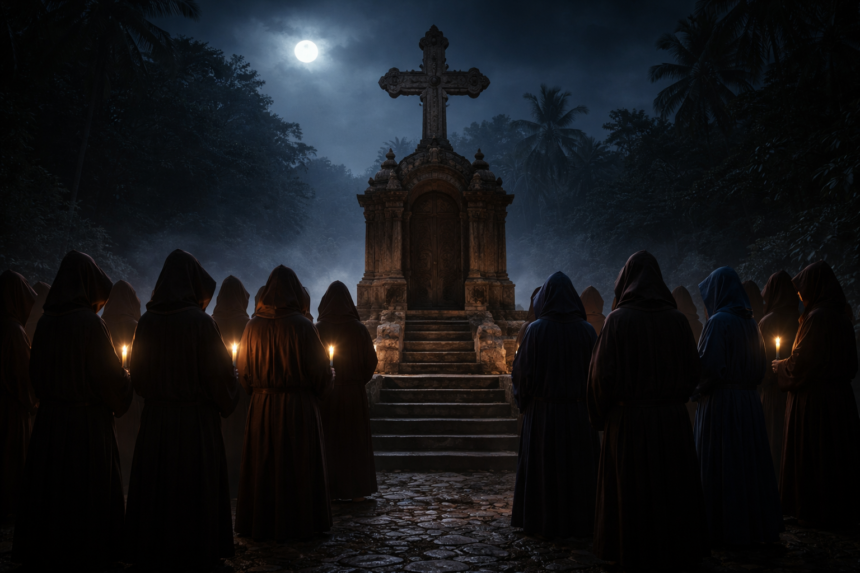
Traditionally participants cloaked themselves in black, blue, or brown tunics with hoods to stay anonymous. Their sorrowful chants, echoing Gregorian styles, evoke goosebumps and shivers, especially piercing the midnight quiet.
Legend holds that Devotts from one village visit the next and vice versa, but the groups must never meet face-to-face. If paths crossed during travel, the first to spot the other would conceal themselves behind trees or in nearby fields until they passed.
In certain areas, the two groups gathered at distant village crosses, chapels, or churches to avoid sighting each other. One group sounded a Lenten clapper, known as “crotalus” or “crotalum” in Latin, crafted from wood. Styles differ: some have an integral hammer striking the wood, others a wooden piece riding a gear for a clicking ratchet noise. Goan churches often used rectangular wooden planks with attached door handles; shaking or rotating them made the metal handles clap against the wood, producing a haunting rattle.
The distant group replied with their own clapper. One group then chanted loudly for people to wake, kneel, and pray, with the other responding in kind, chants resembling Goan motets, some drawn from Latin motets. Afterward, clappers rang out again. All vocals were unamplified, purely natural, slicing through the night silence for an even more mesmerizing effect. The groups then moved to the next crosses.
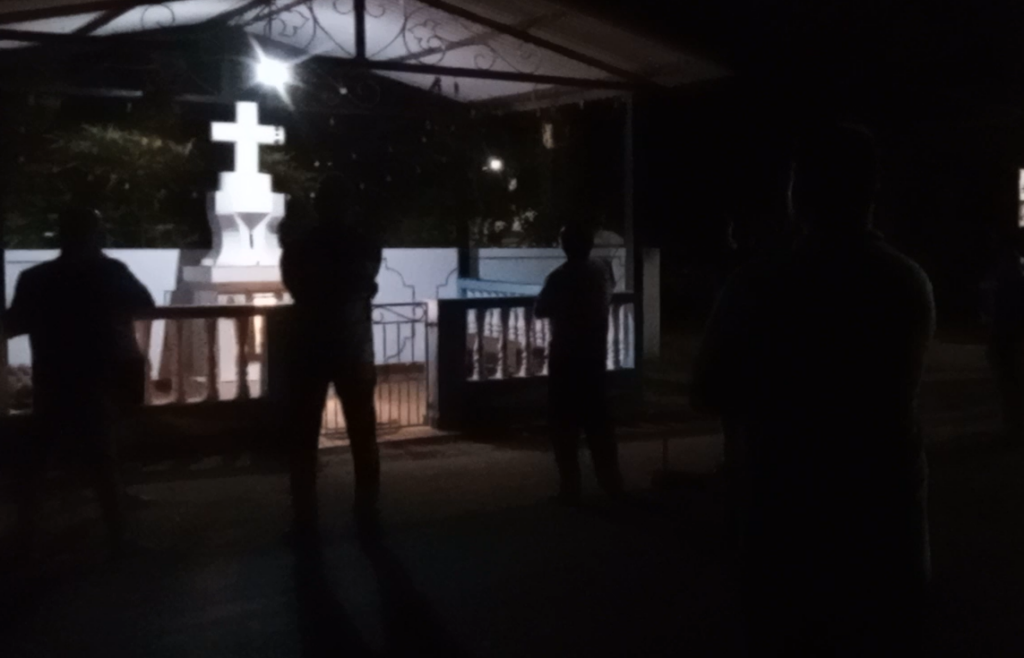
Mr. Luis Coutinho from Orlim in South Goa fondly recalled how he and his friends would regularly gather to practice the traditional chants. “With a prayerful spirit, we would then set out to visit the 14 Crosses in our village,” he said. The atmosphere was serene and silent. As they sang, villagers would join in prayer from their homes upon hearing the chants and motets. This nightly ritual, carried out as an act of penance, would take place late at night from around 11:30 pm until 1:30 am.
Locals left pots or jugs of hot tea at cross bases for the Papiyas, who embody apostles Peter, James, and John, who joined Jesus in the Garden of Gethsemane during his prayer and agony on the Mount of Olives.
Ida de Paula Dias from Orlim fondly recalls how, as a child, her mother would gently wake her in the middle of the night whenever they heard the distant calls of the “devotts,” exclaiming ‘devott aile, begin uttai ani rozar korai‘ . In those quiet, solemn moments, she would be encouraged to kneel and pray the Our Father and Hail Mary, making it a deeply spiritual and memorable part of her childhood during that time.
Lyrics of a local folk chant.
Jezu mogalla Jetsemannea molleant, tum dukham golloitaloi. Deva bapache puta, mornache ximer pavon, rogot hummeloi. Hea tujea koxttam khatir, kaklut amchi kor… Chukloi Saiba, kaklut kor amam somestanchi, Chukloi saiba kaklut kor amchi somestanchi.
Jezu mogalla, vingllo tuka korun, eka kambheak tuka bhandun, saath (hozar) jerbonnd tujea angar marun, tea tujea koxttam khatir, kaklut amchi kor. Chukloi saiba, kaklut kor amchi somestanchi, Chukloi saiba, kaklut kor amchi somestanchi.
Jezu mogalla, kantteancho mukutt tujea mostokar ghatloi, thaptam tujea pollear marun, eka khambear raiachem vostr tuka nhesoiloi. Hea tujea koxttam khatir kaklut amchi kor. Chukloi Saiba, kaklut kor amchi somestanchi, Chukloi Saiba, kaklut kor amchi somestanchi.