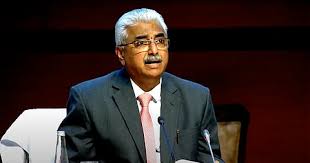
Supreme Court Justice Aravind Kumar has strongly countered the belief that Delhi represents the peak of India’s legal talent, asserting that “Delhi is not India and India is not Delhi.” Speaking at a seminar on Artificial Intelligence and dispute resolution in Bengaluru, he said the glorification of Delhi’s legal circles stems from its position as the capital and the seat of the Supreme Court, not from inherent superiority.
He noted that an impression has long been cultivated — commercially, institutionally and socially — that Delhi is the natural pinnacle of legal ability. “That impression is utterly false,” he said, stressing that the location of final courts and national tribunals does not create a hierarchy of minds.

Justice Kumar insisted that disputes culminating in Delhi do not mean excellence originates there. India’s legal brilliance, he said, is produced across High Courts, district courts, tribunals, commercial courts and arbitral forums that may lack visibility but match Delhi in skill and seriousness.
Rejecting any “constitutional caste system” among Bars, he said no lawyer gains intrinsic worth merely by proximity to the capital. What is often mistaken for superiority is actually a mix of visibility, institutional concentration and pricing power, he explained.
He also cautioned that AI systems trained on Delhi-centric data could hard-code metropolitan bias, undermining India’s diverse and federal legal ecosystem. Legal tech, he said, must not reinforce old hierarchies.
“The Indian legal system draws its intelligence from the entire Republic,” he concluded.