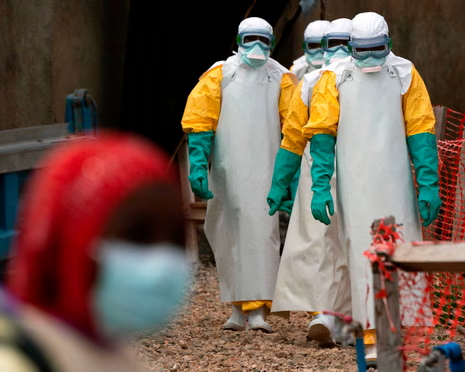
The World Health Organization has declared the Ebola outbreak spreading in eastern Democratic Republic of Congo and Uganda a “public health emergency of international concern.” The move follows international spread and rising fatalities linked to the Bundibugyo strain.
Where cases are appearing
Most cases are concentrated in Ituri province in eastern DR Congo—Bunia, Rwampara and Mongbwalu—while Uganda has confirmed infections in Kampala tied to travelers from Congo. A case was also detected in Kinshasa. WHO and the Africa CDC warn reported numbers likely undercount the true toll because many suspected cases remain under investigation.

Death toll and scale
Official tallies vary: WHO reported about 80 deaths and over 240 suspected cases; Africa CDC later cited 88 deaths and more than 330 suspected cases. The affected region’s heavy cross-border trade, mining activity and insecurity make tracking and isolation difficult, increasing risk of further spread.
Why this outbreak worries experts
Bundibugyo is one of six known Ebola strains and was first identified in Uganda in 2007. Vaccines and approved treatments exist only for the Zaire strain, not Bundibugyo, prompting WHO to call the situation “extraordinary.” Doctors Without Borders is preparing a large-scale response amid rapid case spread.
Symptoms and spread
Ebola causes fever, fatigue, headache and can progress to vomiting, diarrhoea, bleeding and organ failure. It spreads through direct contact with bodily fluids, and close contacts should be monitored for 21 days. Mortality varies by strain and care access; Bundibugyo’s fatality rate can reach about 50%.
What WHO advises
Countries should boost cross-border screening, isolate cases, monitor contacts daily and activate emergency systems, while avoiding border closures that drive people to unmonitored crossings.