Shravani G Kumbhar
Ancestral homes in Goa are more than just houses. They are the living memories that must be preserved so that these masterpieces can be carried forward into the generations to come. These ancestral homes not only bear local elements but also showcase western influences. This heritage is important because it helps one to learn, to understand, to grow and to preserve.

Irwin Antão is a chemical technologist, natural dye activist, and artist, who lives in an ancestral house in Chandor. He says, “Preservation is very important because people and the next generation must know the value of artefacts.” Old artefacts, paintings, and traditional architecture are like part of a mini museum. “An old house itself is a mini museum,” he says emphasising that such homes should be preserved so that the next generation can understand the lifestyle, creativity of earlier times. “Certain damages cannot be undone but we can protect it. Ancestral homes still can be protected with modern technology. Treatment for woods, walls, and other structure can help to preserve. Intelligent design ideas were used in olden days. For example, some traditional houses had wooden toilets built so cleverly into rooms that visitors could not easily identify them as toilets. Such ideas could inspire modern architecture today using better materials while maintaining the same creativity,” he explains.
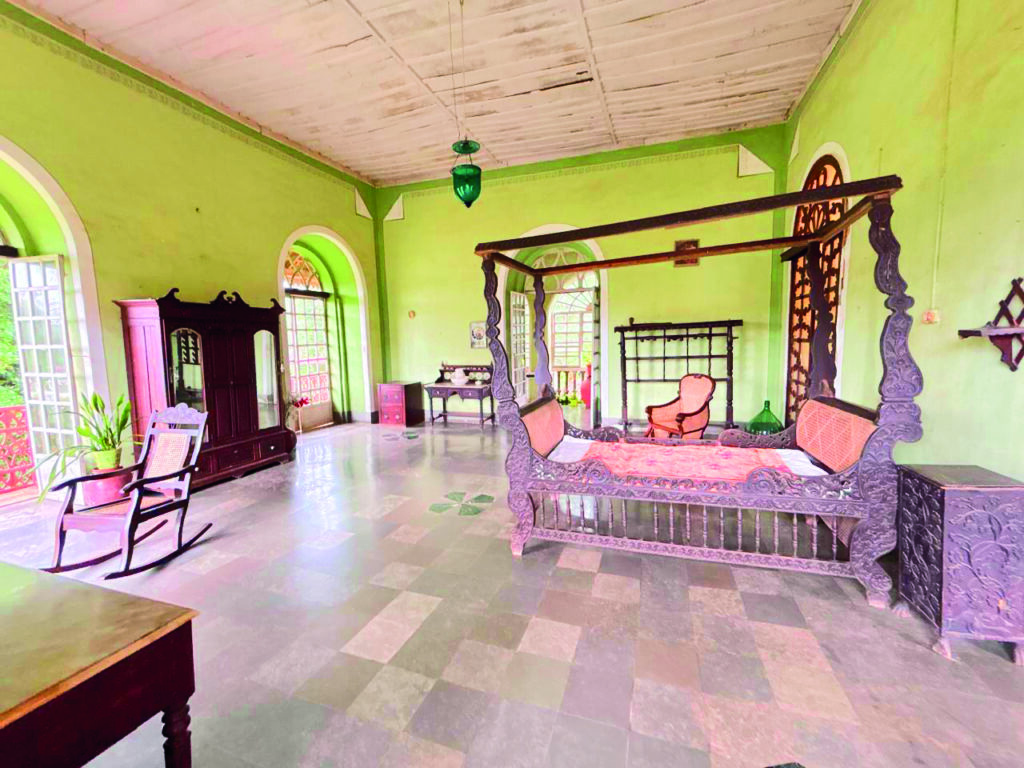
Ancestral homes reflect a kind of structure and craftmanship which are rarely seen in today’s world. “In earlier times, construction work was carried out manually by skilled labourers, unlike today’s buildings, which are mostly made using modern concrete method,” says Ranjeev Fernandes, who enthusiastically shows the Fernandes Heritage House in Cotta, Chandor. He belongs to the family that owns Casa Grande also known as Vhoddle Ghor in Chandor. According to him, traditional architect reflect the efforts and techniques of the past, making these structure more valuable and a source of learning for students. “Earlier people travelled in palanquins, then came bullock carts, and engines. The lifestyle of people in the past were very different from the modern world today, as lifestyle has evolved and preserving them helps the society to remember it. Old things are often better than new things,” he says.
Preservation, however, requires a continuous care and awareness. Andre Alberto de Braganca Pereira, one of the grandsons of the Braganca Pereira Mansion, Chandor says, “Artefacts need regular and careful cleaning to preserve them properly. These artefacts are gently cleaned with soft cloths, while chandeliers are dismantled carefully and are cleaned. This mansion is open to public since the past 40 years from my uncle’s time and people do visit the place and gain knowledge of artefacts.”
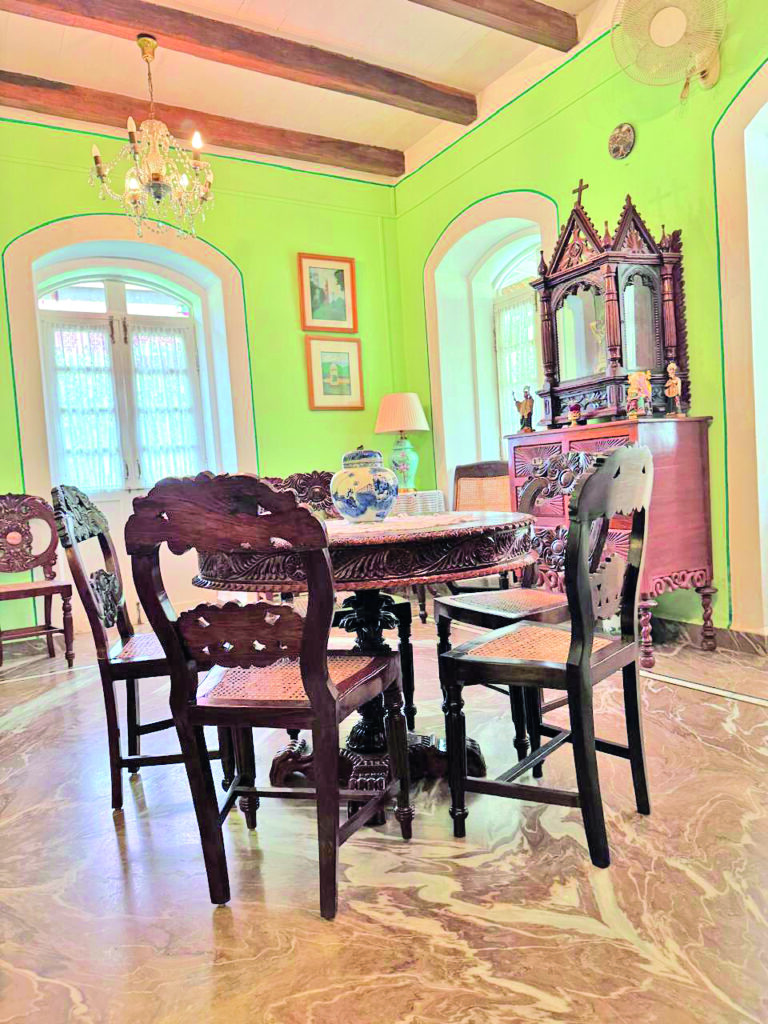
People will truly understand the history and cultural value of ancestral homes only when people will visit them personally. Otherwise, from the outside, these homes may appear to be just ordinary simple houses. He further mentions that many ancestral homes are privately owned and maintained by families who personally take care while keeping them open for visitors. Some heritage houses and historical properties are protected under government care.
Bosco P Afonso, a Portuguese teacher, who lives in his ancestral home, Casa de António Afonso in Nagmodem, Navelim, says, “Preserving artefacts is not only protecting history but also preserving the heritage and identity of a family.” He furthermore adds to preserve the artefacts there are many methods but the most important factor is that the person handling them must have proper knowledge and understanding. Heritage preservation is crucial for younger generations as many of them are unaware of the materials used in past.
He mentions that when his students were taken on heritage visits, many were surprised to learn that altar in church’s are entirely made up of wood. He believes that preserving such heritage and ancestral homes will surely help youngsters to gain information and knowledge. People who are aware of the importance of heritage must pass the knowledge to students which makes World Museum Day, a very important day.
Gerard da Cunha is an architect, who has been practicing in Goa for the past 40 years, who set up Houses of Goa Museum. He believes that architecture helps people understand their past and offers a glimpse into how their grandparents once lived.
Along with museums preserving the souls of the ancestral home is much needed so that the past does not fade with time and it stands as a reminder that history is not confined only to museums but also surviews in ancestral walls.