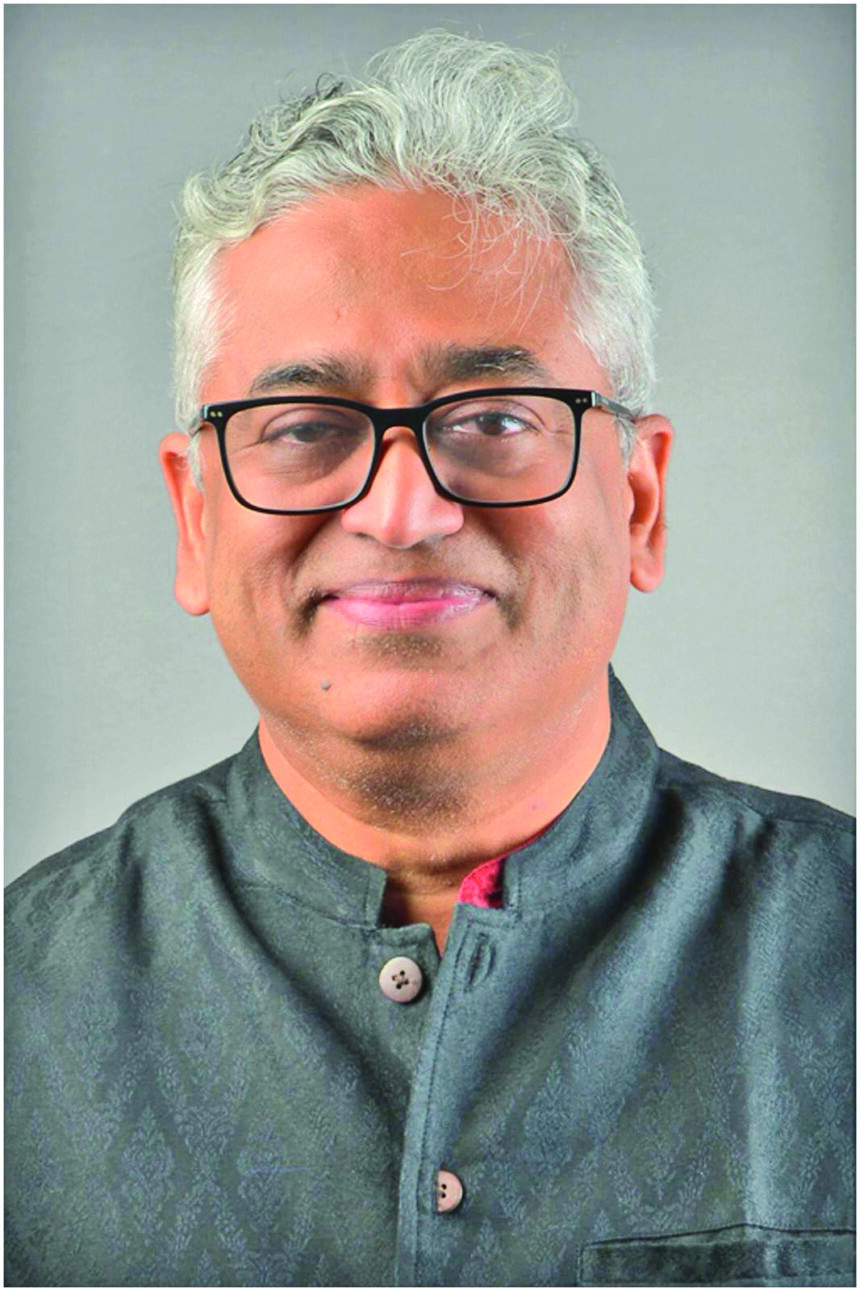
RAJDEEP SARDESAI
For many Indians, Goa is a holiday. For me, Goa is home. Not in the conventional sense perhaps, because I did not grow up there, I can’t speak Konkani, but emotionally, spiritually and historically, Goa has always been part of my identity. It is my father’s land. And every time I return, I feel I am reconnecting not merely with a place, but with a part of myself.

My father was the first and is still the only Goa-born male cricketer to play for India. That fact alone gave Goa a special meaning in our family. Long before Goa became India’s favourite tourist postcard, before beach shacks and mega festivals became its global image, there was another Goa — quieter, gentler, deeply-rooted in community and culture. That is the Goa I grew up hearing about and slowly discovering for myself.
To me, Goa is not only about beaches. It is about people who valued conversation over confrontation, music over noise, community over aggression. It is about susegad not as laziness, but as a philosophy of balance. Goa taught India that modernity and tradition could coexist. That different faiths could live together without suspicion. That temple, church and mosque were symbols of religious co-existence. That life did not always have to be lived at breakneck speed. That occasionally pressing the pause button has its own charm.
Unfortunately, outsiders have often reduced Goa to easy stereotypes — beaches, parties, casinos and the old cliché of the laid-back Goan enjoying an endless afternoon siesta over feni and fish. But that caricature misses the real Goa entirely. Goans have always been remarkably resilient, entrepreneurial and adaptable. Across the world, Goans built reputations for professionalism, integrity and hard work. The stereotype of the “lazy Goan” says more about how outsiders view Goa than about Goa itself.
As a journalist travelling across India for decades, I have often felt that Goa represented something rare in our increasingly impatient world: civility. There was a warmth to Goa that could not be manufactured. Whether in a village feast, a football match, a local tavern or a family gathering, there was always a sense of ease about human relationships.
Which is why I feel strongly that Goa must retain its unique character. Development is inevitable and welcome. Young Goans deserve opportunities and prosperity. But development without sensitivity can destroy the very soul of a place. When every hill becomes a real-estate project, every village a commercial zone and every beach a battleground for unchecked tourism, something precious is lost.
What troubles me today is that the pressures on Goa are becoming more visible. Rising crime, taxi mafias, mounting garbage and civic concerns, reckless commercialisation and the spread of a casino culture risk changing the social character of the State. Tourism is Goa’s economic lifeline and no one can deny its importance. But there is a difference between tourism that respects a place and tourism that overwhelms it. Do we, for example, really need the quaint waterfront at Panjim to be taken over by showpiece casino ships?
There is also a growing need to change the political culture that has taken root in Goa — one marked by defections, opportunism and cash-and-carry politics. Public life cannot be reduced to short-term transactions and shifting loyalties without weakening people’s faith in institutions. Goa deserves a politics grounded in principles, accountability and a genuine commitment to the State’s long-term well-being.
What makes Goa distinct from much of India is its unique historical and cultural evolution. Centuries of Portuguese influence blended with deeply rooted Indian traditions created a society that developed its own rhythm, architecture, cuisine and social outlook. Goa’s villages and comunidade system fostered a strong sense of local identity that remains rare. Its openness to the world never erased its traditions; instead, it produced a culture that feels both cosmopolitan and deeply rooted. That delicate balance — between modernity and heritage, environment and growth, freedom and community — is precisely what many Goans fear losing today.
The Goa I cherish was never about excess. Its beauty lay in its restraint, its civility and its sense of community. Once that social fabric begins to fray, it becomes very difficult to restore.
Perhaps my attachment is also personal nostalgia. Every son sees his father’s land through emotional eyes. When I think of Goa, I think of my father’s journey from Margao to Mumbai, of a generation that carried Goan pride quietly but proudly into the national mainstream. In many ways, Goa reminds me that roots matter. In a fast-changing India, where identities are constantly reshaped, Goa still feels anchored.
And maybe that is why I care so deeply about its future. Because Goa is not just a destination to be consumed or a land to be exploited. It is an inheritance to be protected.
As Goa marks 40 years of statehood, my hope is that it continues to modernise without losing its soul, to grow without surrendering its identity. Goa’s greatest strength has always been its unique character. May that never change.
A happy Statehood Day to all Goenkars. Goa will always be home.
(The writer is senior journalist and author)