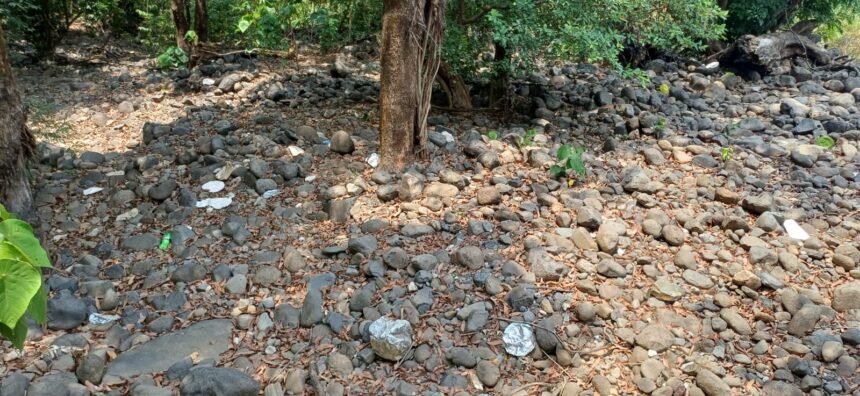
Despite being located within protected areas, anthropogenic disturbances such as plastic waste, glass fragments, cement debris, and tourism-related litter were consistently recorded in the fish biodiversity interim report, particularly in downstream zones.
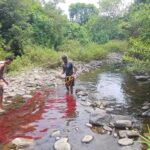
This observation was corroborated by O Heraldo during the field visit to Mhadei Wildlife Sanctuary, where used disposable paper plates were seen littered near one of the streams within the protected area (see photo).

“While current diversity patterns indicate moderate ecological stability and resilience, continued solid waste influx and hydrological interference may gradually affect habitat structure, species evenness, and long-term ecosystem health,” the report stated.
While current diversity patterns indicate moderate ecological stability and resilience, continued anthropogenic disturbance may gradually affect species evenness and long-term community structure.
“Collectively, the seasonal dataset underscores the ecological significance of Goa’s forest-associated river systems and emphasises the importance of sustained monitoring and conservation management to maintain freshwater biodiversity,” Mayekar said.
Responding to this finding, PCCF Goa, Kamal Datta said the Forest Department and the GFDC make all reasonable effort to prevent littering in eco-tourism sites like Dudhsagar waterfall, etc, by engaging labourers for regular cleaning of the sites which attract large numbers of tourists.
“However the departmental effort will never be sufficient unless as responsible citizens we all inculcate the habit of not littering our surroundings and make the concept of Swachh Bharat a reality,” Datta said.
Litter status in protected areas:
Mhadei Wildlife Sanctuary
Minor anthropogenic disturbances were observed in the form of thin oil films in localised stagnant pools, which may potentially interfere with gaseous exchange at the water surface. Scattered plastic waste and construction-related debris, including remnants of cement material along streambanks, were also recorded. Although limited in extent, such disturbances may contribute to gradual habitat alteration if not effectively managed.
Bhagwan Mahavir Wildlife Sanctuary
Anthropogenic disturbances were consistently observed including plastic wrappers, bottles, paper waste, cans and glass bottles within and along the stream channel, indicating a regular influx of solid waste from nearby human activities.
Bondla Wildlife Sanctuary
Plastic waste and tourism-related debris, including bottles, wrappers, disposable cups, and foam materials, were consistently recorded across sampling locations. Such anthropogenic inputs contribute to habitat degradation, potential water quality deterioration and risks of ingestion or entanglement for aquatic organisms.
Cotigao Wildlife Sanctuary
Anthropogenic disturbances were consistently observed at both locations, including plastic wrappers, bottles, paper waste, cans and glass bottles within and along the stream channel.
Netravali Wildlife Sanctuary
Anthropogenic pressures were evident in the form of plastic wrappers, bottles, chips packets, and broken glass bottles along the stream margins and within the channel. The presence of broken glass represents an additional physical hazard to aquatic organisms and reflects unmanaged waste disposal in the downstream zone.
Goa’s protected areas are a treasure tove of ecological diversity. It is import-ant for the government agencies and the general public to ensure that the forests are kept litter-free.