Elsa Angel Rose
Delayed monsoons, reduced rainfall, and a drop in water levels in reservoirs raise concerns and highlight the importance of water conservation. With the onset of the monsoon, the situation has slightly improved, offering much-needed relief. But the current scenario cannot be taken lightly, wherein monsoons are delayed by only a few weeks, and at such a moment, water shortage becomes the conversation and conservation efforts commence, while throughout the year, water continues to be wasted and is often treated as the opportunity cost for various developments, leading to environmental degradation.

Factors like El Niño, the heating of the Pacific Ocean, urbanisation, deforestation, hill cutting, and more are directly or indirectly contributing to the depletion of groundwater sources and impacting rainfall patterns, leading to irregular monsoons and dry spells instead of sustained rains. It is not just a concern for the present moment; water conservation must always be given the priority it truly needs. Whether it is through the landscape design of your home, the plants you have around your house, or other water conservation setups, every effort plays a role.
Recharging Pits and Bogs for Groundwater Recharge
“When there is a gradient slope, towards the end I berm it up and bring back the water. That is how I recharge the groundwater level at the source. This is called recharging at the source,” shared Landscape designer, Daniel D’souza from Assagao. If there is a well present at the property, then the gradient has to be made in such a way that all water is carried towards the well, which is again recharging the water at the source, and the well becomes the recharging pit. While creating recharging pits, it is important to note that if you are located at a higher geographical level in a village, this technique may not be suitable. The water will naturally flow down towards the village, and someone else may end up benefiting from it. “Dig pits in the garden and let the pits recharge the groundwater levels. And during dry spells, use the pit for composting,” shared Daniel.
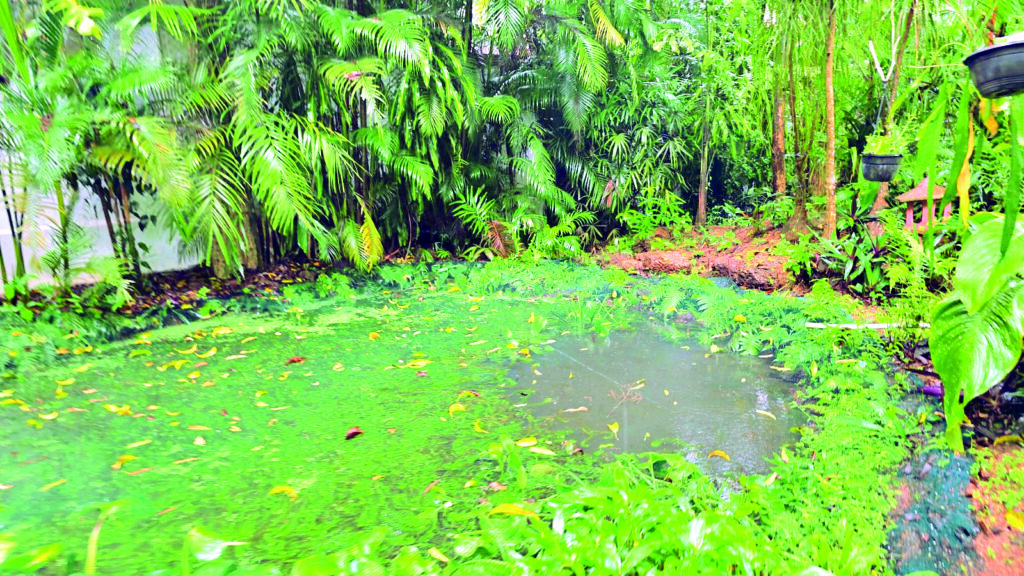
Another good option for recharging groundwater levels is the construction of Bogs. “Bogs are another good option for rainwater harvesting during the monsoons. A bog is a transition between your wet area and your dry area in a garden. These bogs collect all the rainwater during the monsoon. A lot of recycled plastic is used, with a topping of ‘Ganpati chikni mitti’ (soil), and then the entire area is rammed to create the base for the bog. There is no need to add any filtering options; only aquatic plants are put in, as they do the job in the best way. This way, you create an entire ecosystem. You attract wildlife and serve an aesthetic purpose. You cannot use this water for anything else,” explained Daniel. Bogs function effectively during monsoons. During summer, to sustain the bog, it is better if you have a well or a stream nearby from where water can be carried to the bog.
Remember to cultivate plants that require less water to grow. “As a landscape designer, I use plants that can stay longer without watering,” said Daniel.
Rooftop Gardens and Soaking Trenches for Water Recharge
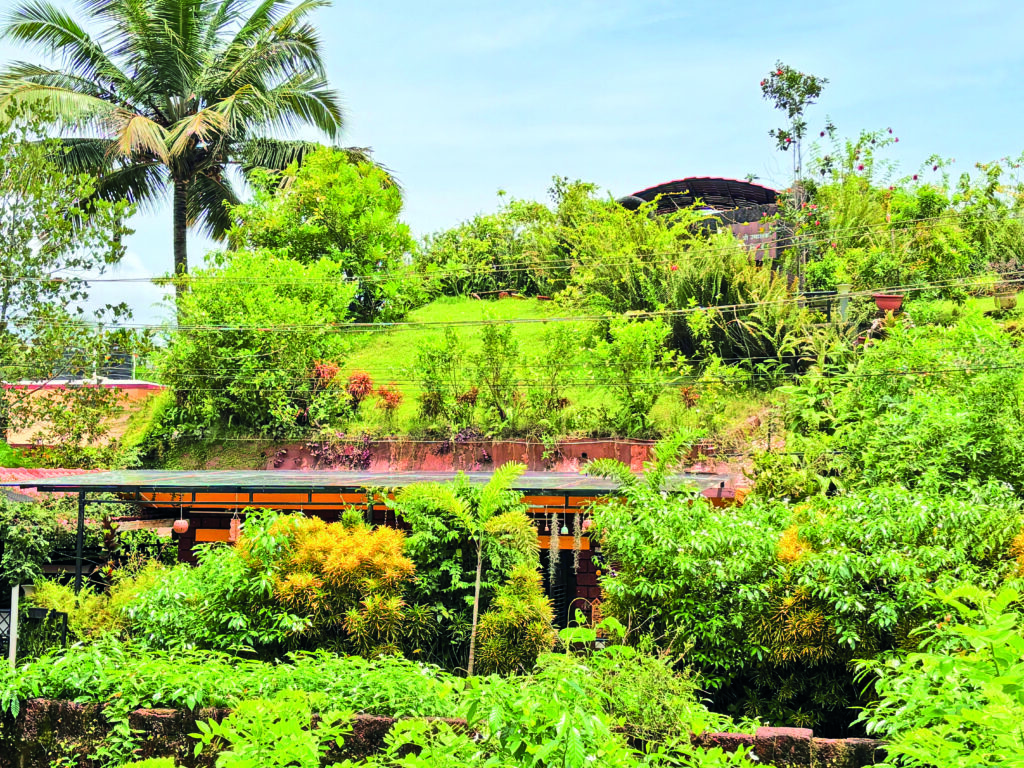
Dr Jyoti Heblekar’s home has rooms with water tanks underneath. While the soil removed during construction is used to create a sloping rooftop garden above the rooms. “Each room is built over an underground water tank that collects and stores rainwater, while the soil removed during construction is used to create a sloping rooftop garden above. By storing water below and growing greenery above, the house follows the natural cycle of rainwater absorption, storage, and recharge, showing how sustainable living can start right at home,” said Dr Jyoti, founder and promoter of Mystic Woods, a butterfly and insect sanctuary.
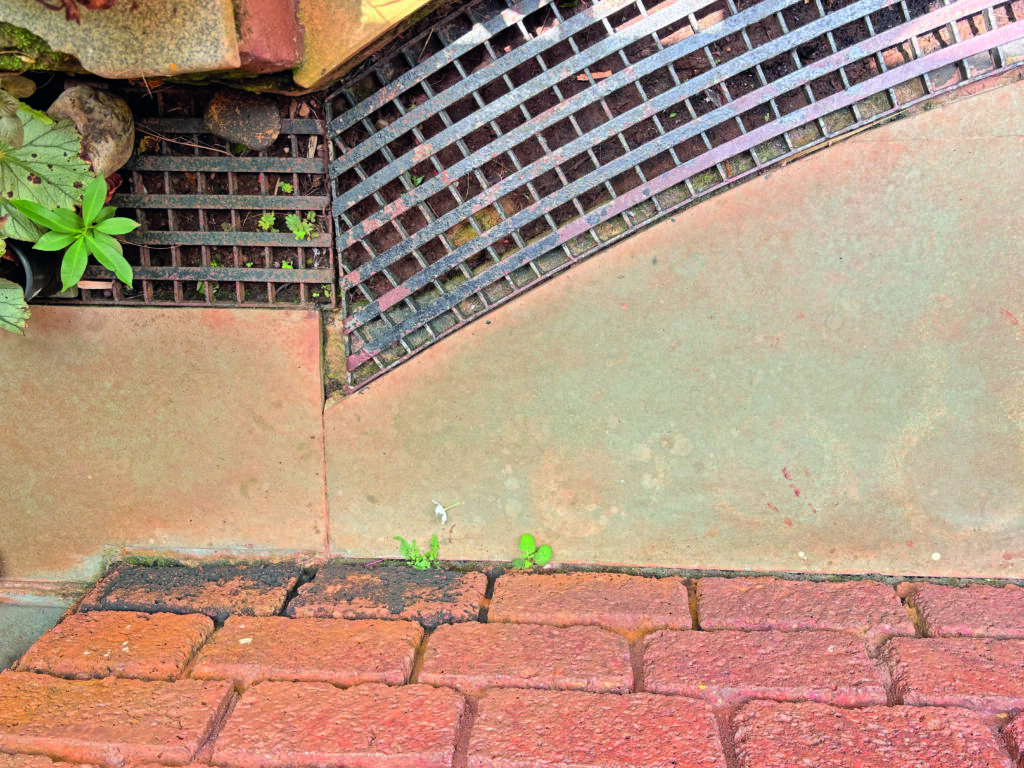
A soaking trench, which surrounds the house, is also a wonderful water conservation option. “A soaking trench encircles the house, allowing every drop of rainwater and excess garden runoff to percolate back into the ground and recharge the water table,” said Dr Jyoti. He emphasised another of the environment’s natural ways of conserving water, the Termite mounds. “Termite mounds are among nature’s most efficient rainwater harvesting systems. Found abundantly on hill slopes in Goa and forested landscapes, these remarkable structures act like natural sponges, absorbing rainwater through their porous towers. Beneath the surface lies an intricate network of tunnels and chambers that slows the movement of water, allowing it to percolate deep into the ground and recharge underground aquifers,” said Dr Jyoti. Protecting termite mounds protects not just the insects but also safeguards the groundwater, prevents soil erosion and manages water most naturally.
Rainwater Harvesting Tanks Integrated into Home Design
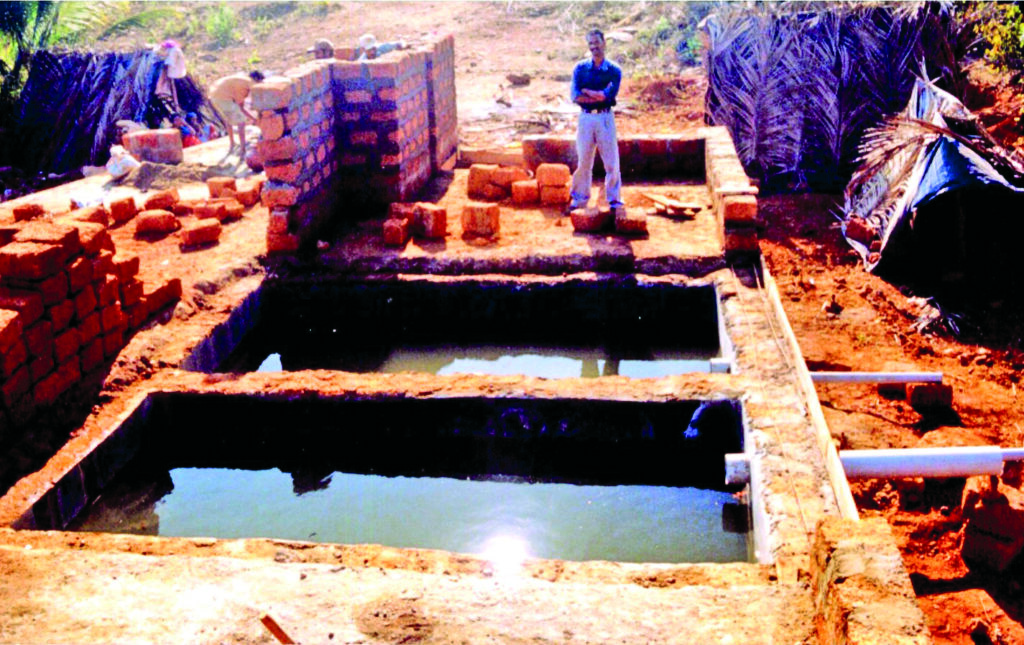
Design the house with a singular slope, where the entire structure slopes towards one particular point. Then all the rainwater is directed and stored in rainwater harvesting tanks located beneath the house itself. “What I did was extend my ground foundation walls. Generally, the foundation goes at least one metre down into the ground, and the plinth is around 75 centimetres above. I simply took the ground walls slightly deeper inside so that we could create a full-fledged tank where a person could actually stand inside. This was very important because, for maintenance and cleaning purposes, a person should be able to walk inside the tank,” Shared Abhijit Sadhale, an architect. Rainwater harvesting tanks have a myriad of benefits. “Since the water was stored beneath the house, it created a cooling effect within the space. The house remained much cooler, leading to a significant enhancement of the microclimate. It also improved thermal comfort and provided better comfort at the body level,” said Abhijit.