
Team café
A game that has entertained generations across the world, ‘Snakes and Ladders’ is much more than a simple board game. Behind its familiar squares, ladders, and snakes lies a history connected to moral lessons and the consequences of actions. The game was originally played using cowrie shells as dice, with the board decorated with images of animals and deities. In its early forms, it was not just a game but a way of teaching moral values. The snakes represented vices and wrong actions, while the ladders symbolised virtues and good deeds. Players aimed to reach the top of the board, which represented achieving enlightenment or Moksha.

Today known as ‘Snakes and Ladders’, the game originated in ancient India, where it was called ‘Mokshapapat’ or ‘Moksha Patamu’. While the exact time and creator of the game remain uncertain, historians believe it may have been played as early as the 2nd century BC. Some believe it was created in the 13th century AD by Marathi saint and philosopher Gyandev. Originally designed as a tool for moral instruction, the game taught children about the consequences of their actions. The squares where ladders began represented virtues, while those with snake heads represented evil traits. Interestingly, in the original Hindu version, snakes outnumbered ladders, highlighting the many challenges and temptations people face on their journey toward spiritual growth.
Through gameplay, it teaches players the importance of virtues such as honesty, kindness, and generosity, while showing the importance of making the right choices. The board represents a journey from the bottom to the top, with each square reflecting different qualities and actions. Landing on squares connected to virtues rewards players with a ladder that helps them move forward, while landing on squares representing negative traits, such as greed, anger, and dishonesty, results in being pulled back by a snake. The game encourages players to think about their values, the person they want to become, and the life they want to lead.
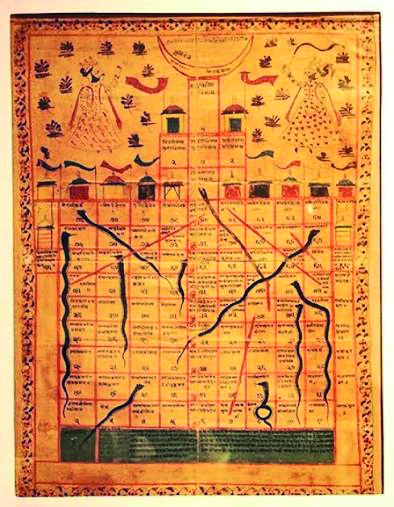
Although ‘Snakes and Ladders’ began as an ancient Indian game, it eventually travelled beyond India and reached the Western world during the late 19th century. The game was brought to England through English traders and colonial rulers, where it quickly became popular. As it spread to other countries, including the United States, the original version was modified to suit Western audiences.
During this transformation, many of the game’s original moral and religious elements were removed, and the number of snakes and ladders was made equal. This modified version became known as ‘Snakes and Ladders’. Later, in 1943, the game was introduced in America under the name ‘Chutes and Ladders’. Over time, different countries developed their own versions of the game while keeping the basic concept unchanged. Even after centuries of change, ‘Snakes and Ladders’ continues to be enjoyed by people around the world, especially children. Its journey from an ancient Indian teaching tool to a globally recognised game reflects its lasting appeal.