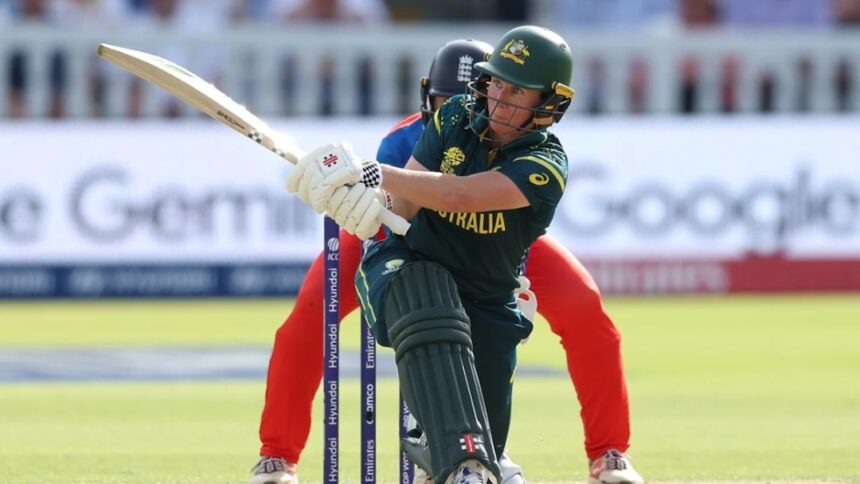
Australia reaffirmed their dominance in women’s cricket by defeating England by seven wickets to win the Women’s T20 World Cup 2026 final at Lord’s on Sunday. Chasing a target of 151, Australia completed the chase with 17 balls to spare, capturing a record-extending seventh T20 World Cup title and continuing their remarkable success on the global stage.England endured a difficult start after Australia’s disciplined bowling reduced them to 70/4. Captain Nat Sciver-Brunt led the recovery with a composed half-century, becoming the player with the most fifties in Women’s T20 World Cup history. Freya Kemp provided late acceleration as the pair stitched together an 80-run partnership, helping England post a competitive total of 150. Despite the late flourish, Australia’s bowlers maintained control throughout the innings with tight lines and clever variations.Australia’s reply was built on a commanding opening stand between Beth Mooney and Phoebe Litchfield. The duo dominated England’s attack, adding a century partnership that all but sealed the contest. Mooney anchored the chase with a superb 64 off 49 balls, while Litchfield contributed an impressive 48 before Charlie Dean broke the stand by bowling her.England briefly fought back when Sophie Ecclestone trapped Mooney lbw following a successful review, but the target had already slipped beyond their reach. Experienced campaigners Ellyse Perry and Ashleigh Gardner calmly finished the chase, with five wides helping Australia seal victory in emphatic fashion.Mooney was named both Player of the Final and Player of the Tournament after ending the competition with 238 runs in seven innings. She credited the team’s fearless approach, unity and belief for their successful campaign under captain Sophie Molineux. Perry described the triumph as one of Australia’s most memorable achievements, while coach Shelly Nitschke praised the squad’s consistency and ability to perform under pressure.The victory further strengthened Australia’s legacy as the most successful team in Women’s T20 World Cup history, adding the 2026 crown to their previous titles in 2010, 2012, 2014, 2018, 2020 and 2023.
Australia defeat England to lift record seventh Women’s T20 World Cup title