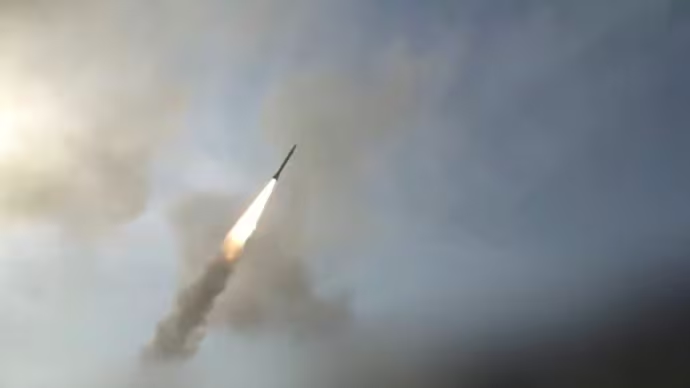
Iran on Friday claimed it carried out missile and drone strikes targeting US military aircraft stationed in Jordan, alleging that several American fighter jets and aerial refuelling aircraft were destroyed while others sustained significant damage. The announcement came as tensions between Washington and Tehran escalated following continued US military operations against Iranian targets.
According to the Islamic Revolutionary Guard Corps (IRGC) Aerospace Force, the attack was executed in two waves under the 14th phase of its military campaign, codenamed “Operation Nasr 2”. Iranian officials described the strikes as a retaliatory response to recent US attacks, which have continued for six consecutive nights.

The United States has intensified military operations against what it describes as Iranian military infrastructure associated with activities around the Strait of Hormuz, a strategically important shipping route through which a significant portion of the world’s oil supply passes. The latest strikes are part of Washington’s broader effort to counter Iranian military capabilities in the region.
Shortly after Iran’s announcement, Jordan’s military confirmed that its air defence systems intercepted and destroyed three missiles over its territory. However, Jordan did not confirm Iran’s claim that US aircraft stationed within the country had been hit or damaged.
Iran’s assertions have not been independently verified, and there has been no immediate official response from the United States regarding the alleged destruction of military assets.
The latest exchange highlights the rapidly widening conflict between the two countries, raising concerns over a broader regional confrontation involving neighbouring states that host American military facilities.
Security analysts have warned that continued retaliation by both sides could threaten stability across the Middle East, particularly around strategic military installations and key maritime routes. As both countries continue military operations, the international community is closely monitoring developments amid growing fears that the conflict could expand beyond its current scope and involve additional regional actors.