The horrifying assault on an 83-year-old man in Betalbatim, allegedly by his son and daughter-in-law, has shaken Goa’s conscience. Experts and social workers warn that this should not be viewed as an isolated act of violence, but rather as a grim warning. Unless Goa strengthens its protective systems s today, today, the State faces a future marked by frequent cases of abuse, neglect, financial exploitation, and violent crimes against the elderly. MARCOS GONSALVES reports
Goa has been known as a peaceful haven. Teachers, government employees, seafarers, professionals and returning expatriates settled here expecting security and dignity, drawn by close-knit villages and slower pace of life.
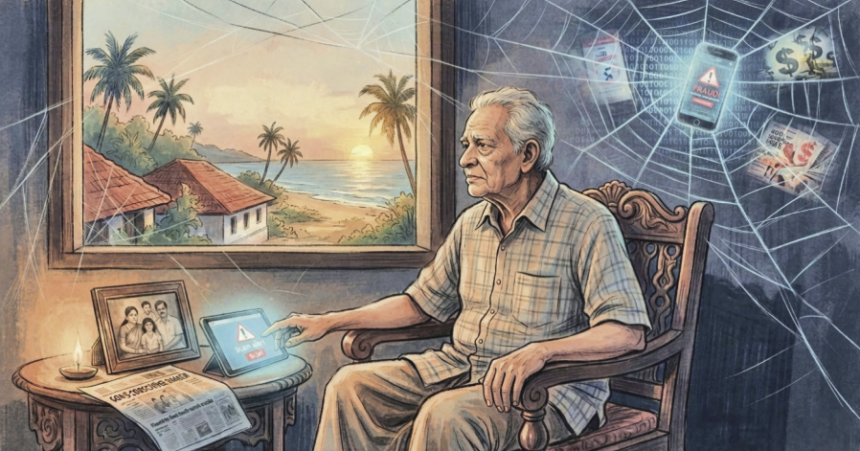
That image is slowly fading. Dangers now target the elderly from multiple fronts-ranging from digital fraudsters operat-ing from distant States to property disputes and physical abuse within their homes.

According to the National Crime Records Bureau (NCRB), Goa recorded 40 crimes against senior citizens in 2023, translating into one of the highest crime rates against the elderly in India when adjusted for population. Theft accounted for the largest number of cases, followed by cheating, forgery and fraud. A murder involving a senior citizen was also reported.
Official crime statistics reveal only reported cases. They tell us little about the silent suffering hidden behind closed doors.
Most elders endure emotional abuse, financial exploitation, and neglect in silence. They hesitate to approach authorities out of fear of social stigma; a desire to protect their family’s reputation, or worry that legal action will permanently divide their relatives. This silence has allowed a hidden crisis to grow.
Demographic vulnerability and cyber threats
Goa’s changing demographic profile exacerbates this vulnerability. As youth migrate abroad or to major cities for employment, more senior citizens are left living entirely alone. While digital communication keeps families connected, it cannot replace physical presence and protection. Criminals actively target these independent seniors, exploiting their limited mobility or health concerns. The sharpest rise in threat comes from cybercrime.
Goa Police have warned the public about such frauds. Between September 2024 and June 2025, 36 seniors fell victim to cybercrime, including 15 cases involving digital arrest scams. Victims often lose confidence in digital banking, online transactions and even simple phone conversations. Many fear answering unknown calls. Others stop trusting legitimate institutions altogether. The emotional trauma caused by cyber fraud has been as devastating as the monetary loss.
Equally concerning is the rise in predatory property disputes. Lawyers and social workers report an increasing number of cases where ageing parents face intimidation, harassment, and violence from family members demanding property transfers, financial assets, or altered wills. The Betalbatim case underscores how easily domestic financial disagreements can escalate into tragedy.

Bridging the implementation gap
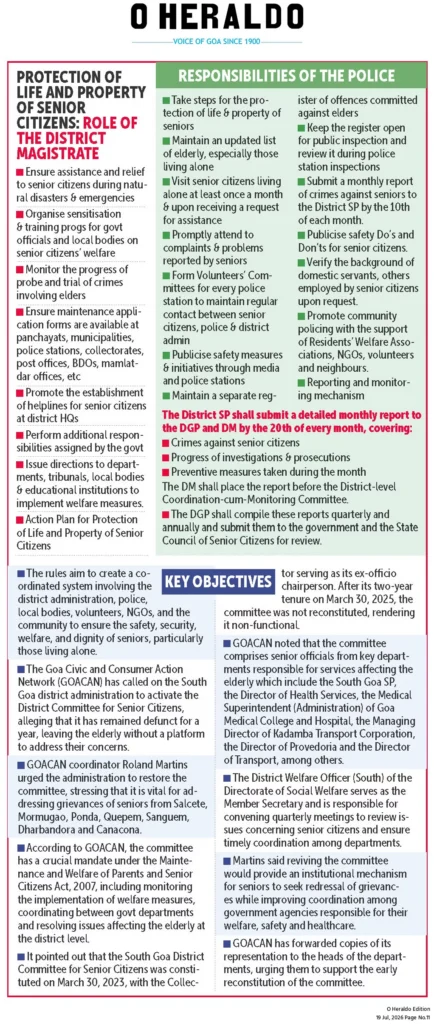
The and Welfare of Parents Maintenance and Welfare of Parents and Senior Citizens Rules, 2009 provide important legal safeguards. Police are expected to maintain registers of senior citizens living alone, conduct periodic visits, verify domestic helpers when requested and respond to complaints involving the elderly. Police have launched cyber awareness campaigns and encouraged seniors to register with police stations.
These are positive initiatives, but how effectively are they being implemented?
There is little information on how many senior citizens have registered under these schemes, how frequently police conduct home visits, which areas report the highest incidence of crimes against the elderly or how quickly complaints are investigated. Greater transparency would help policymakers, families and community organisations working to safeguard vulnerable citizens. The responsibility cannot rest solely with the police or the government.
Protecting seniors requires a collective effort from society. Families should be involved in the lives of ageing parents. Neighbours should check on the elderly living alone. Banks should strengthen fraud detection systems for
senior customers. Educational institutions should encourage youth to teach grandparents basic digital safety. Religious institutions, resident welfare associations and voluntary organisations can create neighbourhood sup-port networks.
Small acts of concern prevent major tragedies. A simple phone call. A visit from a neighbour: Helping an elderly person understand an online banking message. Accompanying them to a government office. These gestures can make a big difference.
Each senior has contributed to building the State we now enjoy. They worked in fields, schools, government offices, hospitals, fishing boats, factories and businesses. They raised families, preserved traditions and strengthened communities.
They deserve sympathy and safety. The assault in Betalbatim should not become just a headline that fades with time. It should serve as a turning point that compels Goa to reassess how it protects its seniors. Ensuring their safety, dignity and wellbeing will become the defining responsibilities of government, communities and families.
A society is judged by how it cares for those who have grown old after spending a lifetime caring for everyone else.
For Goa, that judgement has begun.