SHASHWAT GUPTA RAY
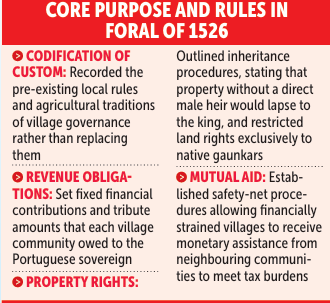
Department of Archives, Goa has signed a Memorandum of Under standing (MoU) with Gov ernment College of Arts, Science and Commerce, Khandola to undertake mul tilingual translation of the Foral of 1526, a foundation al 16th-century legal char ter issued on September 16, 1526, by the Portuguese Crown to codify the rights, duties, and indigenous cus toms of the people of Goa. This Foral will be soon turn ing 500-years-old. “Through this partner ship, we aim to bridge linguistic gaps and make these invaluable historical records accessible to a wid er audience by translating them into four languages: English, Konkani, Marathi, and Hindi,” Director of Ar chives, Balaji Shenoy told O Heraldo. This particular manu script is of immense histor ical significance as it marks its 500th anniversary this year.

Documented by the Portuguese shortly after their arrival in 1510, the Foral of 1526 offers a vital insight into our history, spe cifically codifying the local land revenue systems, cus toms, usages, and so cial tra ditions prev alent among the locals in Goa at that time. “While the De partment of Archives has al ready com pleted the English version, the Translation Incubation Centre of the College, will now translate it into region al languages. By translat ing these records—which are originally in languages like Portuguese or Sanskrit that are not widely under stood to day—we hope to empower language learn ers, re search e r s , and the general public to ex plore these historical texts and open up new possibilities for research,” Shenoy said.
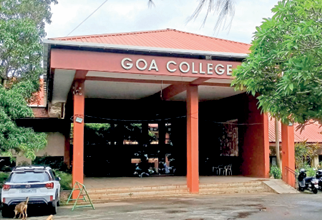
Principal of the Govern ment College of Arts, Science and Commerce, Khandola (Marcela), Dr Purnakala V Samant said that the project involves translating a collec tion of historical documents dating back 500 years. “These documents were originally written in Por tuguese and have recently been translated into Eng lish. The current task as signed to our students is to translate these English versions into both Konkani and Marathi. We have been given a six-month timeline to complete this work,” Dr Samant said. She added that this pro ject holds significant value. “The completed transla tions will serve as a valua ble resource for research, cultural preservation, and insights into our early histo ry,” the Principal added.