PETER F BORGES
Democracy thrives on questions. It grows stronger when cit izens challenge ideas, de bate policies and hold in stitutions accountable. Yet somewhere along the way, something appears to have changed. Somewhere be tween the question and the answer, the questioner has become the issue. Some where between the protest and the policy, the protester has become the headline. Instead of debating ideas, we increasingly dissect indi viduals. Instead of respond ing to concerns, we respond to personalities. If this trend continues, the greatest casualty will not be a polit ical party or a government. It will be the willingness of children and young people to participate in democracy itself. The recent student-led protests over examination reforms exposed this un comfortable reality. What ever one’s opinion about the protests or the govern ment’s response, the move ment reflected a generation determined to participate in public life. Young people organised themselves, used digital platforms to mobilise and demanded accountability. Democracies have always witnessed protests, and healthy democracies de bate methods, demands and outcomes. What was dis turbing, however, was what followed online. Public at tention rapidly shifted from education and governance to the young people them selves. Young women reportedly faced rape threats, misog ynistic abuse, doxxing and character assassination.

Young men encountered branding, ridicule, coordi nated trolling and intim idation. Viral clips were selectively amplified, per sonal lives became public property and families were dragged into the conver sation. Before long, exami nation reforms had disap peared from the debate. The students remained under attack. Public discourse soon became filled with labels. Some public figures criti cised what they saw as in appropriate behaviour and language by sections of the protesters, while others argued that such criticism unfairly stereotyped an en tire generation. The debate became less about whether reforms were needed and more about whether Gen eration Z was respectful enough to deserve a hear ing. That should concern all of us. Democracies are strengthened when ideas are challenged. They are weakened when labels re place listening. It is far eas ier to dismiss an entire gen eration than to answer the difficult questions it raises.
Perhaps the more impor tant question is this: What lesson are we teaching chil dren and young people? We spend years encouraging them to think critically, be come innovators and emerge as leaders. Schools organise debates, student councils and youth parliaments. Col leges celebrate leadership, entrepreneurship and civic engagement. Every Interna tional Youth Day, we proudly describe India’s young pop ulation as our greatest de mographic dividend. Yet the moment young people step into public life with opin ions that challenge existing systems, many discover that participation comes with an unexpected price. It is one thing to disagree with an ar gument. It is something en tirely different to humiliate, threaten or intimidate the person making it. If that be comes the cost of participa tion, should we be surprised if many eventually choose silence? This is not simply a ques tion of online behaviour. It is a question of rights. Arti cle 12 of the United Nations Convention on the Rights of the Child, ratified by In dia, recognises every child’s right to express views freely in all matters affecting them and to have those views tak en seriously. More recently, the UN Committee on the Rights of the Child, through General Comment No. 25, recognised that the digital environment should enable children’s participation, civ ic engagement and access to information. Digital spaces were meant to strengthen democratic participation, not suppress it. If children and young people fear ex pressing opinions because online abuse has become inevitable, then we are wit nessing more than cyber bullying.
We are witnessing the erosion of one of the most fundamental demo cratic rights — the right to participate. Perhaps this is a new and subtle form of exclusion. Nobody formally tells chil dren or young people that they cannot speak. They are free to express themselves. But when every opinion at tracts abuse, every public appearance invites ridicule and every disagreement triggers digital intimidation, freedom gradually becomes theoretical rather than real. Democracies are not weak ened because young peo ple ask difficult questions. Democracies are weakened when young people con clude that asking those questions is simply not worth the consequences. The opposite of democracy is not disagreement. It is si lence created by fear. The impact is not ex perienced equally. India’s children and young people are far from a homogene ous group.
The university student with a strong sup port network, the school girl demanding teachers in a government school, the tribal adolescent struggling to complete secondary ed ucation, the young migrant worker, the adolescent with a disability navigating inaccessible systems and the young woman forced to abandon education be cause of poverty all begin from very different places. If participation itself becomes intimidating, those who disappear first will not be the privileged. They will be those whose voices have al ways struggled to be heard. Online trolling therefore becomes more than an indi vidual problem. It becomes a barrier to inclusion. As someone who has worked extensively in child protection and online safe ty, I find this trend deeply worrying. We teach chil dren about cyberbullying, digital citizenship and re spectful online behaviour. We encourage empathy, kindness and responsi ble communication. Yet adults increasingly model precisely the opposite. If children behaved online the way many adults do in public discourse, we would rightly call it cyberbullying. The standards should not change simply because the targets are young people participating in democratic life. Democracy does not re quire unanimous agree ment. It requires respectful disagreement. Governments should be questioned. Pro testers should be ques tioned. Public figures should be questioned. Institutions should be questioned. Ac countability belongs to everyone. But criticism loses its democratic value the moment it becomes in timidation. The purpose of debate is to persuade, not to silence.
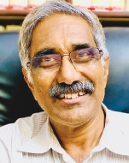
The objective of public discourse should be to test ideas, not to destroy confidence. India proudly celebrates having one of the world’s largest youth populations. But a demographic divi dend is measured not only by numbers; it is measured by participation. It depends on whether children and young people believe their voices matter and whether they feel safe enough to use them. If our digital public square becomes a place where participation invites humiliation instead of dia logue, we should not be sur prised when many quietly withdraw from civic life. Perhaps that is the ques tion we should ask our selves. Do we want a gener ation that thinks critically, participates confidently and strengthens our democra cy, or one that learns that silence is safer than speak ing? Because somewhere between the question and the answer, the questioner should never become the issue. In a democracy, ideas deserve to be challenged. People should never be bul lied into silence. (Peter F. Borges is an assistant professor of Social Work, Goa Univer sity, and Founder, Human Touch Foundation, and former chairperson of the Goa State Commission for Protection of Child Rights.)