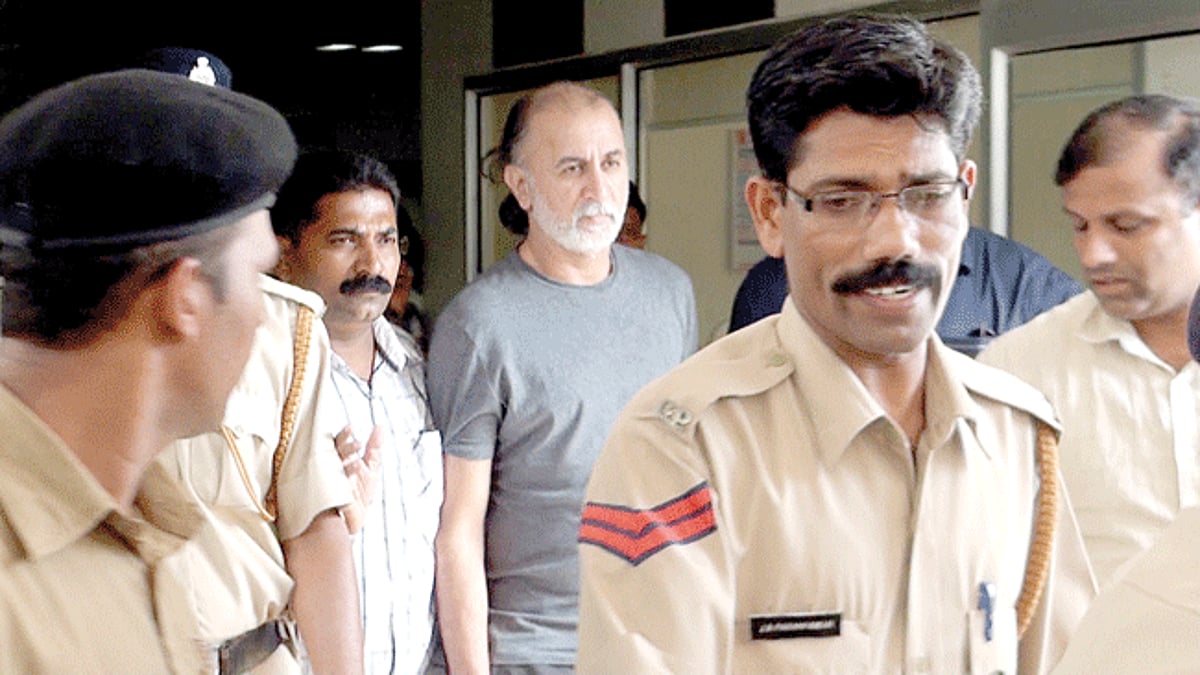
The Goa government has approached the Supreme Court of India seeking an enhancement of the sentence awarded to Tarun Tejpal, former editor-in-chief of Tehelka, in connection with a 2013 sexual assault case. The state’s move follows a landmark verdict by the Goa Bench of the Bombay High Court, which overturned Tejpal’s earlier acquittal and sentenced him to 10 years of rigorous imprisonment.
Background of the Case The case originates from November 2013, when a junior female colleague accused Tejpal of sexually assaulting her inside an elevator at a luxury hotel during a high-profile Tehelka event in Goa. Following a complaint, the Goa Police registered an FIR, leading to Tejpal’s arrest later that year. He faced multiple charges under the Indian Penal Code (IPC), including rape, sexual harassment, assault with intent to disrobe, wrongful restraint, and wrongful confinement. Throughout the legal proceedings, Tejpal denied the allegations, claiming the encounter was either consensual or misinterpreted.

Trial Court Acquittal and High Court Reversal In May 2021, a Goa trial court acquitted Tejpal of all charges, casting doubt on the complainant’s testimony and raising questions regarding her post-incident behavior. The Goa government subsequently challenged the acquittal in the High Court, arguing that the trial court relied on flawed assumptions and stereotypes regarding how a sexual assault survivor should act.
Overturning the lower court’s decision, a Division Bench of the High Court, comprising Justices Neela Gokhale and Amit S Jamsandekar, characterized the trial court’s assessment as legally “perverse.” The High Court upheld the complainant’s testimony as natural, credible, and of high quality. Furthermore, the court noted that the prosecution successfully proved its case beyond a reasonable doubt through corroborating evidence, including CCTV footage, circumstantial facts, and Tejpal’s own email communications and apologies.
Current Legal Position The High Court sentenced Tejpal to 10 years of rigorous imprisonment along with a fine of approximately ₹10.21 lakh, designated to be paid to the survivor. The sentences across various charges were ordered to run concurrently, resulting in an effective term of 10 years.
Although the High Court initially granted Tejpal a two-week window to surrender, the period was later extended to four weeks to allow him to appeal before the apex court. Tejpal has indicated his intention to challenge both his conviction and sentence before the Supreme Court. Meanwhile, the Goa government’s appeal for a stiffer penalty adds another layer to the upcoming proceedings before the top court, where the High Court’s conviction remains active until stayed or modified.