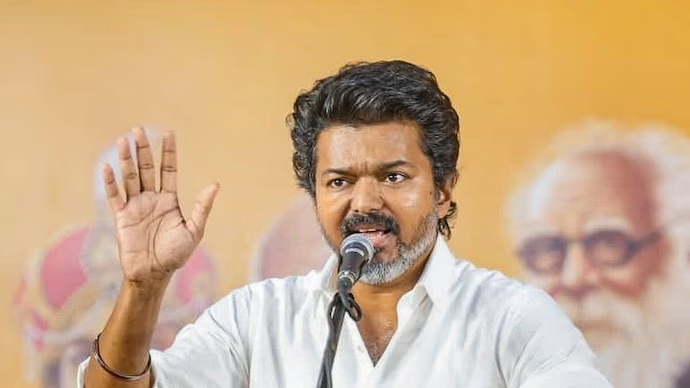
Tamil Nadu Chief Minister C. Joseph Vijay and Public Works Minister Aadhav Arjuna of the TVK party have filed applications in the Madras High Court requesting the dismissal of election petitions brought against them by DMK candidates. The challenges follow the May 2026 Tamil Nadu Assembly elections, where both leaders secured victories in their respective constituencies.
Chief Minister Vijay faced an election petition from DMK’s S. Inigo Irudayaraj regarding his victory in the Tiruchi East Assembly constituency. Irudayaraj accused Vijay of using children during his campaign, emotionally influencing impressionable minds to gain family votes, along with making improper religious appeals and exceeding election expenditure limits. In response, Vijay’s legal team argued that the allegations lacked the essential material facts required under Section 100 of the Representation of the People Act, 1951, to declare an election void. His counsel emphasized that vague assertions of voters being “emotionally swayed” fail to demonstrate a direct link to the votes cast, and that campaign expenses incurred by TVK party functionaries cannot be attributed personally to him. Justice V. Lakshminarayanan directed the High Court Registry to number the rejection application and scheduled the listing for August 31, 2026.

Simultaneously, Public Works and Sports Development Minister Aadhav Arjuna filed an application to reject an election petition submitted by DMK’s Karthik Mohan, who challenged his election from the Villivakkam constituency. Mohan alleged that Arjuna suppressed vital asset details in his Form 26 affidavit, specifically failing to disclose a 50% shareholding held by his wife in Dominant Towers and Traders Private Limited—a company subject to proceedings under the Prevention of Money Laundering Act (PMLA), 2002. Arjuna denied any intentional non-disclosure, maintaining that his statutory filings were accurate. He contended that personal ownership of corporate assets is legally distinct from holding directorships, and that disclosures regarding PMLA impleadments are not mandated by law. Furthermore, he argued that minor omissions do not justify invalidating an election result without concrete evidence showing they materially affected the polling outcome. Justice Lakshminarayanan is overseeing both matters as the Court considers whether the election petitions meet the legal standard to proceed to full trials.