JENIFER FERNANDES

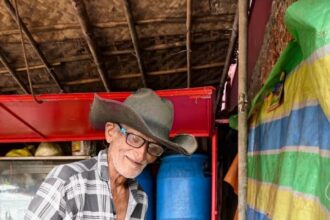
ALDONA: In the bustling Aldona market, under the shade of a modest tarpaulin canopy, 77-year-old Digambar Satardekar diligently plies his trade. With an assortment of tools by his side, Digambar is one of the last links to the cobbling tradition that his family has carried on for over a century.
Born into a family of cobblers, Digambar’s life has been shaped by the craft. His father dedicated over 80 years to this trade, passing on both the skills and the values of hard work and dedication. Today, Digambar has completed 17 years in Aldona’s market, mending shoes and earning a living. “Together, we have spent more than 100 years in this profession,” he says with pride, as his hands rhythmically work on a leather sole.
Despite the challenges that come with age, Digambar’s enthusiasm for his work remains undiminished. He begins his day early in the morning, spending hours stitching and repairing footwear before returning home by noon. “At this age, I still feel young,” he says with a hearty laugh, his hands never missing a beat. “I stay true to my promises of time and quality when customers trust me with their work.”
For Digambar, every person who approaches him is more than just a customer. “I see them as friends,” he explains. Over the years, he’s formed lasting connections with the people of Aldona, remembering each face and their footwear needs.
Digambar notes with sadness that the art of cobbling is fading, as the younger generation shuns manual labour for white-collar jobs and overseas opportunities. “Today’s children don’t want to sit on the floor and work like I do,” he laments. “They feel it’s beneath them.” He points to the decline in Aldona, where there were once 15 cobblers but now only two remain. “A time will come when there will be no cobblers left,” he warns.
He attributes this decline to changing societal norms and the rise of mass production. The advent of cheaper, ready-made shoes and the prevalence of a use-and-throw culture have significantly impacted his trade. Yet, Digambar takes pride in the durability of his work. “Unlike factory-made shoes that are glued, my stitches are stronger and longer-lasting,” he says, his voice tinged with a quiet sense of achievement.
Digambar’s toolkit is a collection of time-tested instruments: hammers, needles, leather knives, sandpaper, pliers, and awls. “These tools are my companions,” he says fondly, demonstrating how he uses them with precision and care. Whether it’s crafting new soles or reinforcing old ones, every task demands patience and dedication.
“It takes at least an hour to stitch a shoe,” he explains, “and some tasks, like repairing football shoes, require even more time and effort.” Despite the painstaking nature of his work, Digambar’s passion for his craft is matched by his concern for its future. He appeals to the younger generation to shed their inhibitions and embrace the dignity of labour. “There is no shame in honest work,” he insists. “We work to earn our livelihood, and this work has sustained families for generations. Why should we let it disappear?”
He also urges the government to support traditional trades like cobbling. “These businesses need encouragement,” he says, emphasising the importance of preserving heritage and self-reliance. “Every stitch tells a story, and these stories should not be forgotten.”
Digambar finds immense joy in his work. “I can’t imagine sitting idle,” he says with a twinkle in his eye. “As long as my hands are strong, I will continue to stitch and mend.” And when the day comes that his bones no longer allow him to work, Digambar says he will leave his trade “with a full stop”—but not without passing on a message to the world.
“Be proud of what you do,” he says. “Whether you sit on a roadside or work in an office, every effort has its dignity. There’s nothing to be ashamed of – work is work, and it deserves respect.” With these words, Digambar Satardekar hopes to inspire others to honour the traditions that have shaped lives and communities for generations.