For a man who has worn different caps at different points of time in his life
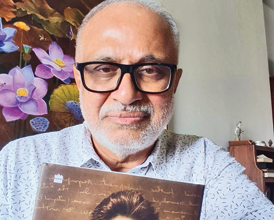
Somnath Batabyal is a pretty calm man. At ease in his skin now as a Lecturer in
Media in Development and International Journalisms at SOAS University of
London, he is in Goa relaxing with his family as he prepares to complete his
second book which should hit the stands sometime soon. He spend ten years as a
journalist covering the crime beat in Delhi. There is nothing more final than
death to give you an understanding of your standing in the larger order of
things. A murder in South Delhi he learned very fast commanded front page space
where as a death in one of the by lanes of Noida would be carried on page 5 or
6. His experiences resulted in the The Price You Pay which was written through
the eyes of debut journalist Abhishek Dutta, working for the crime reporting
department of his news channel. As Abhishek moves through the web of crime
reporting through the city, he makes friends and foes but the ultimate lesson
he learns is that in the underworld, there are no friends and no enemies and
that a man must fend for himself. Somnath said the mafia in Delhi was
unorganised and was focussed on kidnapping folk and murder. The mafia in Mumbai
he said was very organised which made it a different beast.
Post this he was invited by the senior management of Star Ananda
to be embedded and to do an in-depth study on the operations of the
organisations. This took place over a period of twelve months. It is now
considered an excellent insight into the working of the Indian media and has
even been introduced in paper back. It is considered an excellent academic
study of the industry.

His life as a journalist reflected very heavily in his work as a
novelist. Along with the story of Abhishek, moves the story of ACP Mayank
Sharma from the Crime Branch, who very soon becomes good friends with Abhishek;
Deputy Commissioner of Police Uday Kumar, a corrupt police officer; a mafia
from the underworld who controls the mafia world in Delhi from outside the city
and Abhishek’s mentor, Samir Saxena, who oversees his transition from print
media to TV Journalism.
The story carries the reader to the hidden world of the
underdogs in Delhi where the lives of the common men have little value and
where corruption is an accomplice in crime. The author has brought into context
his personal experience with the capital city of the country, which has its own
dark history with the underworld. The book explores the city through those who
make it what it is. The book is interspersed with dialogues that are typical to
the city. The book is a reflection on how ego, corruption and power can combine
to shape the response of people in this city to criminal activities. It is not
only a satire on the social life of Delhi, but also a crime thriller that
totally absorbs the reader into its plot.
The
book may be three years old but the author has moved on to other interests. His
third book focusses on the fifty years of Bangladesh and the migrants who came
into Assam. It is about who belongs and who is disenfranchised. It is about
nationalism. The problem he felt today was that the middle class did not want
to see differences. He will be speaking at six Assagao on Monday as part of the
Das Critique series.