The art
movement in India is on the upscale, with boundaries being eclipsed and global
influences making an imprint on it, a far cry from the time Indian art and
artists fought hard to seek recognition in the Western concept of modernism.
However, what is now in danger of being lost is the cultural specificity of the
individual artist. “While art has crossed boundaries and become global, rooting
one’s art in the locale while giving it cosmopolitan nature is the need of the
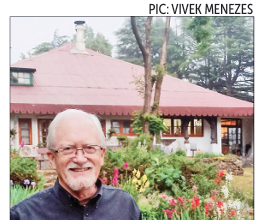
hour,” feels Indian art historian, critic, curator and teacher at Santiniketan,
Raman Siva Kumar.
In doing so
he is reiterating the Rabindranath Tagore principle of creating art to respond
to the modern complexities – to the times and environment they lived in rather
than being too rooted in a historical past to make an international impact.
”Before I began to write, Santiniketan was not seen as a separate identity, but
subsumed under the Bengal School of Art. I personally see that whole effort
that Tagore and others have made to have the local rooted in the international
sphere.”

Siva Kumar
has also argued the aspect of alternative modernism in art practise, when he
curated the exhibition Santiniketan: The Making of Contextual Modernism. “While
the older generation of artists had to deal with culture conflict, the
contemporary Indian artists now have to address the issue of retaining their
cultural individuality to woo a global audience and yet remain connected to the
local one.”
He cites the
case of Ram Kinker Baij who he terms as one of India’s truly modern sculptors
and artists; a topic he discussed at length at the lecture he delivered on the
artist yesterday. “Baij along with Tagore, Nandalal Bose and Benode Behari, was
one of the central figures of a revolutionary art movement at Santiniketan. He
responded to both Indian and Western traditions of art and figured out his own
originality and style. He would do figurative art and experimented with
abstracts, which were sometimes ugly to see. It was not so much the visual for
this artist as it was a concern with movement. So for him the dichotomy of west
and east did not exist. He was indeed the pivot of a new idea in his times and
one emulated by many,” explains Siva Kumar.
To be one
with the global art world and yet retain one’s individual cultural specificity
is an issue he invites all artists to ponder upon.