Dolcy D’Cruz
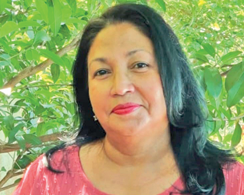
One trait that love stories of the twentieth century teach is patience. Communication unfolded over long periods of time, with people waiting for replies sent through letters. There was a unique charm in holding a lovingly written letter, one that could be saved as a keepsake and revisited to bring back fond memories. These letters have stood the test of time, unlike the fleeting telephonic messages exchanged today. After five years of careful research, Sharbelle Fernandez makes her literary debut with ‘Romance on the Airwaves’, a non-fiction account of her parents’ lives set against the complex social and political landscape of mid-20th-century Goa. The book reconstructs the love story of Antonio Rodrigo Aguiar and Marjorie Valerie Lobbo through letters, memories, and historical detail, offering readers an intimate portrait of romance shaped by radio, distance, and turbulent times. For Nachinola-based Sharbelle, the story had to be pieced together from fragile letters written more than seventy years ago, documents that carried both private emotion and the weight of their era. “The most daunting part was staying true to history. Bringing together memories, dates, and historical context required patience and time. I also had to weave their love story into the larger backdrop of Goa during the India–Portuguese conflict, ensuring that personal moments and political realities f lowed naturally,” she says. Antonio was a radio announcer, journalist, poet, and footballer. Sharbelle draws from a two-foot-long book in which her father catalogued his articles, poems, and football memorabilia from the 1930s and 1940s. With little of this material available online, she considers these preserved snippets priceless and plans to bring the book to the launch, hoping others may recognise names from their own family histories. At the heart of ‘Romance on the Airwaves,’ the non-fiction book published by Goa 1556, is the correspondence that sparked her parents’ relationship. Marjorie f irst caught Antonio’s attention through song dedications she wrote for his English-language radio programme. Sharbelle describes her mother, “My mother had a wonderful way with words. Her letters were full of charm and quiet wit, and that is what first caught my father’s attention. What started as two-page letters soon grew into long, twenty-page missives and an exchange of thoughts. Through these letters, they came to understand each other’s personalities, emotions, and ways of thinking even before they met. They wrote about music, books, poetry, films, and the changing times around them. These exchanges helped their relationship grow and show how simple words, shared through letters, played an important role in shaping both their love story and the story I tell in this book. There is also an unexpected element in the book but you will have to read it to discover that.” The love story is inseparable from its political context. The Goa blockade and new travel restrictions created significant obstacles to the couple’s wedding plans, including mandatory interviews in Bombay for exit permits. Sharbelle felt it was essential to include these details, noting that her parents’ love “did not grow in isolation.” By showing how their relationship endured suspicion, bureaucracy, and historical upheaval, the book illustrates how love found space even in unsettled times. Balancing personal memory with historical accuracy was crucial, particularly since both her parents have passed away. Growing up in Goa and later living in Hubli helped Sharbelle understand both her parents’ worlds and write not only as a daughter, but as someone who had lived parts of their journeys. Radio itself plays a central role in the book, reflecting its importance in everyday life during the 1950s and 1960s. Sharbelle says, “In those days, radio was the main medium of entertainment and information. People planned their evenings around broadcasts. I remember it being very much a part of my life as a teenager, listening to Radio Ceylon every morning and on Sunday afternoons, waiting for ‘Your Favourites’ by Imelda Tavora and her expressive voice.” Looking ahead, Sharbelle plans to write a book about animals, drawing on her love for them, while continuing to pursue creative passions that include singing in The Stuti Choral Ensemble, poetry, quilling, calligraphy, and the art of handwritten letters. (The book launch of ‘Romance on the Airwaves’ will be held on January 9, at 6 pm at the Xavier Centre of Historical Research, Porvorim. Sharbelle Fernandez, Tino de Sa and Velma Fernandes will be in conversation with Frederick Noronha.)