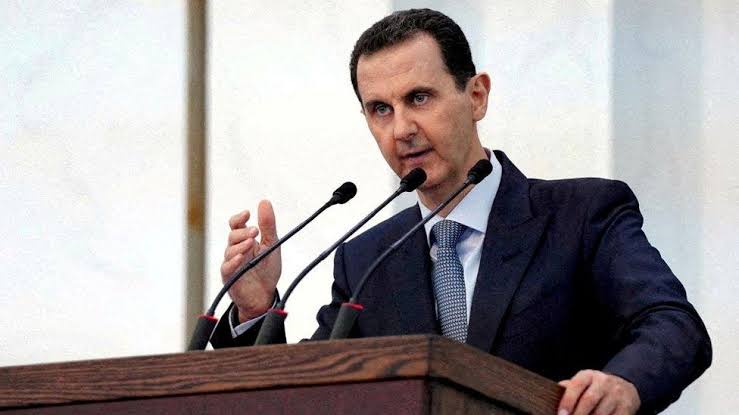
A Damascus court has sentenced former Syrian President Bashar al-Assad, his brother Maher al-Assad, and his cousin Atef Najib to death for war crimes and atrocities committed over the course of Syria’s nearly 14-year civil war.
The Criminal Court in Damascus delivered the verdicts on Tuesday, finding Bashar al-Assad guilty in absentia of premeditated murder, systemic torture, and crimes against humanity. Assad was ousted from power in December 2024 and currently resides in Russia, where he was granted exile following the collapse of his regime.

Presiding Judge Fakhr al-Din al-Aryan stated that extensive witness testimony confirmed Assad’s direct role as the “highest decision-maker” who mobilized state institutions and military forces to execute widespread abuses against Syrian citizens.
Assad’s younger brother, Maher al-Assad—who commands a notorious reputation as former head of the elite Republican Guard and 4th Armoured Division—was also sentenced to death in absentia for torture and premeditated murder. Maher is likewise believed to be living in Russia.
Unlike the Assad brothers, their cousin Atef Najib was tried in person. Najib, the former political security chief in Deraa province, was arrested by Syrian authorities in January 2025. He appeared in the courtroom dressed in prison attire inside a secure cage as the judge read his sentence.
Najib is widely cited as a central figure in launching the brutal 2011 crackdown against peaceful demonstrators in Deraa—an escalation that triggered the broader Syrian uprising and civil war. His conviction includes specific charges of murder, torture leading to death, and the intentional killing of children under the age of 15.
The verdicts mark the first high-profile convictions carried out by the transitional judiciary tasked with holding members of the former government accountable. The ruling sets a significant legal precedent for ongoing investigations into low- and mid-level operatives across the former state security apparatus.
Reactions across Syria reflect a profound sense of closure. For millions of citizens affected by displacement, illegal detention, and violence, the court’s decision represents an essential step toward national healing and justice. While enforcing the sentences against those in Russian exile remains logistically improbable without international extradition support, the symbolic weight of the convictions offers long-awaited accountability for victims of the regime.